Ayurveda Breakfast: What to Eat and Why It Matters for Your Dosha
When you think of Ayurveda breakfast, a morning eating routine rooted in ancient Indian medicine that matches food to your body type. Also known as dosha-based morning meals, it’s not just about what you eat—it’s about how your body reacts to it. Unlike Western diets that push the same breakfast for everyone, Ayurveda says your ideal morning meal depends on whether you’re mostly vata, a body type characterized by lightness, quick movement, and sensitivity to cold, pitta, a fiery constitution prone to overheating and acidity, or kapha, a grounded, slow-metabolism type that needs warmth and lightness to stay balanced. Your breakfast isn’t just fuel—it’s medicine.
Most people skip breakfast or grab sugary cereal, but Ayurveda says skipping this meal throws off your whole day. If you’re vata, cold oatmeal or smoothies can make you feel anxious and bloated. If you’re pitta, spicy toast or coffee might trigger heartburn. And if you’re kapha, a heavy pancake stack will leave you sluggish by 10 a.m. The right Ayurveda breakfast warms your digestion, balances your energy, and prevents cravings later. It’s not about calories—it’s about compatibility. Warm, cooked foods are key. Think porridge with ghee, steamed apples with cinnamon, or lentil soup. Raw salads, cold milk, and processed grains? Avoid them. Your body wasn’t built to process them first thing.
There’s no one-size-fits-all here. One person’s healing breakfast is another’s disaster. That’s why Ayurveda doesn’t give you a menu—it gives you a mirror. Look at how you feel after eating. Do you feel light or heavy? Calm or jittery? Clear-headed or foggy? Those signals tell you what your dosha needs. And when you get it right, you don’t need caffeine to wake up. You don’t crash after lunch. You just feel… steady. The posts below show real examples: what vata folks eat to stay grounded, how pitta types cool their fire, and what kapha warriors eat to stay sharp. You’ll also find simple 7-day plans, herbal tips, and what to avoid. No fluff. No myths. Just what works—based on how your body actually behaves.
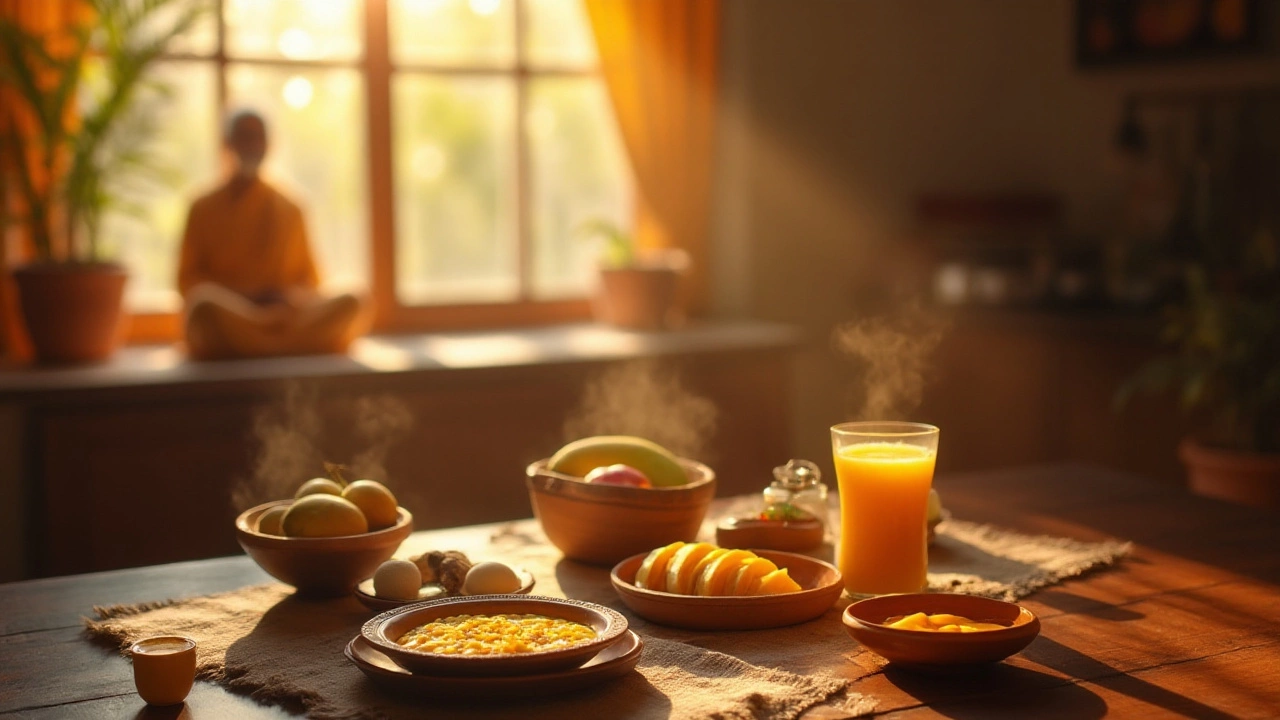
Ayurveda's Morning Starts: The Best Foods to Begin Your Day
•16 Jan 2025
According to Ayurveda, the food we consume first thing in the morning can set the tone for our physical and mental well-being throughout the day. This ancient system of medicine places importance on starting the day with a balanced meal that nourishes the body and calms the mind. The article explores different foods recommended by Ayurveda, discusses their benefits, and offers tips for creating an ideal morning diet. By adhering to these principles, one can fuel their mornings with energy and positivity.