Not Suitable for Heart Surgery: Who Should Avoid It and Why
When your heart isn’t working right, surgery might seem like the only answer. But not suitable for heart surgery, a medical determination based on overall health, age, and organ function. It’s not about fear—it’s about survival. Many people assume if a doctor mentions heart problems, surgery is next. That’s not true. In fact, for a significant number of patients, surgery could do more harm than good.
One major reason someone might be not suitable for heart surgery, a medical determination based on overall health, age, and organ function. It’s not about fear—it’s about survival. is severe poor heart function, when the heart can’t pump enough blood to meet the body’s needs, often measured by ejection fraction below 30%. If your heart is already weak, putting it through open-chest surgery can be too much. Another key factor is coronary artery disease, when arteries supplying the heart are clogged, and multiple vessels are severely blocked, making bypass risky. If the damage is too widespread, surgeons may avoid cutting in because the heart won’t recover.
Age alone doesn’t disqualify someone, but combined with other conditions like kidney failure, lung disease, or uncontrolled diabetes, it raises the risk too high. Patients with active infections, especially in the bloodstream, also can’t safely undergo surgery—the risk of the infection spreading during the procedure is dangerous. Even severe obesity or prior radiation to the chest can make surgery too risky. Doctors look at the whole picture: not just the heart, but the lungs, kidneys, liver, and even mental health.
When surgery isn’t an option, alternatives exist. Medications like beta-blockers, ACE inhibitors, or newer drugs like SGLT2 inhibitors can slow decline. Non-invasive procedures like angioplasty with stents might help if blockages are limited. For some, cardiac rehab and oxygen therapy improve quality of life without a scalpel. The goal isn’t always to fix everything—it’s to keep you alive, comfortable, and as active as possible.
These decisions aren’t made lightly. They’re based on years of clinical data, patient outcomes, and real-world results—not guesses. If you’ve been told you’re not suitable for heart surgery, it doesn’t mean giving up. It means finding a smarter path forward—one that matches your body’s reality.
Below, you’ll find real cases and expert insights on who avoids surgery, why alternatives work, and how to manage heart health when the scalpel isn’t the answer.
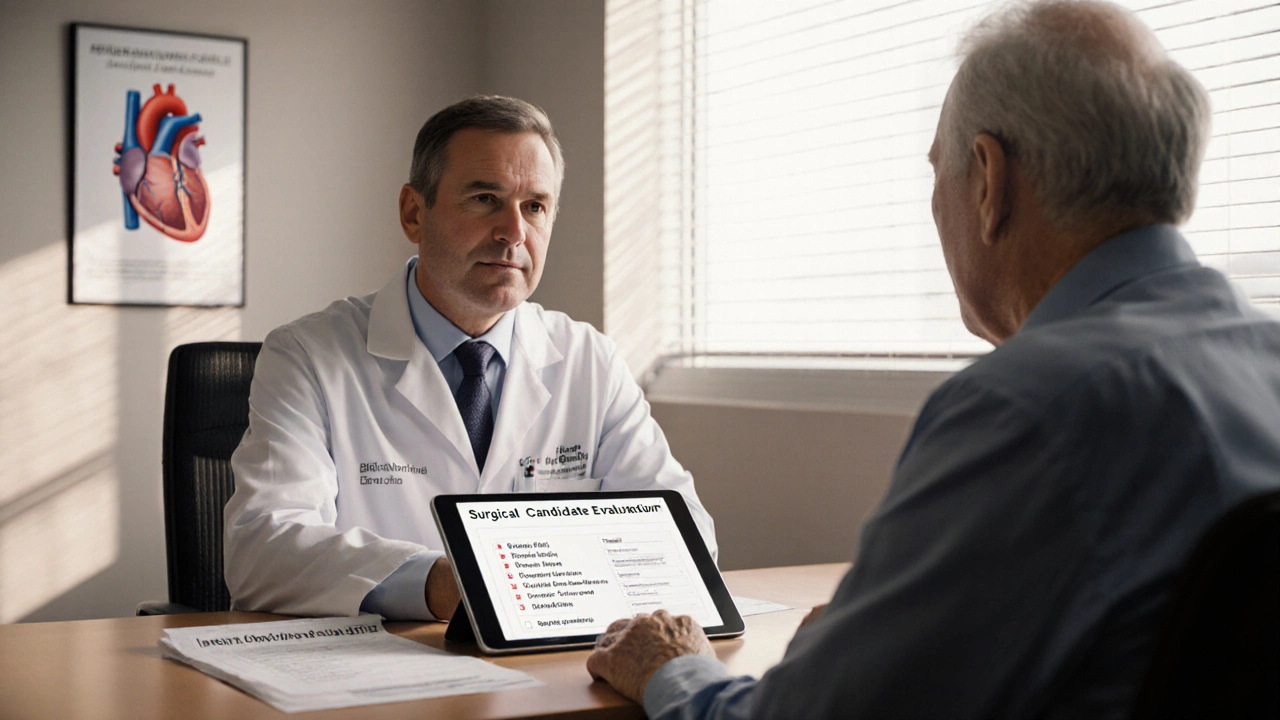
Who Should Avoid Heart Surgery? Key Contraindications Explained
•10 Oct 2025
Learn which health, age, and lifestyle factors make a person unsuitable for heart surgery, and discover safer alternatives and evaluation steps.