IVF Health Outcomes Explorer
Select a health factor below to understand how IVF compares to natural conception and what the primary drivers of these differences are.
Preterm Birth & Low Birth Weight
IVF babies have a higher likelihood of being born prematurely compared to natural conception.
Genetic Disorders
In some cases, IVF children can actually have a health advantage over natural conception.
Preimplantation Genetic Testing (PGT-A) identifies chromosomal abnormalities (like trisomies) before implantation, reducing the risk of genetic syndromes.
Cognitive & Social Development
Long-term follow-ups show that IVF children are indistinguishable from naturally conceived children in these areas.
- Comparable IQ and school performance
- Identical social behavior patterns
- No significant developmental delays
Congenital Heart Health
Some registries note a slightly higher incidence of heart defects, but the absolute risk remains low.
When controlling for maternal age, the difference almost disappears. The risk is more closely tied to the age of the egg than the IVF process itself.
Quick Summary: What You Need to Know
- Most IVF babies meet all health milestones and are indistinguishable from naturally conceived children.
- There is a slightly higher risk of preterm birth and low birth weight.
- Congenital heart defects and respiratory issues show a marginal increase in some studies, though the absolute risk remains low.
- Modern screening like PGT-A helps reduce the risk of genetic disorders.
- Long-term follow-ups show no significant cognitive or developmental delays.
Understanding the IVF Process and Health
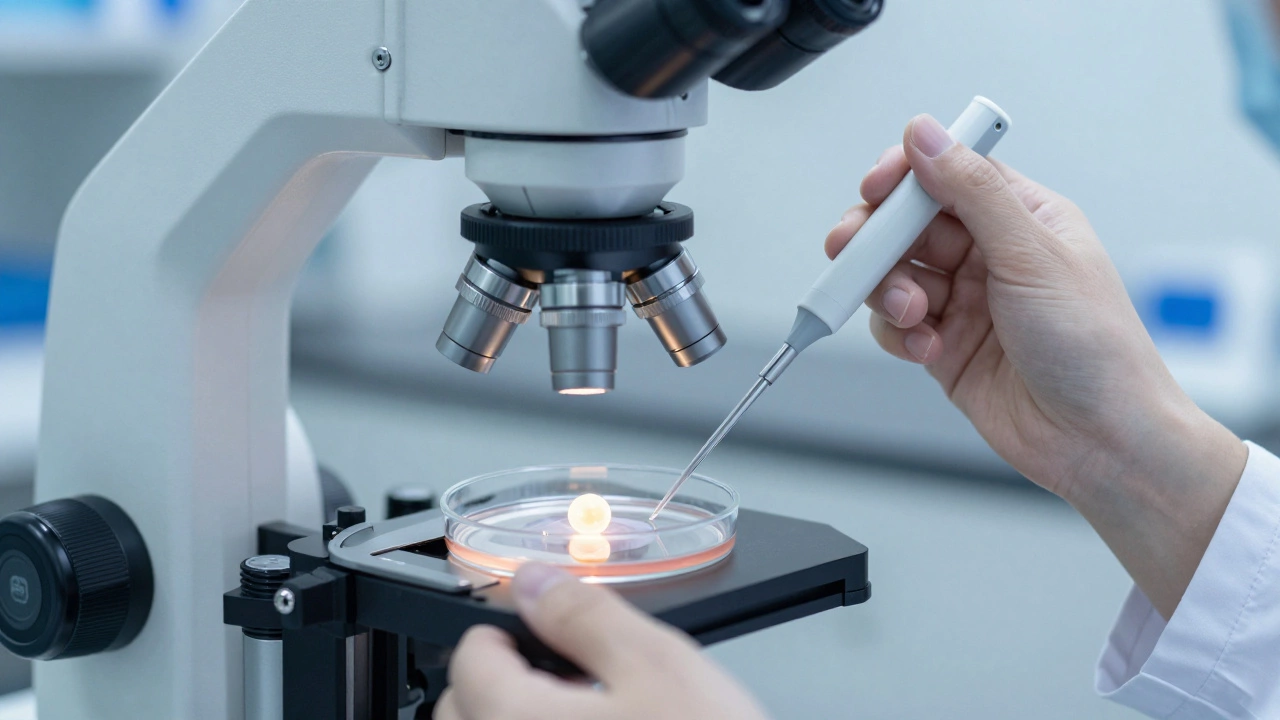
To talk about health, we first have to look at what IVF is In Vitro Fertilization, a process where an egg is fertilized by sperm outside the body in a laboratory setting. Because we are manipulating the environment where the embryo grows for those first few days, it's natural to wonder if that changes the baby. In reality, the IVF health outcomes for the child are largely determined by the health of the parents and the quality of the gametes, not just the lab process itself.
When we look at the data, we have to distinguish between the "IVF effect" and the "infertility effect." Many couples undergoing IVF are older or have underlying health issues like endometriosis or polycystic ovary syndrome. Often, what looks like a risk caused by IVF is actually a risk associated with the parental health conditions that made IVF necessary in the first place.
The Reality of Birth Weights and Preterm Labor
If there is one area where the numbers differ, it is birth timing and weight. Children born through Assisted Reproductive Technology medical treatments used to handle infertility by manipulating eggs and sperm are more likely to be born prematurely. This is often because IVF frequently results in multiple births (twins or triplets), and multiples are almost always born earlier.
A baby born at 34 weeks instead of 40 weeks faces different challenges, such as underdeveloped lungs. This is why many clinics now push for "Single Embryo Transfer" (SET). By transferring only one embryo, doctors can drastically reduce the risk of multiple pregnancies, bringing the birth weight and gestation period closer to natural averages. If you are choosing a single embryo, your risk of a low-birth-weight baby drops significantly.
| Risk Factor | Natural Conception | IVF Conception | Primary Cause in IVF |
|---|---|---|---|
| Preterm Birth | Baseline | Higher | Multiple births/Maternal age |
| Low Birth Weight | Baseline | Higher | Prematurity |
| Genetic Disorders | Standard Risk | Potentially Lower | Use of PGT-A screening |
| Cognitive Development | Standard | Comparable | N/A |
Genetic Screening and the "Perfect" Embryo
One area where IVF babies actually have a health advantage is the ability to screen for chromosomal abnormalities. Through PGT-A Preimplantation Genetic Testing for Aneuploidy, which screens embryos for the correct number of chromosomes, doctors can identify embryos with trisomies (like Down syndrome) or monosomies before they are ever implanted.
This means that for couples with a history of recurrent miscarriage or known genetic mutations, IVF can actually produce a *healthier* child than natural conception would have. Instead of discovering a genetic issue via an ultrasound at 20 weeks, PGT-A allows the medical team to select the most viable embryo. It removes a layer of biological gambling that natural conception requires.
Long-term Development: Childhood and Adolescence
What happens after the first few years? This is where the anxiety usually peaks. Parents worry about "epigenetics"-the idea that the lab environment might flip a switch in the baby's DNA that leads to obesity, diabetes, or heart disease later in life. For years, scientists have tracked cohorts of IVF children from the 1980s and 90s.
The results are reassuring. In terms of IQ, school performance, and social behavior, IVF children are essentially identical to their naturally conceived peers. While some early studies hinted at a slightly higher risk of childhood obesity, more recent data suggests this is linked to the higher rate of preterm birth and the use of certain growth-promoting medications during pregnancy, rather than the IVF process itself.
Heart health is another common concern. Some registries have noted a slightly higher incidence of Congenital Heart Defects malformations of the heart that are present at birth. However, when you control for the age of the mother-since IVF patients are typically older-the difference almost disappears. An older egg is more likely to have a mutation regardless of whether it is fertilized in a tube or in the fallopian tube.

The Role of the Gestational Environment
Once the embryo is implanted, the IVF process is essentially over. The health of the baby then depends on the Placenta the organ that connects the developing fetus to the uterine wall to allow nutrient supply and waste elimination and the mother's health. Many IVF pregnancies are high-risk not because of the lab, but because the mother may have conditions like hypertension or gestational diabetes.
The key to a healthy IVF baby is the prenatal care that follows the transfer. This includes strict monitoring of blood pressure and glucose levels. Because IVF babies are closely monitored by specialists from day one, they often receive more attentive prenatal care than the average pregnancy, which can actually lead to better outcomes through early detection of issues.
Common Pitfalls and Misconceptions
There is a common myth that IVF babies are "fragile." This isn't true. Once an IVF baby reaches a healthy weight and passes the neonatal stage, they aren't more prone to colds, infections, or injuries. Another misconception is that using donor eggs or sperm increases the risk of health problems. While using a donor introduces new genetic variables, it doesn't inherently make the child "less healthy" than a child from two biological parents.
The real risk is usually the "over-stimulation" of the ovaries during the egg retrieval phase, which can affect the mother (OHSS), but doesn't typically impact the long-term health of the fetus. The focus should be on the quality of the embryo and the health of the womb, not the fact that the fertilization happened in a petri dish.
Do IVF babies have a higher risk of autism or ADHD?
Current large-scale research does not show a definitive link between IVF and neurodevelopmental disorders like autism or ADHD. Most studies suggest that any slight increase in these conditions is likely tied to parental age or the complications of premature birth rather than the fertilization method itself.
Does freezing embryos (cryopreservation) affect the baby's health?
Modern vitrification (ultra-rapid freezing) is extremely safe. Data shows that frozen embryos have similar, and sometimes even slightly higher, pregnancy and live-birth rates compared to fresh embryos, with no increase in birth defects or long-term health issues for the child.
Are there more birth defects in IVF babies?
The rate of major birth defects is slightly higher in IVF pregnancies, but this is heavily skewed by the fact that IVF patients are often older or have a history of genetic issues. When comparing IVF babies to naturally conceived babies of the same maternal age, the risk is nearly identical.
Can PGT-A guarantee a healthy baby?
No guarantee exists in medicine. PGT-A screens for chromosomal numbers (like 46 chromosomes) but cannot detect every single point mutation or a wide range of complex genetic disorders. It significantly lowers the risk of miscarriage and certain syndromes, but it isn't a 100% fail-safe.
Will my IVF child be more prone to chronic diseases as an adult?
There is some evidence of a slightly higher risk of metabolic issues (like childhood obesity) due to the risks associated with low birth weight and prematurity. However, these are environmental and developmental risks that can be managed with healthy nutrition and pediatric care from an early age.
Next Steps for Prospective Parents
If you are worried about the health of your future IVF child, the best move is to focus on the variables you can control. First, talk to your doctor about Single Embryo Transfer (SET) to avoid the risks associated with multiples. Second, ask about the latest PGT-A or PGT-M screening options if you have a family history of genetic disorders.
For those already pregnant via IVF, the priority shifts to prenatal health. Manage your weight, keep a close eye on blood pressure, and ensure you are getting the right supplements. Most importantly, remember that an IVF baby is simply a baby who had a little help getting started. Once they are here, they are just as resilient, capable, and healthy as any other child.