Kidney Health Hydration Calculator
The article suggests 2-2.5 liters daily, but this calculator personalizes it based on your body, activity, and climate.
Your kidneys filter about 120 to 150 quarts of blood every day. That’s roughly 50 gallons - removing waste, balancing fluids, and keeping your electrolytes in check. But when they’re overworked - from dehydration, high salt, sugar, or chronic stress - they start to slow down. Many people assume pills or expensive treatments are the only way to fix this. But the truth? What you drink every day matters more than you think.
What actually helps kidneys recover?
Kidneys don’t "heal" like a cut on your skin. They don’t regenerate tissue overnight. But they can recover function - especially if the damage isn’t advanced. The goal isn’t to reverse chronic kidney disease in a week. It’s to reduce strain, flush toxins, and support the body’s natural cleaning process.
There’s no magic potion. But certain drinks, used consistently, can make a real difference. These aren’t quick fixes. They’re daily habits that reduce inflammation, lower blood pressure, and help your kidneys do their job without extra stress.
Water - the simplest, most powerful tool
Most people don’t drink enough water. Not because they forget, but because they confuse thirst with hunger, or they think coffee or tea counts. It doesn’t. Caffeine is a mild diuretic. It makes you pee more, but doesn’t hydrate as well as plain water.
For kidney health, aim for 2 to 2.5 liters a day - more if you’re active or live in a hot climate like Bangalore. That’s about 8 to 10 glasses. Drink it slowly, not all at once. Sipping through the day keeps your kidneys working steadily instead of flooding them in one go.
One study from the Journal of the American Society of Nephrology found that people who drank more water had a 30% lower risk of developing chronic kidney disease over 10 years. Why? Water dilutes toxins. It keeps salts from crystallizing into stones. It helps your kidneys filter without working overtime.
Barley water - an Ayurvedic classic
Barley water has been used in India for centuries to support urinary health. It’s not trendy. It’s traditional. And it works.
To make it: Toast 1/4 cup of raw barley (not pearl barley) in a dry pan until golden. Add 4 cups of water. Simmer for 30 minutes. Strain. Drink warm, unsweetened, once or twice a day.
Barley contains soluble fiber and antioxidants like lignans. These help reduce inflammation in the urinary tract. It also acts as a gentle diuretic - meaning it helps your body flush out excess sodium and urea without overstimulating the kidneys.
Unlike synthetic diuretics, barley water doesn’t deplete potassium. That’s important. Low potassium can cause muscle cramps and irregular heartbeat. Barley water supports fluid balance without throwing electrolytes off.
Cucumber and mint infused water
Simple. Refreshing. Effective.
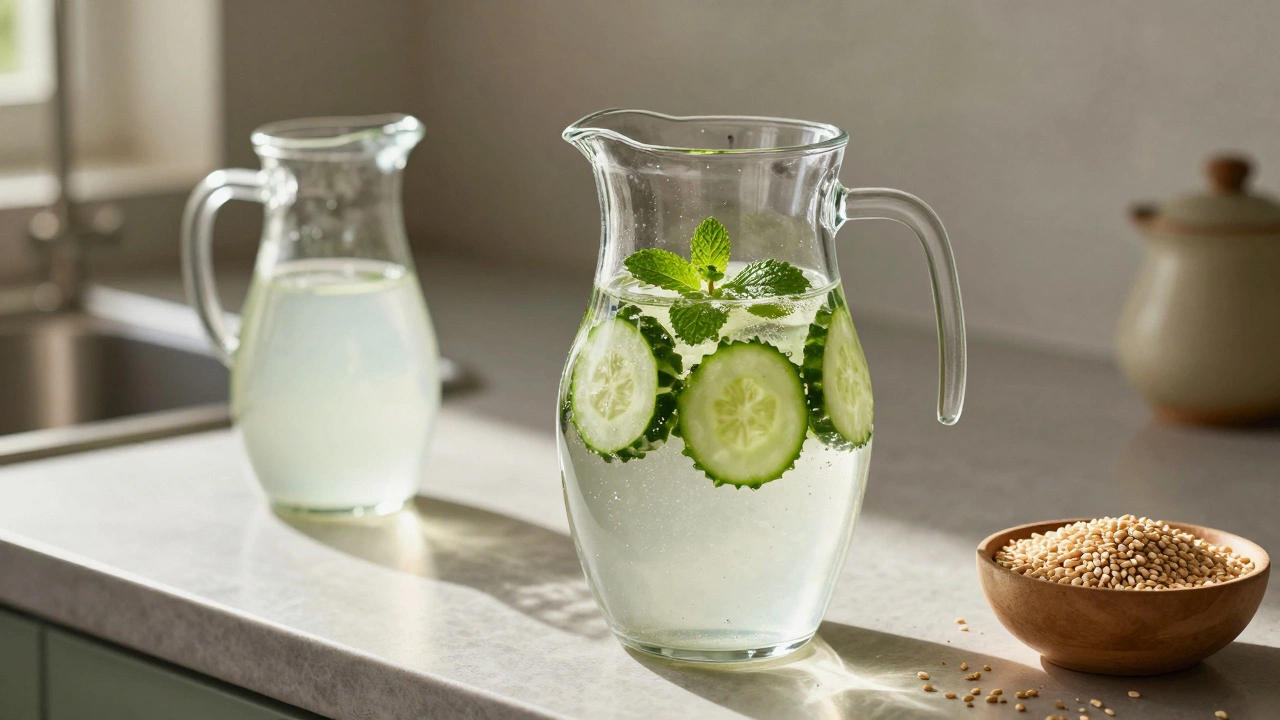
Thinly slice one cucumber (peel optional) and add a handful of fresh mint leaves to a pitcher of water. Let it sit overnight in the fridge. Drink throughout the next day.
Cucumbers are 96% water and packed with silica, which helps repair connective tissues - including those in the kidneys. Mint contains rosmarinic acid, a compound shown in lab studies to reduce oxidative stress in kidney cells.
This drink is perfect for hot days. It cools your body, reduces bloating, and encourages hydration without added sugar. No need to boil or strain. Just prep it once and sip all day.

Coriander seed water - a hidden gem
Coriander seeds (dhania) are common in Indian kitchens, but few use them for kidney support.
Boil 1 tablespoon of coriander seeds in 2 cups of water for 10 minutes. Let it cool. Strain. Drink on an empty stomach in the morning.
Coriander has been studied in animal models for its ability to lower serum creatinine - a key marker of kidney function. High creatinine means your kidneys aren’t filtering waste well. In one 2021 study published in Phytotherapy Research, coriander seed extract reduced creatinine levels by nearly 22% in rats with induced kidney damage.
It also lowers uric acid, which helps prevent gout and kidney stones. And because it’s naturally alkaline, it helps balance the acidity caused by processed foods and meat-heavy diets.
Green tea - in moderation
Green tea is full of antioxidants, especially EGCG. But it’s also a source of oxalates - compounds that can form kidney stones in sensitive people.
So here’s the rule: Limit it to one cup a day. Use loose-leaf, not tea bags. Brew for only 2 minutes. Don’t add sugar or honey.
Studies show that moderate green tea consumption (1 cup daily) can reduce inflammation and lower blood pressure - both good for kidneys. But more than that? Risk goes up. Oxalate overload can trigger stones in people with a history of them.
If you’ve had kidney stones before, skip it. If you’re healthy and drink it in small amounts, it’s fine.
What to avoid - the hidden kidney killers
Drinks aren’t just about what you add. It’s also about what you remove.
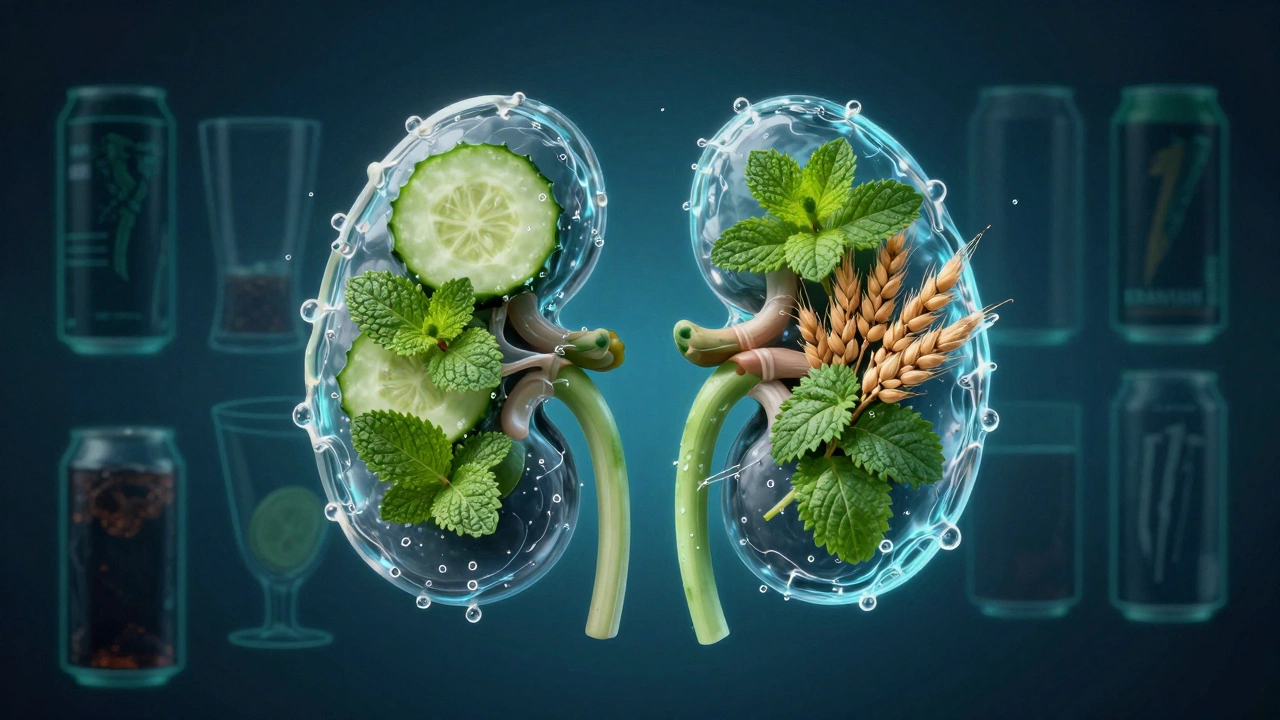
- Soda and sugary drinks: One 12-ounce can of soda has 39 grams of sugar - that’s 10 teaspoons. Sugar spikes insulin, which raises blood pressure and stresses the kidneys. A 2023 study in The American Journal of Kidney Diseases linked daily soda intake to a 61% higher risk of kidney function decline.
- Energy drinks: High in caffeine, sugar, and artificial additives. They cause sudden spikes in blood pressure and can damage kidney blood vessels over time.
- Alcohol: Even moderate drinking increases dehydration and forces kidneys to work harder to filter toxins. Long-term use can lead to chronic damage.
- Over-the-counter herbal teas with licorice root: Licorice raises blood pressure and can cause potassium loss. It’s in many "detox" teas. Check labels.
How long does it take to see results?
Don’t expect overnight changes. Kidneys don’t work like a light switch.
If you’re just starting to support your kidneys with better drinks, give it 4 to 6 weeks. Track these signs:
- Less swelling in ankles or face in the morning
- Clearer, lighter-colored urine
- Less frequent nighttime bathroom trips
- More energy during the day
These are subtle, but meaningful. They mean your kidneys are working more efficiently. If you have a diagnosed condition like high blood pressure or diabetes, pair these drinks with your doctor’s plan - don’t replace it.
Who should avoid these drinks?
Most of these are safe for healthy people. But if you have:
- Advanced kidney disease (stage 3 or worse)
- Low potassium levels
- Are on dialysis
- Take diuretics or blood pressure meds
Then talk to your doctor first. Some herbs and natural diuretics can interfere with medications. Barley water and coriander seed water, for example, may increase the effect of blood pressure drugs. Too much could drop your pressure too low.
Always get a blood test before making big changes. Check your serum creatinine, eGFR, and electrolytes. That’s the only way to know if your kidneys are improving.
Final thought: It’s about rhythm, not remedies
Kidney health isn’t about finding the "best" drink. It’s about building a daily rhythm that supports your body’s natural systems.
Start with water. Add one herbal drink - barley, cucumber-mint, or coriander - once a day. Cut out soda and energy drinks. Sleep well. Manage stress. Move your body.
These aren’t fixes. They’re foundations. And over time, they do more than any supplement ever could.
Can drinking more water reverse kidney damage?
Drinking more water won’t reverse advanced kidney damage, but it can prevent further decline. Water helps flush out toxins and reduces the risk of kidney stones and urinary tract infections. For early-stage kidney stress, staying well-hydrated gives your kidneys a better chance to recover function naturally.
Is lemon water good for kidneys?
Yes, lemon water can help. Lemons are high in citrate, which binds to calcium in urine and stops stones from forming. A daily glass of lemon water (half a lemon in 8 oz of water) is safe and effective for most people. Avoid if you have acid reflux or sensitive teeth.
Can herbal drinks replace kidney medication?
No. Herbal drinks support kidney function but cannot replace prescribed medications for conditions like high blood pressure, diabetes, or chronic kidney disease. Always consult your doctor before stopping or changing any medication, even if you feel better.
Which is better for kidneys - barley water or coriander water?
Both are beneficial, but they work differently. Barley water is better for general hydration and reducing inflammation. Coriander water is stronger for lowering creatinine and uric acid. You can alternate them - barley in the morning, coriander in the evening - for broader support.
Are there any side effects from drinking herbal kidney drinks?
Generally, no - if used in normal amounts. But too much coriander or barley water can cause low blood pressure or diarrhea in sensitive people. Avoid licorice root teas. Always stop if you feel dizzy, nauseous, or notice changes in urine output. Consult a doctor if symptoms persist.
Next steps to protect your kidneys
Start today: Fill a water bottle with 1 liter. Add cucumber and mint. Keep it in your fridge. Drink it by noon.
Tomorrow, make a batch of barley water. Sip it while you work. Skip the soda at lunch.
Week 2: Get a basic blood test - creatinine, eGFR, sodium, potassium. Compare it in 6 weeks. You’ll see the difference.
Kidneys don’t shout when they’re in trouble. They whisper. Listen early. Support them daily. And don’t wait until you feel sick to act.