Calorie Calculator for 55-Year-Old Women
How Many Calories Should You Eat?
This calculator helps you determine your safe daily calorie range for weight loss based on your activity level.
At 55, your body isn’t the same as it was at 25. Hormones have shifted, metabolism has slowed, and even small changes in eating habits can lead to weight gain-especially around the belly. If you’re trying to lose weight, the question isn’t just how many calories you should eat-it’s what kind of calories, when to eat them, and how your body is responding now. The answer isn’t a one-size-fits-all number, but there’s a clear range based on science, real-world data, and what works for women your age.
Why Calorie Needs Change After 50
Your metabolism naturally slows down by about 1-2% per decade after age 20. By 55, that adds up. Muscle mass decreases, even if you’re active, and fat mass increases. This isn’t about laziness-it’s biology. Hormonal changes during and after menopause also play a big role. Lower estrogen levels shift fat storage to the abdomen, making it harder to lose weight even if you’re eating the same amount you did in your 30s.
Studies from the National Institutes of Health show that women over 50 typically burn 200-300 fewer calories per day than they did at 30, even with the same activity level. That means if you kept eating like you did in your 20s, you’d gain about 1-2 pounds per year without doing anything different.
How Many Calories Should You Actually Eat?
For a 55-year-old woman who is lightly active (walking 30 minutes most days, doing light housework), the sweet spot for weight loss is between 1,400 and 1,600 calories per day. This isn’t a starvation diet-it’s a sustainable, nutrient-dense approach.
If you’re more active-like walking 60 minutes daily, doing yoga, or lifting weights-you might be able to eat up to 1,800 calories and still lose weight. But if you’re mostly sedentary (sitting most of the day, little movement), you’ll need to stick closer to 1,300-1,500 calories to see results.
Here’s what the numbers look like based on activity level:
| Activity Level | Calories to Maintain Weight | Calories to Lose Weight (Safe Range) |
|---|---|---|
| Sedentary (little to no exercise) | 1,600-1,800 | 1,300-1,500 |
| Lightly active (walking 30 min/day, light chores) | 1,800-2,000 | 1,400-1,600 |
| Moderately active (daily walking, light strength training) | 2,000-2,200 | 1,600-1,800 |
These numbers aren’t guesses. They’re based on data from the USDA’s Dietary Guidelines and real-world studies tracking women over 50 who lost weight successfully. The key is to never drop below 1,200 calories. Going lower risks losing muscle, slowing metabolism further, and missing out on vital nutrients.
It’s Not Just About Calories
Two women eating 1,500 calories a day can have totally different results. One loses weight. The other doesn’t. Why? Because what you eat matters more than just the number.
Focus on these three things:
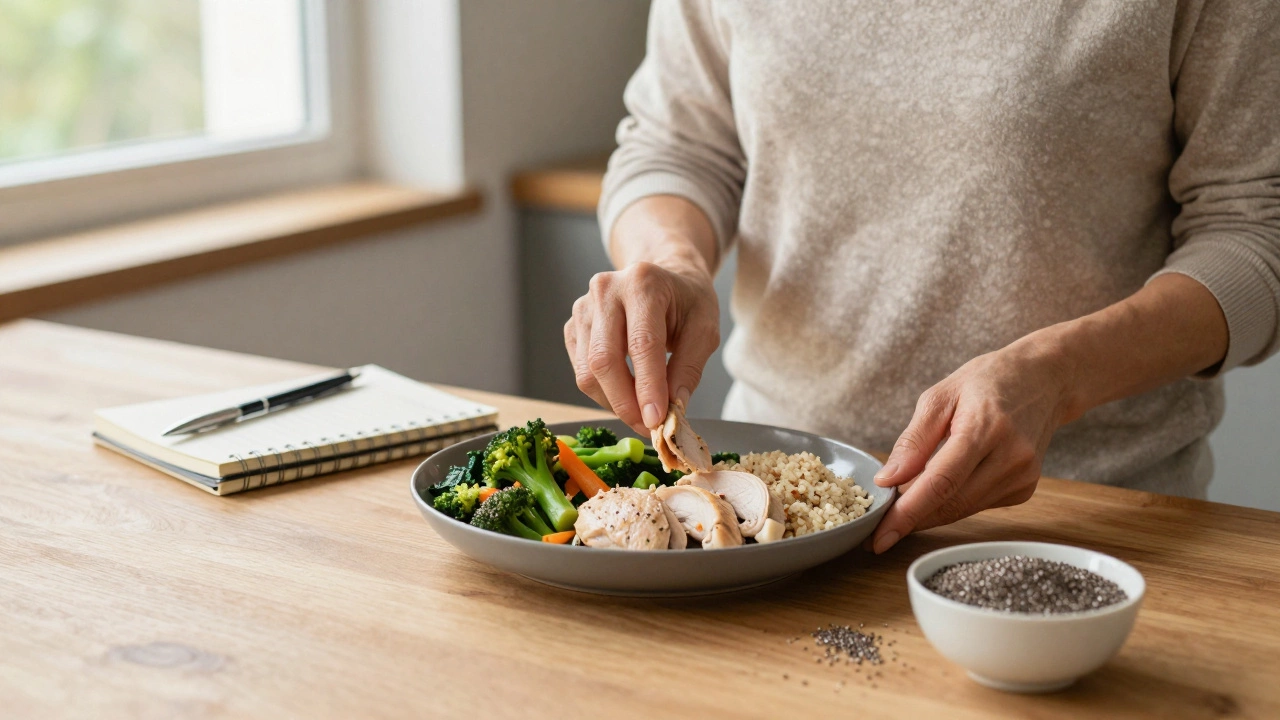
- Protein - Aim for 1.2 to 1.6 grams per kilogram of body weight. That’s about 75-100 grams daily. Protein keeps you full, preserves muscle, and helps your metabolism stay active. Eggs, tofu, lentils, Greek yogurt, chicken, and fish are great sources.
- Fiber - Women over 50 need at least 25 grams of fiber daily. It stabilizes blood sugar, reduces cravings, and supports gut health. Vegetables, beans, oats, chia seeds, and apples are easy ways to hit that target.
- Healthy fats - Don’t fear fats. Omega-3s from fatty fish, walnuts, and flaxseeds reduce inflammation linked to weight gain. Avoid trans fats and too much added sugar-they spike insulin and make fat storage worse.
One study from the Journal of the American College of Nutrition found that women over 50 who ate higher-protein, higher-fiber diets lost 30% more belly fat over six months than those on low-fat, high-carb diets-even when both groups ate the same number of calories.
What to Avoid
Some foods that seemed harmless in your 30s become weight-loss roadblocks after 50:
- Added sugars - Even in "healthy" snacks like flavored yogurt, granola bars, and fruit juices. Sugar turns to fat quickly when insulin sensitivity drops.
- Refined carbs - White bread, pasta, rice, and pastries spike blood sugar and lead to cravings. Swap them for whole grains like quinoa, barley, or brown rice.
- Alcohol - It’s empty calories that your body prioritizes burning over fat. One glass of wine a night can add 120 calories-and lower your fat-burning efficiency.
- Large meals late at night - Your metabolism slows down after dark. Eating big meals after 7 p.m. means more calories get stored as fat.
How to Know If You’re Eating Right
Don’t just guess. Track for two weeks. Use a free app like MyFitnessPal or Cronometer. Log everything you eat and drink. You’ll be surprised what you’re missing-like that afternoon cookie, the extra splash of cream in coffee, or the handful of chips while watching TV.
After two weeks, look at your average daily intake. If you’re eating 1,800 and not losing weight, drop to 1,500. If you’re eating 1,300 and feeling tired or dizzy, bump up to 1,500. Your body will tell you what it needs.
Also, pay attention to how you feel. Are you sleeping well? Do you have energy? Are you hungry all the time? Weight loss shouldn’t leave you exhausted. If it does, you’re cutting too much.
Exercise: The Missing Piece
Calories in, calories out is true-but exercise isn’t just about burning calories. At 55, movement is about preserving muscle. Muscle burns more calories at rest than fat. That’s why strength training is non-negotiable.
Do this:
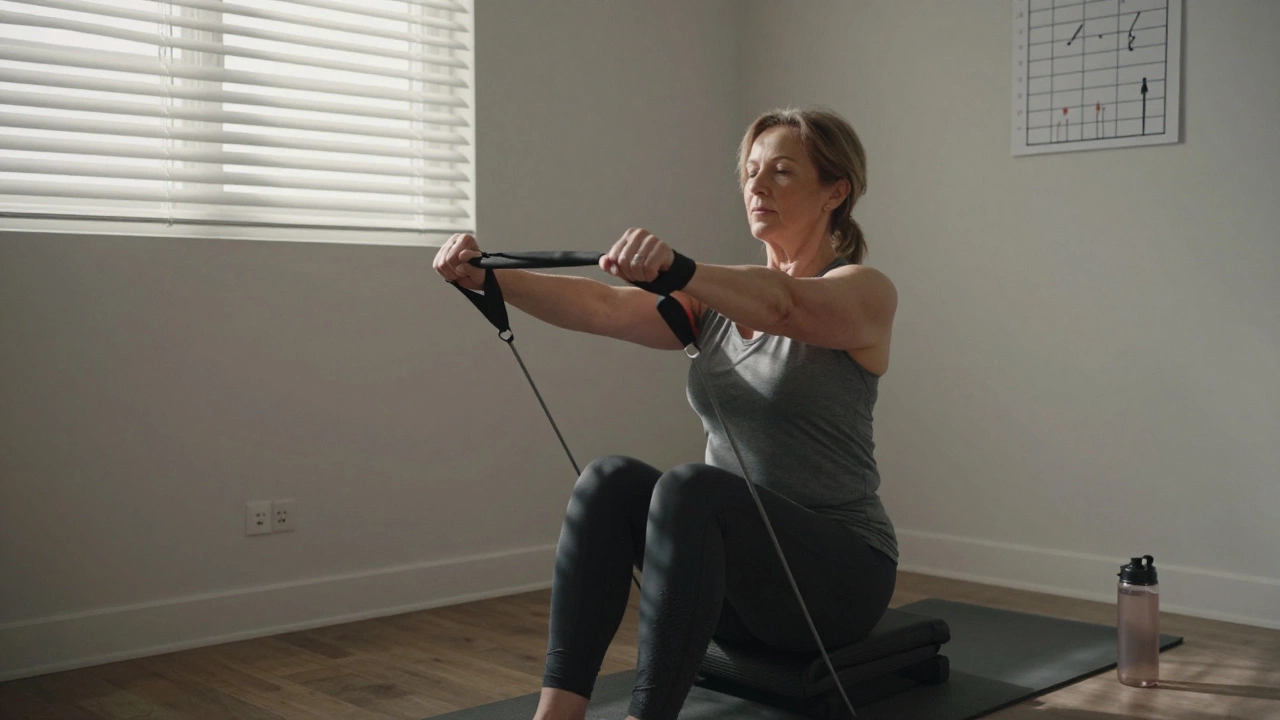
- Two days a week: Bodyweight exercises-squats, lunges, push-ups (even wall push-ups), seated rows with resistance bands.
- Three days a week: Walking, swimming, or cycling. Aim for 30-45 minutes at a pace where you can talk but not sing.
- Every day: Stretching or yoga. It improves mobility and reduces joint pain, which keeps you moving.
One 2024 study from the University of Texas found that women over 55 who did just two 20-minute strength sessions per week lost 2.5 times more fat than those who only walked. Strength training doesn’t have to be intense. Consistency matters more than heavy weights.

Common Mistakes
Here’s what most women over 50 get wrong:
- Thinking they need to eat less than 1,200 calories - This triggers starvation mode. Your body holds onto fat and breaks down muscle.
- Skipping meals to "save" calories - That leads to overeating later. Eat three balanced meals with one small snack if needed.
- Blaming hormones - Yes, they change. But they don’t make weight loss impossible. You still control your food choices.
- Waiting for the scale to move fast - Weight loss after 50 is slower. Aim for 0.5 to 1 pound per week. That’s healthy and sustainable.
Realistic Expectations
At 55, losing 10 pounds in a month isn’t realistic-or safe. A 5% body weight loss over six months (like going from 170 to 162 pounds) is a huge win. It lowers blood pressure, improves insulin sensitivity, reduces joint pain, and boosts energy.
One woman in Bangalore, 57, lost 18 pounds in 8 months by eating 1,500 calories a day, walking 45 minutes daily, and adding protein to every meal. She didn’t do keto. She didn’t buy expensive supplements. She just ate real food, moved more, and stopped counting carbs.
When to See a Doctor
If you’re eating 1,400-1,600 calories, exercising regularly, and still not losing weight after 8-10 weeks, talk to your doctor. Thyroid issues, insulin resistance, or sleep apnea can make weight loss harder. A simple blood test can rule out these issues.
Also, if you’re losing weight without trying-like dropping 5 pounds in a month without changing your diet-that’s a red flag. Get checked.
Can a 55-year-old woman lose weight without exercising?
Yes, but it’s much harder and slower. Diet alone can lead to weight loss, but without movement, you’ll lose muscle along with fat. That slows your metabolism even more. Combining food changes with light activity-like walking or stretching-makes the difference between losing weight and losing health.
Is a 1,200-calorie diet safe for a 55-year-old woman?
Only under medical supervision. A 1,200-calorie diet may be too low for most women over 50 and can lead to nutrient deficiencies, fatigue, muscle loss, and hormonal imbalance. It’s better to eat 1,400-1,600 calories with high-quality foods than to cut too much and risk your long-term health.
Why am I not losing weight even though I eat less than before?
Your body has adapted. After years of eating the same way, your metabolism has slowed. You may be eating less than you did in your 30s, but not enough to create a deficit now. Track your intake for a week. You might be underestimating snacks, drinks, or oils used in cooking. Also, stress and poor sleep can block weight loss-even with a good diet.
Do I need to count calories forever?
No. Counting for 2-4 weeks helps you learn portion sizes and identify hidden calories. After that, you can switch to mindful eating: filling half your plate with vegetables, choosing lean protein, and avoiding processed snacks. It’s about building habits, not tracking forever.
Can supplements help me lose weight after 50?
Most weight loss supplements don’t work-and some can be harmful. Protein powder can help if you struggle to get enough protein from food. Vitamin D and calcium are important for bone health, especially after menopause. But no pill replaces a balanced diet and movement. Skip the trendy powders and focus on whole foods.
If you’re serious about losing weight after 55, start with one change: add protein to every meal. Then walk 30 minutes every day. Track your food for two weeks. You don’t need a gym membership, a diet coach, or a miracle pill. You just need to eat smarter, move more, and be patient. Your body will thank you.