Safe Weight Loss Calculator
How much weight can you lose safely in one month? This calculator shows realistic goals based on CDC/WHO guidelines and the risks of rapid weight loss.
Enter Your Details
Your Safe Weight Loss Rate
85% SafeSafe loss: 0.5-1.0 lbs/week
Your Expected Loss:
7.2 lbs
Risk Level:
⚠️ High risk if you aim for 20+ lbs loss
Studies show rapid loss increases rebound risk by 70% and causes muscle loss.
Weight loss clinics help achieve 8-15 lbs safely with medical supervision.
Example: A clinic patient in Bangalore lost 18 lbs in 30 days with blood tests, personalized meal plans, and medication under supervision.
Trying to lose 20 pounds in a month sounds like a dream from a late-night infomercial. But here’s the truth: it’s not just hard-it’s risky if you try to do it alone without medical guidance. Most people who attempt this kind of rapid weight loss end up losing muscle, water, and sometimes even their health. The good news? Weight loss clinics in cities like Bangalore are helping people drop serious weight safely-by combining science, nutrition, and accountability. This isn’t about starving yourself or buying miracle pills. It’s about understanding how your body actually works.
Why 20 Pounds in a Month Is a Red Flag
The CDC and WHO agree: losing more than 1-2 pounds per week is not sustainable and often unhealthy. That means 4-8 pounds a month is the safe range. So why do so many people chase 20 pounds in 30 days? Because they see it on social media. Influencers show before-and-after photos taken over months, then claim it happened in 30 days. The truth? They were fasting, using diuretics, or had surgery. You don’t see the recovery time, the muscle loss, or the rebound weight gain.
When you lose weight too fast, your body goes into survival mode. Your metabolism slows down. You lose lean muscle instead of fat. Hormones like ghrelin spike, making you hungrier than ever. Studies from the American Journal of Clinical Nutrition show that people who lose weight rapidly are 70% more likely to regain it within a year.
That’s why weight loss clinics don’t promise 20 pounds in a month. They promise results that last. And yes-some patients do lose close to 20 pounds in 30 days. But only under medical supervision, with lab testing, and with a plan that protects their health.
How Weight Loss Clinics Actually Help
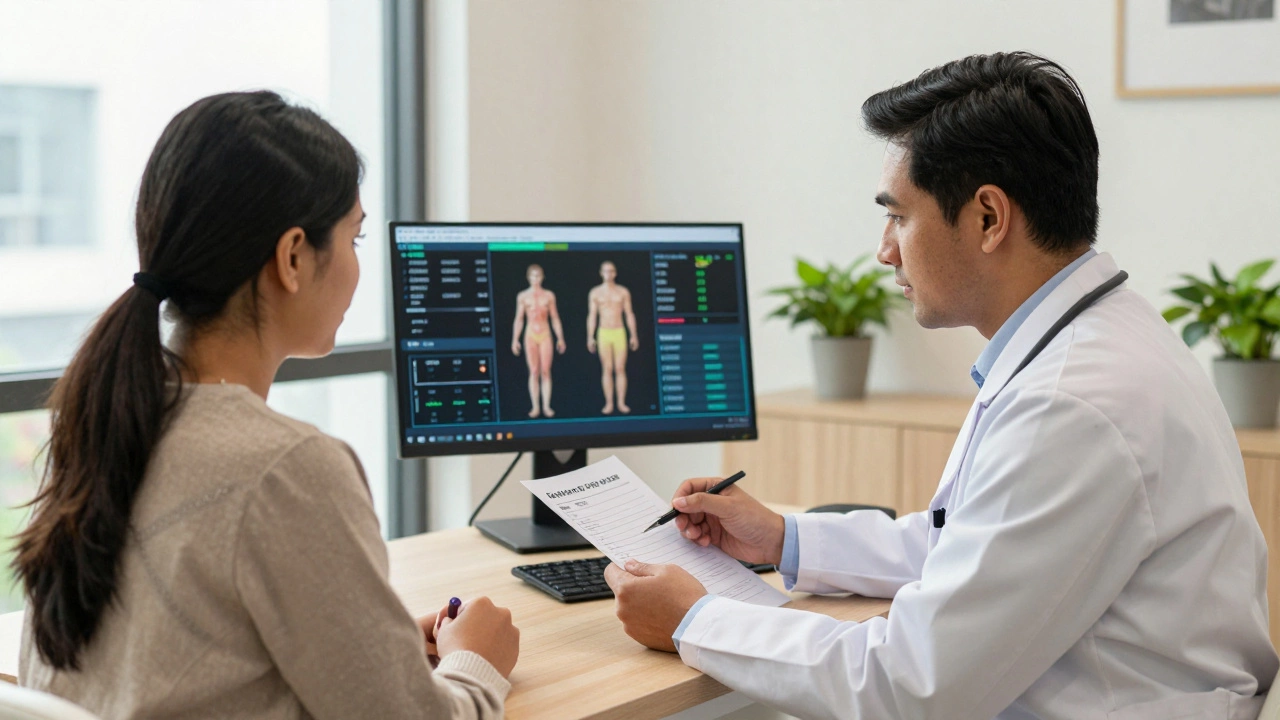
Weight loss clinics aren’t gyms with personal trainers. They’re medical facilities staffed by doctors, dietitians, and behavioral counselors. In Bangalore, clinics like those at Manipal Hospitals, Apollo, and private endocrinology centers offer structured programs that start with a full health assessment.
Here’s what happens in a real clinic:
- You get blood tests: thyroid, insulin resistance, vitamin D, cortisol levels. Many people struggle to lose weight because of hidden hormonal issues.
- Your body composition is measured: not just your weight, but your fat percentage, muscle mass, and visceral fat.
- A personalized meal plan is created: based on your food preferences, cultural habits, and medical history. No one-size-fits-all diets.
- Medication may be prescribed: if you have obesity-related conditions like PCOS or type 2 diabetes, FDA-approved weight loss drugs like semaglutide or liraglutide may be used under supervision.
- You get weekly check-ins: not just to weigh you, but to adjust your plan, manage side effects, and keep you motivated.
One patient from Indiranagar, a 42-year-old woman with insulin resistance, lost 18 pounds in 30 days-not by cutting carbs to zero, but by stabilizing her blood sugar with timed meals, a GLP-1 agonist, and 30 minutes of daily walking. She didn’t feel hungry. She didn’t quit. And she kept the weight off for 14 months.
What You Can Do Right Now (Without a Clinic)
If you can’t access a clinic yet, here’s what works based on real clinical data:
- Track your calories-but don’t obsess. Use a free app like MyFitnessPal for 7 days. You’ll be shocked how many calories are in samosas, ghee-laden curries, and even fruit juices. Most people underestimate intake by 30-50%.
- Stop drinking sugar. One 500ml bottle of packaged mango juice has 60 grams of sugar. That’s 240 calories. If you cut out just one sugary drink a day, you’ll lose 1-2 pounds a week without changing anything else.
- Eat protein first. Start every meal with eggs, dal, chicken, paneer, or tofu. Protein keeps you full longer and protects muscle mass during weight loss. Aim for 25-30 grams per meal.
- Walk after dinner. A 20-minute walk after your evening meal lowers blood sugar spikes. This reduces fat storage and improves insulin sensitivity. Do it barefoot on grass if you can-it’s calming and free.
- Sleep 7+ hours. People who sleep less than 6 hours burn 50% less fat during weight loss, according to a 2024 study in the journal Obesity. Your body repairs itself while you sleep. Skip it, and your metabolism breaks down.
These five steps won’t get you to 20 pounds in a month-but they’ll get you to 8-10 pounds in a healthy, lasting way. And that’s far more valuable.
The Dangerous Myths About Rapid Weight Loss
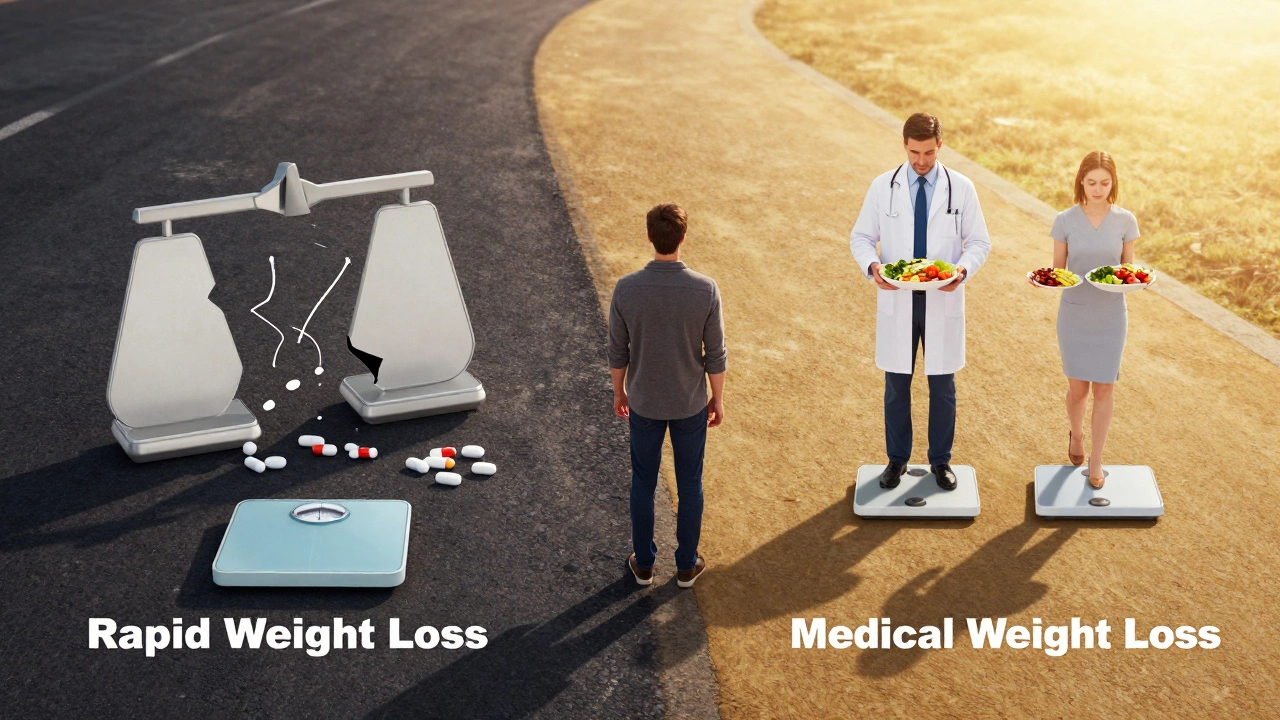
Let’s bust the biggest lies you’ll hear:
- Myth: Fasting for 24 hours burns fat fast. Reality: Prolonged fasting triggers muscle loss and slows metabolism. It also leads to binge eating later.
- Myth: Detox teas and laxatives help you lose weight. Reality: They only flush out water and electrolytes. You’ll feel weak, dizzy, and gain it all back in days.
- Myth: Keto or Atkins diets are the only way. Reality: Any diet that cuts out entire food groups fails long-term. In India, where rice, lentils, and vegetables are staples, extreme low-carb diets are unsustainable and unhealthy.
- Myth: You need to work out 2 hours a day. Reality: Exercise helps, but diet drives 80% of weight loss. You can’t out-exercise a bad diet.
Weight loss clinics don’t sell quick fixes. They sell science. They look at your history, your lifestyle, your stress levels, and your sleep. They treat the cause-not the symptom.
When to See a Weight Loss Clinic
You should consider a clinic if:
- You’ve lost weight before but gained it all back-twice or more.
- You have high blood pressure, prediabetes, or sleep apnea.
- You’re struggling with constant hunger, cravings, or fatigue.
- You’ve tried diets, apps, and gyms-and nothing sticks.
- You’re over 30 pounds overweight and want to avoid surgery.
These aren’t signs of laziness. They’re signs your body needs medical support. Just like you’d see a cardiologist for high cholesterol, you should see a weight loss specialist for obesity-related health risks.
In Bangalore, many clinics offer free initial consultations. Bring your recent blood reports. Ask about hormone testing. Ask if they use FDA-approved medications. Ask how they track long-term success.

What to Expect After 30 Days
If you follow a real clinic’s plan, here’s what you’ll likely see:
- 8-15 pounds lost (not 20, unless you’re very overweight to begin with).
- Lower waist circumference-sometimes 3-5 inches down.
- Improved energy, better sleep, clearer skin.
- Reduced joint pain and less bloating.
- Lab results showing better insulin, cholesterol, and liver enzymes.
That’s not just weight loss. That’s improved health. And it’s the kind of change that lasts.
What Happens After You Reach Your Goal
The biggest mistake people make? Stopping when they hit their target. Weight loss clinics don’t end at 20 pounds. They shift into maintenance mode.
You’ll move from daily tracking to weekly check-ins. You’ll learn how to handle parties, festivals, and travel without derailing progress. You’ll get tools to manage stress eating and emotional triggers.
One patient from JP Nagar lost 22 pounds in 6 weeks and kept it off for 2 years-not because she was perfect, but because her clinic gave her a maintenance plan: 3 days a week of walking, protein at every meal, and monthly hormone checks. She still eats idli and dosa. She just doesn’t drown them in coconut chutney anymore.
Final Reality Check
Losing 20 pounds in a month isn’t impossible. But it’s dangerous without medical oversight. And even if you do it, you’ll likely lose muscle, slow your metabolism, and set yourself up for rebound weight gain.
What you really want isn’t a number on the scale. You want to feel stronger, healthier, and in control of your body. That doesn’t happen in 30 days. It happens with consistent, smart, supported changes.
If you’re serious about lasting results, skip the fads. Talk to a weight loss clinic. Get tested. Get real. Your body will thank you-not just in a month, but in five years.
Can I lose 20 pounds in a month safely without a clinic?
It’s possible for people who are significantly overweight (over 300 lbs) to lose 20 pounds in a month with extreme calorie restriction-but it’s not safe or sustainable. Most people lose muscle, water, and nutrients. Without medical supervision, you risk electrolyte imbalances, gallstones, heart rhythm issues, and rebound weight gain. A clinic reduces these risks by monitoring your health daily.
Are weight loss clinics in Bangalore expensive?
Costs vary. Public hospital programs may cost ₹2,000-₹5,000 per month. Private clinics range from ₹10,000 to ₹25,000, depending on medication use and frequency of visits. Many include blood tests, diet plans, and follow-ups. Compared to the cost of treating diabetes or heart disease later, it’s a smart investment. Some clinics offer payment plans or insurance coverage.
Do weight loss clinics use pills or injections?
Some do, but only if medically necessary. Medications like semaglutide (Wegovy) or liraglutide (Saxenda) are FDA-approved and prescribed for people with obesity or type 2 diabetes. They’re not magic pills-they work by reducing appetite and slowing digestion. They’re used alongside diet and movement, not instead of them. You won’t be given unregulated supplements or stimulants.
How long does it take to see results from a weight loss clinic?
Most people notice changes in energy and hunger within 7-10 days. Visible weight loss usually starts around week 2. By week 4, you’ll see measurable drops in waist size and body fat. The key is consistency-not speed. Clinics focus on long-term results, not just the scale.
What if I don’t live in Bangalore? Can I still access these clinics?
Many clinics now offer telehealth consultations. You can get blood tests done locally and send results. Diet plans and medication prescriptions can be managed remotely. Follow-ups happen via video calls. While in-person visits are ideal for initial assessments, remote programs are effective for ongoing support.
Weight loss isn’t about speed. It’s about sustainability. The goal isn’t to disappear in a month-it’s to live better for the next 30 years.