IVF Genetic Parentage Calculator
Your Genetic Connection Calculator
See how much DNA you share with your IVF baby based on egg and sperm sources used.
Your Genetic Connection
When you hear the word IVF, you might picture a lab, needles, and a long wait. But the biggest question many people carry in silence is this: Is the baby really mine? Not emotionally - that’s never in doubt. But genetically? Biologically? Does the child share your DNA?
The answer isn’t yes or no. It’s complicated. And it depends on which parts of you were used to make that baby.
What Happens in IVF? The Basic Steps
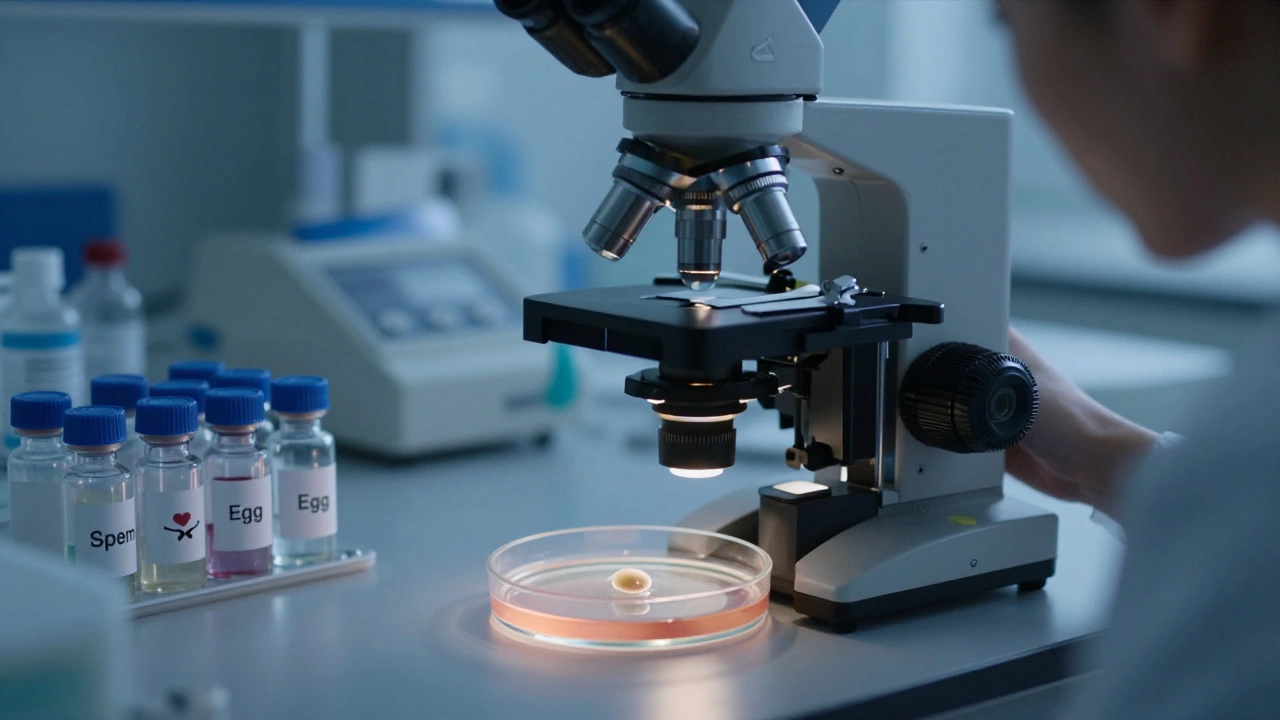
IVF - in vitro fertilization - means fertilizing an egg outside the body. Here’s how it usually works:
- Eggs are pulled from the ovaries, often after hormone shots.
- Sperm is collected - from a partner or donor.
- The egg and sperm are mixed in a lab dish.
- After a few days, one or two embryos are placed into the uterus.
That’s the textbook version. But real life? It’s messier. And that’s where the genetics get interesting.
Genetically Yours? It Depends on the Egg
If you’re the woman carrying the baby, and you used your own egg, then yes - the baby has your DNA. Half of it, anyway. The other half comes from the sperm provider.
But what if you couldn’t use your own egg? Maybe your ovaries don’t respond to hormones. Maybe you had early menopause. Maybe you’re a single man or a same-sex male couple.
In those cases, a donor egg is used. That egg has someone else’s DNA. The baby will look like the egg donor and the sperm provider - not you. If you’re the gestational carrier, you’re still the birth mother. But biologically? You’re not the genetic mother.
There’s no shame in this. Thousands of parents choose donor eggs every year. The love is real. The bond is real. But the DNA? It’s borrowed.
What About the Sperm?
The same logic applies to sperm. If your partner’s sperm is used, the baby carries his genes. If a donor sperm is used - maybe because of low count, poor quality, or no male partner - then the baby’s paternal DNA comes from someone else.
Some men feel a deep sense of loss when they learn their sperm can’t be used. Others feel relief. It’s personal. But here’s what matters: you’re still the father. Legally. Emotionally. Socially. The DNA doesn’t define parenthood - the choice to raise the child does.
Surrogacy and Genetic Links
Surrogacy adds another layer. In traditional surrogacy, the surrogate’s own egg is fertilized. That means she’s the biological mother. In gestational surrogacy - which is far more common today - the embryo is made from the intended parents’ egg and sperm (or donors), then placed in the surrogate’s uterus.
In gestational surrogacy, the surrogate has no genetic link to the baby. She carries the child, but doesn’t contribute DNA. The baby’s genes come from the egg and sperm providers - whoever they are.
Many couples in India choose surrogacy because of medical issues or age. The law here allows it for married couples. But the emotional weight? That’s something no law can predict.
What If You Use Donor Eggs AND Donor Sperm?
This happens more than you think. Single women, same-sex couples, or people with both egg and sperm issues often use double donor IVF.
In this case, the baby has no genetic link to either intended parent. The child is conceived from two strangers’ cells. That can be hard to process. Some parents worry: Will the child feel like ours?
Studies show children raised by parents who used donor gametes feel just as loved and secure as those conceived naturally - as long as the parents are open, honest, and emotionally present. Hiding the truth often causes more pain than telling it.
Can You Change the Genetics? No - But You Can Change the Story
Some people think, If I carry the baby, doesn’t that change the DNA? No. Your body nurtures the embryo. It gives it oxygen, nutrients, hormones. But it doesn’t rewrite its genes.
Think of it like a house. You didn’t build the house, but you painted the walls, fixed the roof, raised the kids inside. You’re still the parent.
Epigenetics - how your environment affects gene expression - does play a role. Your diet, stress levels, and health during pregnancy can influence how the baby’s genes turn on or off. So while you didn’t give the DNA, you shaped how it was used.
Legal Rights and Parentage
In India, the law is clear: if you’re the intended parent using IVF with donor gametes, you are the legal parent. The donor has no rights. The surrogate (if used) has no rights, as long as the agreement is legal and registered.
But legal rights don’t always match emotional fears. Many parents worry: Will the child find out? Will they reject us?
Research from the UK and US shows most children conceived through donor IVF are open to the truth - especially if they hear it early, gently, and often. Waiting until adulthood to tell can feel like betrayal.
What Do Other Parents Do?
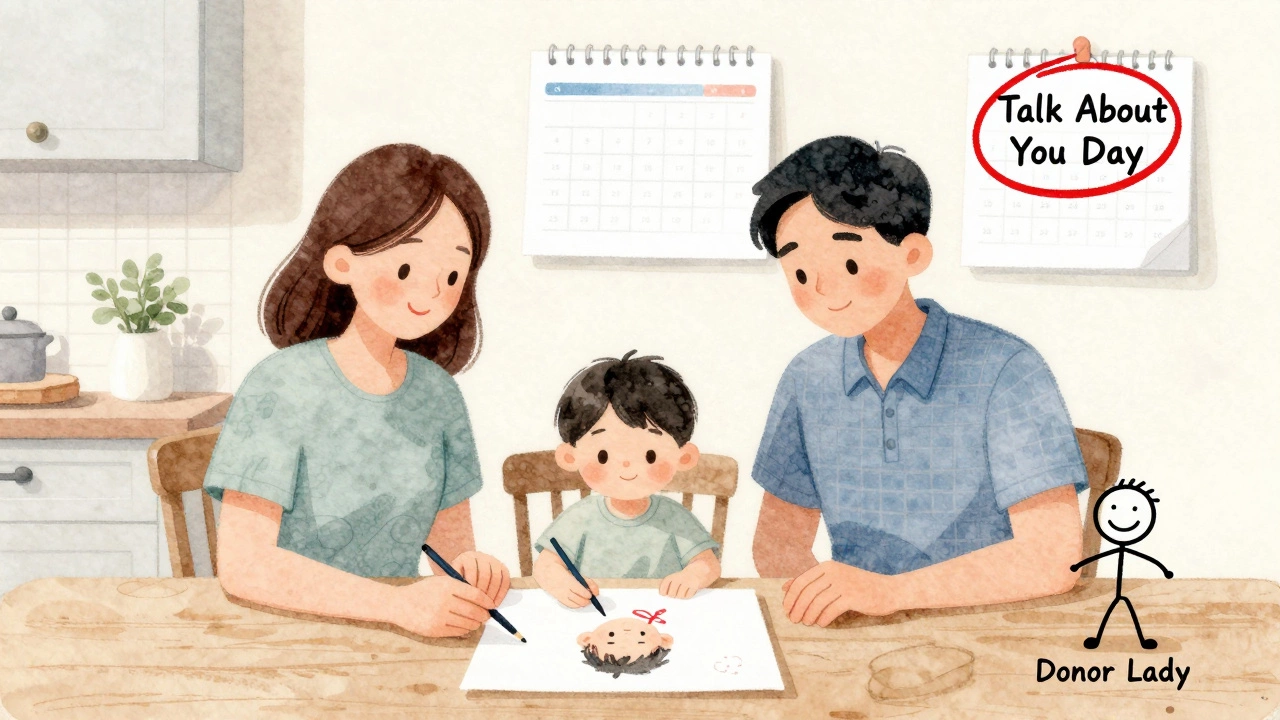
In Bangalore, I’ve met couples who keep donor IVF private. Others have framed the donor egg receipt as a keepsake. One mother told her daughter at age 4: You were made with help from a kind lady’s egg and your dad’s sperm. I carried you for nine months - that’s how I became your mom.
There’s no right way. But silence isn’t protection. It’s a burden.
Is an IVF Baby Really Yours?
Let’s cut through the noise.
If you used your own egg and your partner’s sperm - yes, genetically yours.
If you used a donor egg - no, not genetically. But you’re still the mother who carried the baby, fed it, held it, cried with it, celebrated with it.
If you used donor sperm - no, not genetically his father. But he’s the man who chose to be there, who changed diapers, who reads bedtime stories, who loves the child with his whole heart.
Genetics is a tiny part of parenting. Love, time, patience, sacrifice - those are the real DNA of family.
IVF doesn’t make you less of a parent. It makes you braver.
What About the Child’s Identity?
Some kids conceived through IVF with donors grow up wanting to know their biological origins. That’s normal. It doesn’t mean they love you less. It means they’re curious - like anyone who wonders where they come from.
Keep records. Save donor numbers. Talk openly. Don’t treat it like a secret. If you do, your child will learn to hide their questions - and their pain.
Many clinics in India now offer identity-release donors - meaning the child can contact the donor when they turn 18. It’s not common yet, but it’s growing.
Final Thought: You’re Not a Passenger. You’re the Driver.
IVF isn’t magic. It’s medicine. And medicine can give you a child. But only you can give that child a home.
The genetic code came from somewhere else. But the laughter, the bedtime hugs, the scraped-knee kisses - those came from you. And that’s the only DNA that matters in the end.