Ayurvedic Drinks: Natural Remedies for Balance and Wellness
When you hear Ayurvedic drinks, traditional herbal beverages rooted in India’s 5,000-year-old healing system that use spices, herbs, and warm liquids to restore bodily balance. Also known as rasayanas, these drinks aren’t just tea—they’re medicine designed for your unique body type. Unlike quick-fix smoothies or sugary tonics, Ayurvedic drinks work slowly, quietly, and deeply. They’re not meant to cure a cold overnight but to help your body return to its natural rhythm over time.
These drinks connect directly to your dosha, your body’s constitutional type in Ayurveda—vata, pitta, or kapha—that determines how you process food, handle stress, and respond to temperature. A vata person might sip warm ginger and jaggery water to calm nervous energy, while a pitta type reaches for cooling mint and fennel to reduce heat and irritation. Kapha individuals often drink turmeric and black pepper tea to kickstart sluggish digestion. The same drink can help one person and hurt another—that’s why Ayurveda never pushes one-size-fits-all solutions.
You’ll find these drinks in daily routines across India—not as trendy wellness fads, but as everyday habits. People start their morning with warm water and lemon to flush the system. They sip cumin-coriander-fennel tea after meals to aid digestion. At night, a cup of ashwagandha-infused milk helps quiet the mind. These aren’t rituals for yoga studios—they’re simple, practical, and built into life.
Modern science is catching up. Studies show turmeric in Ayurvedic drinks reduces inflammation. Ginger improves gut motility. Cinnamon helps stabilize blood sugar. But Ayurveda doesn’t just care about isolated compounds—it cares about how the whole blend works together, with warmth, timing, and intention. That’s why a simple drink like ginger-honey-lemon isn’t just about vitamin C—it’s about activating digestion, warming the body, and signaling the day has begun.
What you won’t find in these drinks are artificial sweeteners, preservatives, or caffeine. They’re made with things you can grow or buy at a local spice market: cardamom, cinnamon, tulsi, triphala, rock salt. They’re affordable, accessible, and safe for most people when used correctly. But they’re not magic. They require consistency. A single cup won’t fix your sleep or digestion. But a daily ritual? That changes everything.
There’s a reason these drinks survived for thousands of years. They don’t promise quick results. They don’t need a prescription. And they work whether you’re in Mumbai or Minneapolis. In the collection below, you’ll find real guides on which drinks suit your body type, how to make them without overcomplicating things, and what science says about their effects. No fluff. No hype. Just clear, practical ways to use Ayurvedic drinks to feel better—day after day.
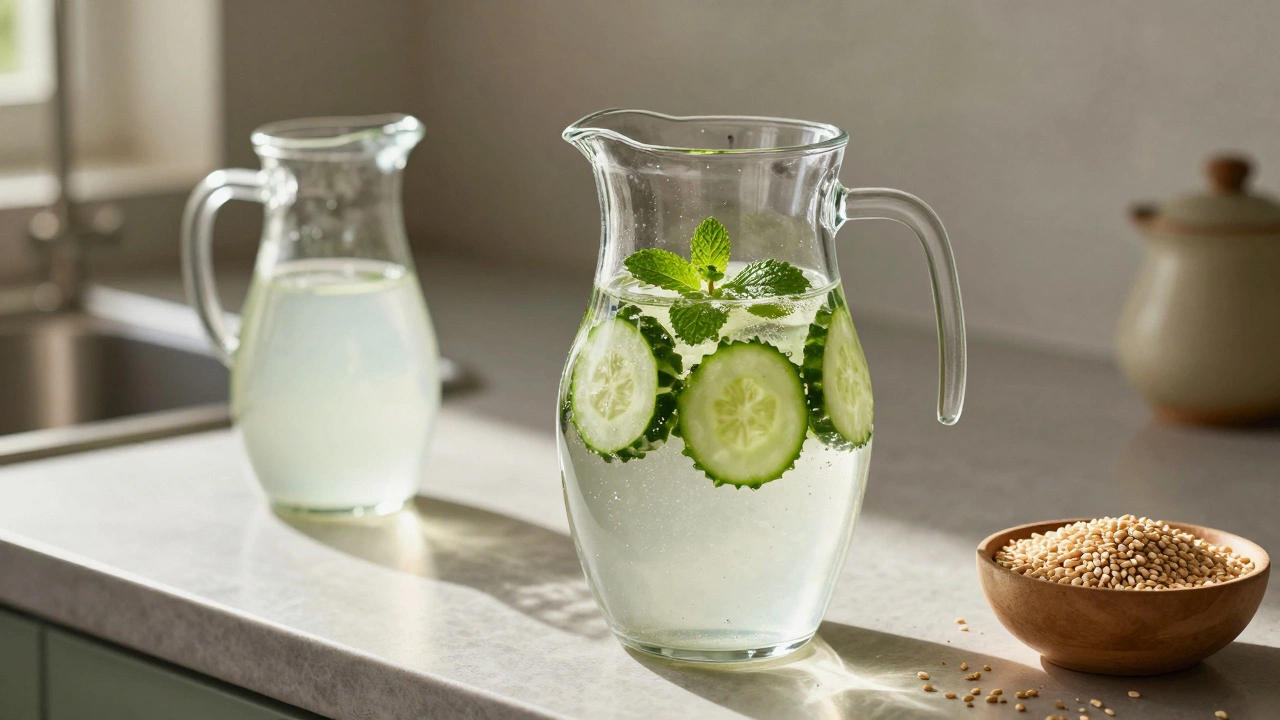
Best Drinks to Support Kidney Function Naturally
•1 Dec 2025
Discover the best natural drinks like barley water, coriander seed water, and cucumber-mint infusion to support kidney function. Learn what works, what to avoid, and how to build a daily habit for lasting kidney health.