Cardiac Arrest Survival Calculator
Based on medical guidelines from the article, this calculator estimates survival probability after cardiac arrest during surgery. Key factors include time to intervention, whether the arrest was planned or unexpected, and medical support available.
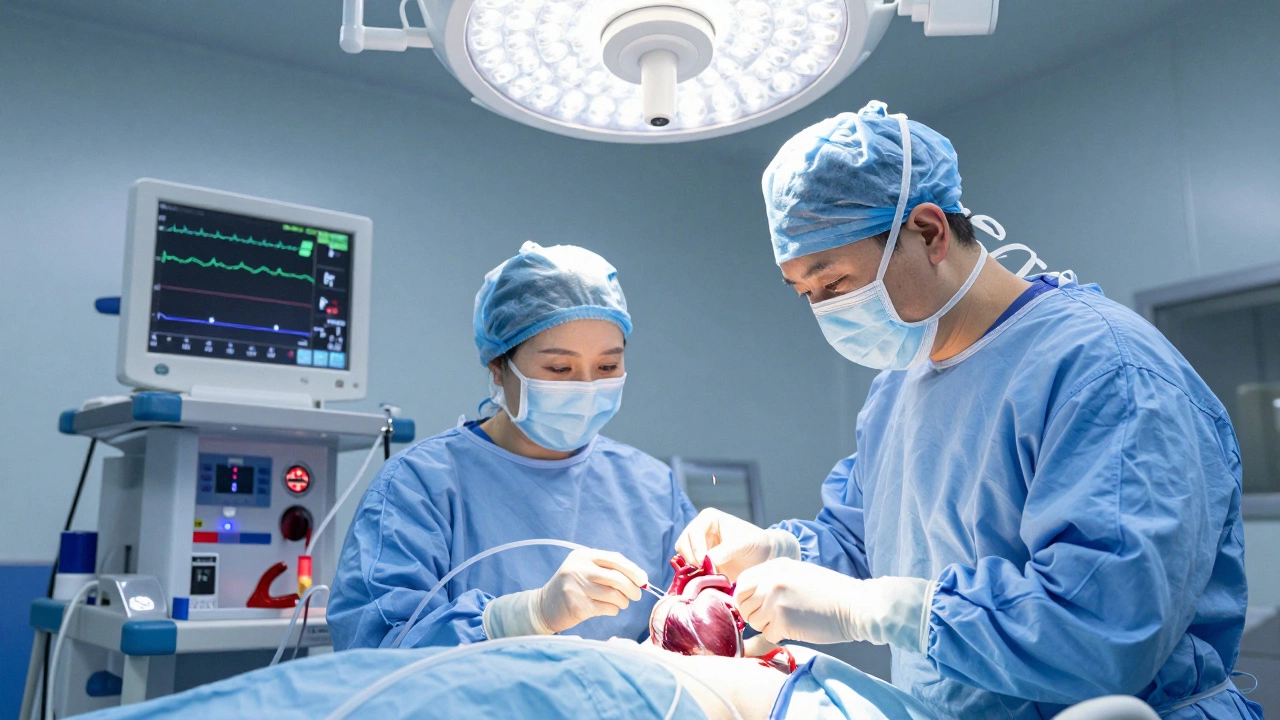
When you’re scheduled for heart surgery, the thought of your heart stopping might feel terrifying. But here’s the truth: in many types of heart surgery, your heart is supposed to stop-and that’s not a mistake. It’s part of the plan. Surgeons don’t operate on a beating heart when they’re fixing blocked arteries, replacing valves, or repairing congenital defects. They need stillness. Precision. Control. So they stop the heart on purpose. But what if it doesn’t restart? What if it stops when it’s not supposed to? That’s where things get serious-and where modern medicine steps in with layers of safety.
Why Do Surgeons Stop the Heart on Purpose?
In procedures like coronary artery bypass grafting (CABG) or valve replacements, surgeons need a bloodless, motionless field. A beating heart makes it impossible to stitch tiny vessels or place delicate valves accurately. So they use a heart-lung machine-also called a cardiopulmonary bypass machine-to take over. This machine pulls blood out of your body, adds oxygen, removes carbon dioxide, and pumps it back in. Once it’s running, doctors give you a drug called cardioplegia. This is a cold, potassium-rich solution that stops your heart in a controlled, reversible way. It’s like hitting pause on a video. Your heart isn’t dead. It’s in a deep, protected sleep. The goal? To give surgeons 30 to 90 minutes of perfect stillness to do their work.What Happens If the Heart Doesn’t Restart?
If the heart doesn’t restart after the planned stop, the surgical team doesn’t panic-they act. Every operating room for heart surgery has a backup plan, and it’s not just one thing. It’s a whole system. First, they check the cardioplegia solution. Was it delivered correctly? Was the temperature right? Was the potassium level accurate? Even a small error here can delay restart. If the heart still won’t beat, they switch to electrical pacing. Thin wires are placed on the heart’s surface before surgery. These can deliver small electric shocks to kickstart the rhythm. If that doesn’t work, they use a defibrillator. This isn’t the dramatic “clear!” moment you see on TV. It’s a controlled, low-energy shock delivered directly to the heart muscle. In over 90% of cases, the heart restarts within seconds with pacing or a single shock.What If the Heart Stops Unexpectedly?
Sometimes, the heart stops when it shouldn’t-like during a non-cardiac surgery, or when a patient has an undiagnosed arrhythmia. This is called intraoperative cardiac arrest. It’s rare-about 1 in every 1,000 surgeries-but it happens. When it does, the entire team springs into action. Anesthesiologists immediately give epinephrine to boost blood pressure and heart drive. Nurses prepare for chest compressions. The surgeon pauses, and the team checks for causes: was there a massive blood loss? A clot in the lungs? A sudden allergic reaction? Or a hidden heart problem that wasn’t caught on pre-op tests? In these cases, they don’t wait. They open the chest if needed, perform direct cardiac massage, and use external defibrillators. The key is speed. Every second counts. Survival rates for unexpected cardiac arrest during surgery are around 50% if help starts within 2 minutes. That’s why teams train for this every single week.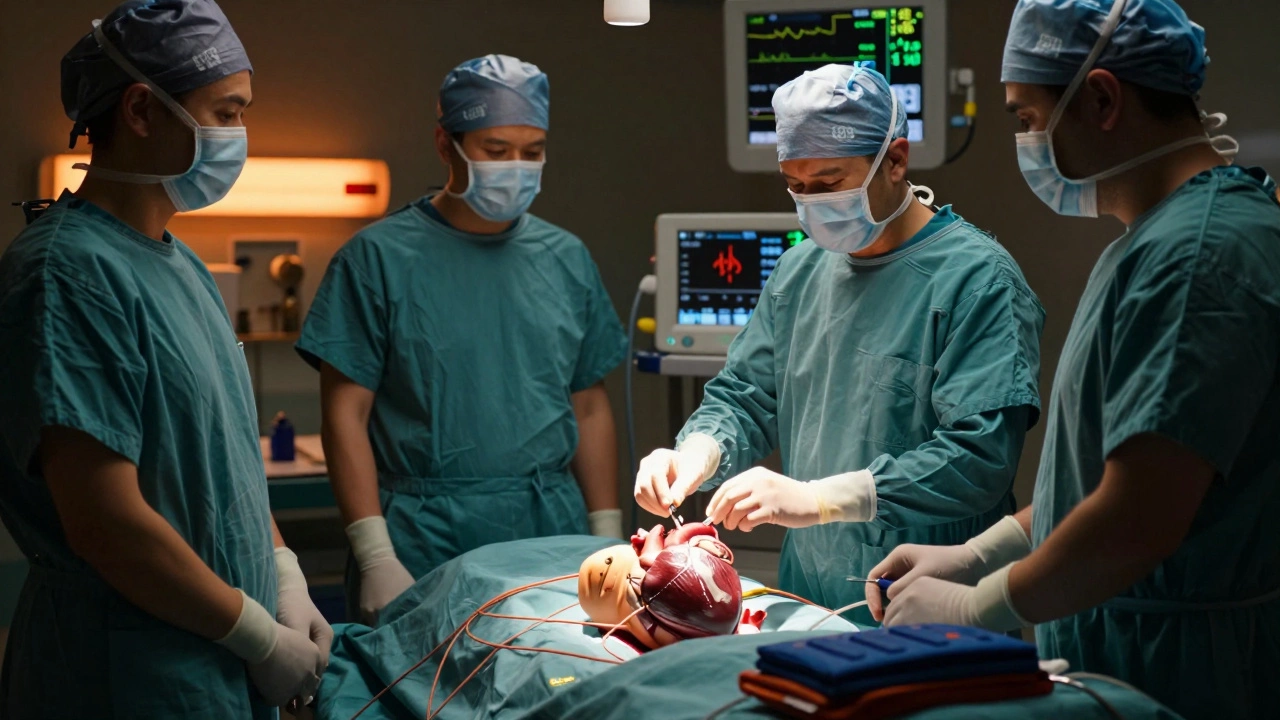
How Is the Heart Monitored During Surgery?
You’re not just lying there. Your heart is being watched by a dozen different devices. A transesophageal echocardiogram (TEE) probe, inserted down your throat, gives real-time video of your heart’s chambers and valves. Electrodes on your chest track every electrical beat. A pulmonary artery catheter measures pressure inside your heart. Blood gas analyzers check oxygen and acid levels every few minutes. If your heart rhythm starts to wobble-even slightly-the anesthesiologist sees it on the screen before you even feel it. Modern systems can predict trouble before it happens. For example, if your heart rate drops and your blood pressure follows, the system flags it as a possible vagal response. They can give you atropine before you go into full arrest. Prevention is the best defense.What Are the Real Risks?
The fear of your heart stopping during surgery is understandable. But the risk isn’t as high as you might think. For healthy patients having planned heart surgery, the chance of dying from a cardiac arrest during the procedure is less than 1%. Most of those cases involve patients with severe heart failure, advanced age, or other major health issues. For people with no other serious conditions, the risk is even lower. The real danger isn’t the heart stopping-it’s what caused it to stop. A sudden drop in oxygen, a massive bleed, or a hidden infection can trigger arrest. That’s why pre-op testing is so thorough. Blood tests, stress tests, echocardiograms, and even CT scans are done to catch problems before you ever enter the OR.What Happens After the Heart Starts Again?
Once the heart is beating on its own, the team doesn’t relax. They watch closely. The heart is weak after being stopped. It needs time to recover. Doctors give medications like dopamine or dobutamine to help it pump harder. They keep you on the ventilator until your lungs and heart are stable. You’re moved to the ICU, not the regular ward. For the next 24 to 48 hours, nurses check your heart rhythm every 15 minutes. They watch for signs of arrhythmia, fluid buildup, or low output. Most patients wake up with a temporary pacemaker in place, just in case. Within a day or two, if everything looks good, it’s removed. Recovery is slow, but predictable. Your heart doesn’t bounce back instantly-it rebuilds over days.
Can You Survive If the Heart Stops for Too Long?
Yes-but only if help comes fast. The brain can survive about 4 to 6 minutes without oxygen before damage begins. During surgery, you’re not breathing on your own. The heart-lung machine keeps oxygen flowing to your brain the whole time. So even if your heart stops for 10, 15, or even 20 minutes during bypass, your brain is protected. The real danger is if the machine fails. That’s why every hospital has backup generators, spare machines, and trained staff ready to swap equipment in under 30 seconds. In the rare case that both the heart and the machine fail, surgeons may perform an emergency open-chest massage while preparing a new bypass circuit. Survival in these extreme cases is low, but it’s happened. There are documented cases of patients waking up with full brain function after 25 minutes of no heartbeat, thanks to perfect cooling and immediate intervention.What Should You Ask Your Surgeon Before Surgery?
You have the right to know what will happen if things go wrong. Ask these questions:- Will my heart be stopped during the surgery? If yes, how will it be restarted?
- What kind of monitoring will be used during the procedure?
- What are the backup plans if the heart doesn’t restart?
- Have you or your team ever had to perform emergency resuscitation during surgery?
- What’s the hospital’s success rate for restarting the heart after planned arrest?
Bottom Line: It’s Controlled, Not Random
Your heart stopping during surgery isn’t an accident. It’s a calculated step. The medical team doesn’t just hope it restarts-they’ve planned for every possible failure. From backup machines to emergency drugs to real-time monitoring, the system is built to catch problems before they become disasters. The fear of cardiac arrest during surgery is natural. But the reality? You’re surrounded by people whose entire job is to keep your heart alive-even when it’s not beating.Can your heart stop during surgery even if it’s not supposed to?
Yes, but it’s rare. Unexpected cardiac arrest during surgery can happen due to factors like severe blood loss, allergic reactions, undiagnosed heart conditions, or anesthesia complications. Operating rooms are equipped with emergency protocols, including defibrillators, epinephrine, and immediate access to chest compressions or open-heart resuscitation if needed.
How long can the heart be stopped during heart surgery?
During planned heart surgery, the heart is typically stopped for 30 to 90 minutes using a solution called cardioplegia. The heart-lung machine keeps oxygen flowing to your brain and organs during this time. In rare cases, the heart can be stopped longer-up to 2 hours-if needed for complex repairs. Survival and recovery depend on maintaining proper cooling and oxygenation.
What happens if the heart doesn’t restart after surgery?
If the heart doesn’t restart after planned arrest, the surgical team uses pacing wires, low-energy defibrillation, or medications like epinephrine to restore rhythm. If those fail, they may perform direct cardiac massage while preparing emergency bypass. Most hearts restart with the first or second attempt. The team is trained for this scenario and practices it regularly.
Are you awake if your heart stops during surgery?
No. You are under general anesthesia and completely unconscious. Even if your heart stops unexpectedly, you won’t feel anything. The anesthesiologist monitors your brain activity and depth of anesthesia throughout the procedure. Your body is fully supported by machines.
Do they use a defibrillator every time the heart stops during surgery?
Not always. In planned heart stops, defibrillators are kept ready but rarely used. The heart is restarted with pacing wires or medications first. Defibrillation is reserved for dangerous arrhythmias or if the heart won’t respond to other methods. It’s not the first step-it’s a backup tool.