
Vitamin D Deficiency Risk Assessment
This quiz helps you understand your personal risk of vitamin D deficiency based on lifestyle factors. The article explains why vitamin D is critical for immune function, mood, and overall health. Take this assessment to see if you should consider testing or supplementation.
How often do you spend 15+ minutes outdoors during midday (10am-2pm)?
What is your natural skin tone?
How often do you eat fatty fish or fortified foods?
Do you regularly use sunscreen?
Do you take medications or have conditions affecting vitamin D?
Ask ten people what supplement they take daily, and you’ll get ten different answers. Magnesium. Omega-3. Zinc. Turmeric. But here’s the truth: vitamin D is the one supplement nearly everyone should take - no matter where you live, how you eat, or how active you are.
It’s not hype. It’s not marketing. It’s science. And it’s backed by data from hospitals in Bangalore, clinics in Delhi, and global health studies going back over a decade. If you’re not getting enough vitamin D, you’re not just missing out on strong bones. You’re putting your immune system, mood, and long-term health at risk.
Why Vitamin D Isn’t Just for Bones
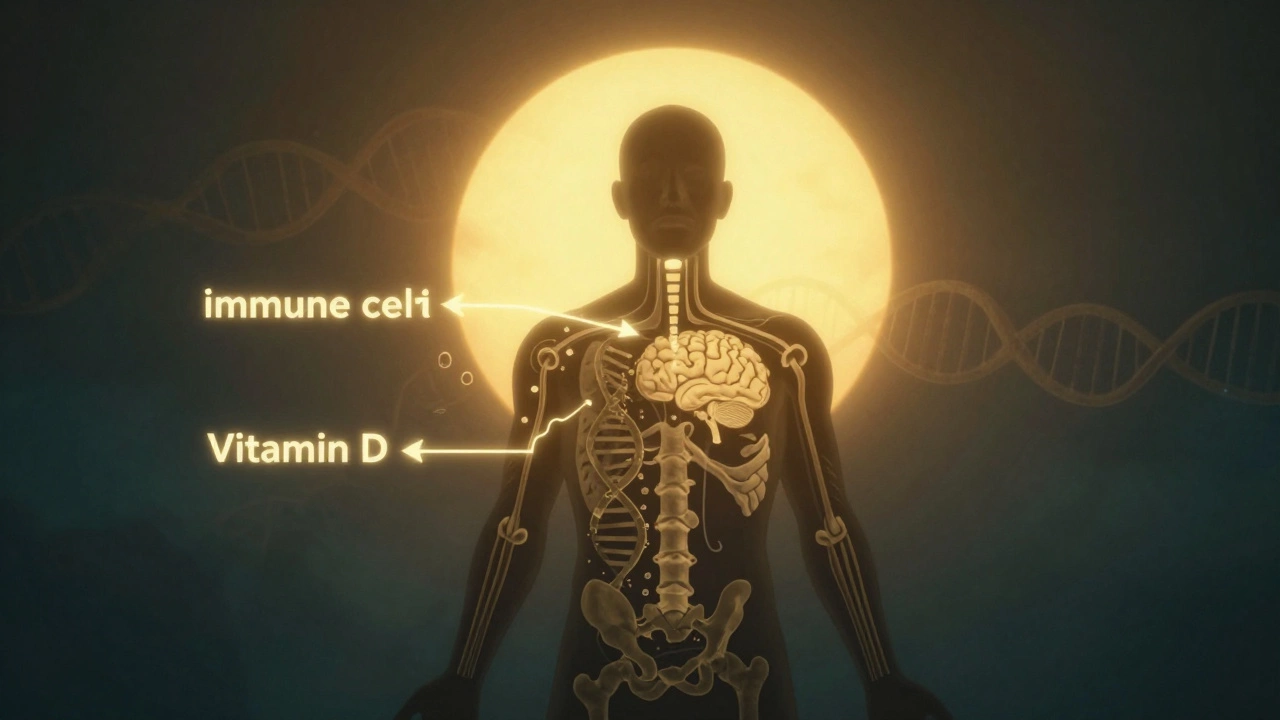
Most people think vitamin D is only about calcium absorption and preventing rickets. That’s true - but it’s only the tip of the iceberg. Vitamin D works like a hormone. It talks to over 2,000 genes in your body. That means it affects everything from how your immune system fights colds to how your brain produces serotonin.
In India, studies from the Indian Journal of Medical Research show that 70% to 85% of urban adults have vitamin D levels below 30 ng/mL - the minimum considered adequate. Even in sunny cities like Bangalore, people are deficient. Why? Because we’re indoors too much. We wear sunscreen. We cover up for cultural or religious reasons. And our diets? Most don’t include fatty fish, egg yolks, or fortified foods in enough quantity.
Low vitamin D isn’t just a number on a lab report. It shows up as:
- Constant fatigue, even after a full night’s sleep
- Frequent colds or infections that stick around
- Muscle aches without a clear cause
- Low mood or seasonal sadness that doesn’t lift
- Slow healing of minor cuts or bruises
These aren’t normal. They’re signs your body is running on empty.
How Much Do You Really Need?
The government recommends 400 IU per day. That’s the bare minimum to prevent rickets. But science says you need more - especially if you’re over 30, live in a city, or have darker skin.
Most experts now agree on 1,000 to 2,000 IU per day for adults. That’s the range shown in clinical trials to raise blood levels into the optimal zone (40-60 ng/mL). You can get this from:
- A daily supplement (D3 form, not D2)
- Fortified milk or plant-based alternatives (check labels - many don’t have enough)
- 10-15 minutes of midday sun on arms and face, 3-4 times a week
But here’s the catch: sun exposure alone won’t cut it for most people. The UVB rays needed to make vitamin D are blocked by glass, pollution, and even light clouds. And in winter? They’re nearly gone.
Supplements aren’t a substitute for sunlight. They’re a safety net.
Who’s Most at Risk?
You might think only elderly people or office workers need vitamin D. But the list is longer than you think:
- People with darker skin - melanin blocks UVB rays, so you need 3-6 times more sun exposure to make the same amount of vitamin D
- Vegetarians and vegans - few plant foods naturally contain D3, the most active form
- Those with digestive issues - Crohn’s, celiac, or gastric bypass surgery can block absorption
- People taking certain medications - steroids, anticonvulsants, and some cholesterol drugs interfere with vitamin D metabolism
- Women over 50 - skin becomes less efficient at making vitamin D as we age
And yes - even if you eat healthy, exercise, and sleep well, you can still be deficient. It’s not about lifestyle. It’s about biology.
What About Herbal Supplements Like Ashwagandha or Turmeric?
Herbal supplements have their place. Ashwagandha helps with stress. Turmeric reduces inflammation. But neither replaces vitamin D. They work differently.
Vitamin D is a nutrient your body can’t make enough of on its own. Ashwagandha is an adaptogen - it helps your body respond to stress. Turmeric is an anti-inflammatory herb. They’re useful, but they don’t fix a vitamin D deficiency.
Think of it this way: You wouldn’t take ginger tea to cure scurvy. You’d take vitamin C. Similarly, if your body is low on vitamin D, no amount of herbal tea will fix it. You need the actual nutrient.
How to Know If You’re Deficient
Guessing doesn’t work. Testing does.
A simple blood test - 25-hydroxyvitamin D - tells you your level. It’s cheap, widely available, and covered by most health plans in India. If your result is below 30 ng/mL, you’re deficient. Below 20? You’re severely deficient.
Don’t wait for symptoms. Get tested. Especially if you:
- Never get sun exposure
- Have chronic pain or fatigue
- Are trying to conceive
- Have a family history of osteoporosis or autoimmune disease
And if you’re already taking a supplement? Retest every 6-12 months. Your needs change with seasons, weight, and health status.
What to Look for in a Supplement
Not all vitamin D is the same. You need D3 (cholecalciferol), not D2 (ergocalciferol). D3 is the form your body makes from sunlight - and it’s 30-50% more effective at raising blood levels.
Look for:
- D3 (cholecalciferol) as the ingredient
- 1,000-2,000 IU per capsule
- No artificial fillers or added sugar
- Third-party tested (check for USP or NSF certification)
Take it with food - especially fat. Vitamin D is fat-soluble. A meal with nuts, avocado, or ghee helps your body absorb it better.
What Happens If You Take Too Much?
It’s possible - but rare. Toxicity usually only happens with doses over 10,000 IU daily for months. Most supplements you buy are 1,000-2,000 IU. That’s safe for nearly everyone.
Signs of excess? Nausea, vomiting, weakness, frequent urination, kidney stones. But again - you’d have to take 5-10 times the recommended dose for a long time to get there.
For context: A 15-minute sunbath can make 10,000-20,000 IU of vitamin D. Your body naturally stops making more when it’s enough. Supplements don’t do that - so stick to the 1,000-2,000 IU range unless a doctor says otherwise.
Real-Life Impact
A 2023 study from Manipal Hospital tracked 500 adults with chronic fatigue and low vitamin D. After 3 months of taking 2,000 IU daily:
- 87% reported better energy
- 76% had fewer colds
- 68% said their mood improved
One woman, 42, from Koramangala, told her doctor: “I used to nap after lunch. Now I’m walking my kids to school without feeling wiped out.”
This isn’t magic. It’s biology. Your body was built to run on sunlight. When you don’t get enough, everything slows down.
Final Thought: It’s Not Optional
You don’t need to take ten supplements. You don’t need to buy expensive powders or trendy gummies. You just need vitamin D - and you likely need more than you think.
It’s cheap. It’s safe. It’s backed by decades of research. And if you’re reading this, you’re probably not getting enough.
Start today. Get tested. Take 2,000 IU daily. Give it three months. See how you feel.
It might not change everything. But it might change enough.
Can I get enough vitamin D just from the sun in India?
In theory, yes. But in practice, most people don’t. Pollution, indoor lifestyles, sunscreen use, clothing choices, and even air quality block the UVB rays needed to make vitamin D. Even in sunny cities like Bangalore, studies show over 70% of adults are deficient. Sunlight helps, but it’s not reliable enough on its own.
Is vitamin D3 better than vitamin D2?
Yes. Vitamin D3 (cholecalciferol) is the form your skin makes from sunlight. It’s more effective at raising and maintaining blood levels than D2 (ergocalciferol), which comes from plants and fungi. Most supplements use D3. Avoid D2 unless your doctor specifically recommends it.
Should I take vitamin D with calcium?
Not necessarily. Vitamin D helps your body absorb calcium - but most people get enough calcium from their diet (dairy, leafy greens, tofu, fortified foods). Taking extra calcium with vitamin D only helps if you’re deficient in calcium too. For most, a vitamin D supplement alone is enough.
Can I take vitamin D if I have kidney problems?
Talk to your doctor first. Your kidneys convert vitamin D into its active form. If they’re impaired, you may need a different type of supplement - like calcitriol - which is already activated. Never self-prescribe high doses if you have kidney disease.
How long does it take to feel the effects of vitamin D?
Some people notice better energy or mood in 2-3 weeks. But for full benefits - stronger immunity, better bone health, stable mood - it takes 3-6 months of consistent daily use. Don’t stop after a few weeks. Give it time.