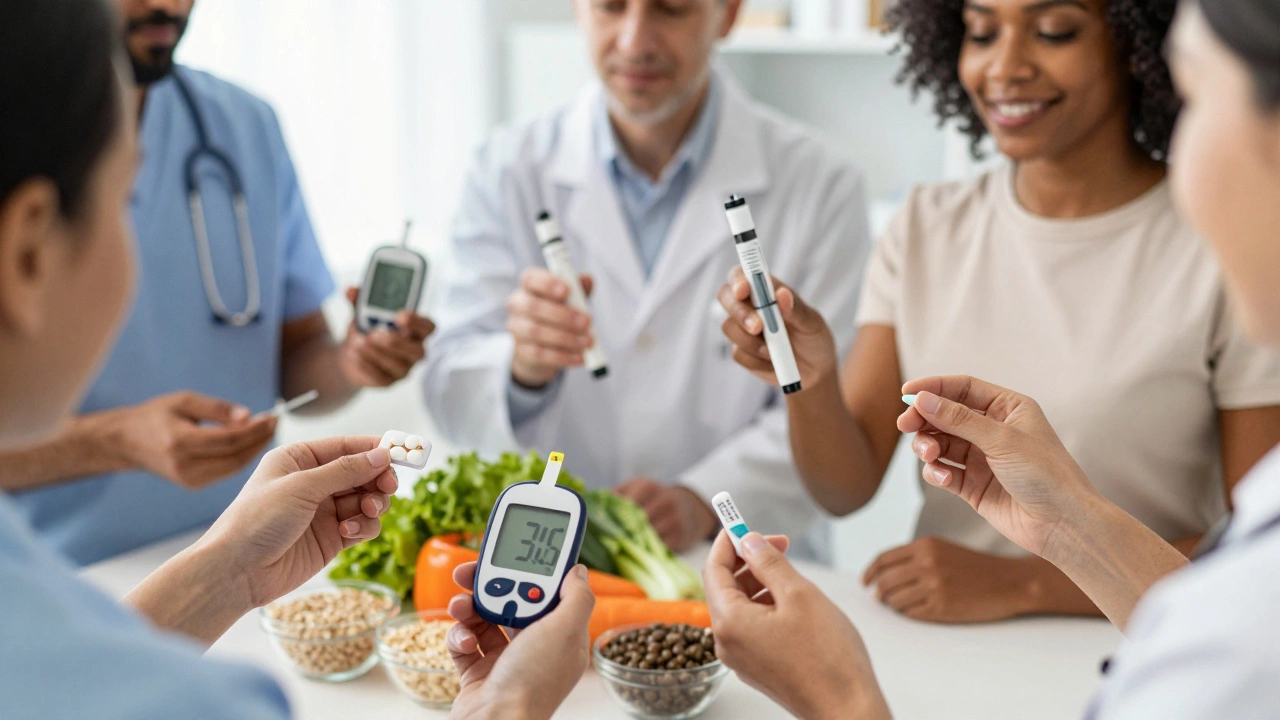
Diabetes Medication Decision Guide
Find Your Best Diabetes Medication
This tool helps you understand which diabetes medications might be best for you based on your specific health conditions, goals, and preferences. Remember: always discuss treatment options with your doctor.
There’s no single "best" medicine for diabetes. What works for one person might not work for another, and the right choice depends on your type of diabetes, your overall health, your lifestyle, and even your budget. The goal isn’t to find the most powerful drug-it’s to find the one that keeps your blood sugar steady without causing side effects, weight gain, or financial stress.
Not all diabetes is the same
Before we talk about medications, you need to know what kind of diabetes you have. Type 1 diabetes means your body doesn’t make insulin at all. You’ll need insulin for life. Type 2 diabetes means your body either doesn’t make enough insulin or doesn’t use it well. That’s where most oral and non-insulin injectable drugs come in. There’s also gestational diabetes, which happens during pregnancy, and less common forms like LADA (Latent Autoimmune Diabetes in Adults), which behaves like a slow-moving Type 1.
If you have Type 1, insulin is non-negotiable. No pill can replace it. If you have Type 2, you might start with metformin, but over time, your treatment will likely change. About 50% of people with Type 2 diabetes will need insulin within 10 years, according to the American Diabetes Association.
Metformin: Still the first choice for Type 2
Metformin has been the go-to starting drug for Type 2 diabetes for over 60 years. It’s cheap, safe, and doesn’t cause weight gain or low blood sugar. It works by reducing how much sugar your liver releases and helps your body use insulin better.
Most people take 500 mg to 2,000 mg a day, usually with meals. Common side effects? Stomach upset, diarrhea, gas. These often fade after a few weeks. A rare but serious risk is lactic acidosis, which mostly happens in people with kidney problems-so your doctor will check your kidney function before and during treatment.
Metformin isn’t perfect. Some people don’t respond well to it. Others can’t tolerate the side effects. That’s when doctors move to the next options.
GLP-1 receptor agonists: The game-changers
Drugs like semaglutide (Wegovy, Ozempic), liraglutide (Victoza), and dulaglutide (Trulicity) have changed the game. Originally designed to lower blood sugar, they turned out to help people lose weight, protect the heart, and even reduce the risk of kidney disease.
They work by mimicking a hormone your gut makes after eating. This hormone slows digestion, tells your pancreas to release insulin only when needed, and reduces appetite. The result? Lower blood sugar and often 5-15% body weight loss.
These are injectables, given once a week or once a day. Side effects include nausea, vomiting, and constipation-especially at first. They’re expensive, but many insurance plans now cover them for Type 2 diabetes, especially if you have heart disease or obesity.
Studies like the STEP and LEADER trials showed that semaglutide reduced heart attacks and strokes by up to 26% in high-risk patients. That’s why the American Diabetes Association now recommends GLP-1 agonists as a first-line option for many people with Type 2 diabetes and heart disease.
SGLT2 inhibitors: Kidney and heart protection
Drugs like empagliflozin (Jardiance), dapagliflozin (Farxiga), and canagliflozin (Invokana) work differently. They make your kidneys flush out extra sugar through urine. That lowers blood sugar-and also helps you lose a few pounds and lowers blood pressure.
But the real win? They protect your heart and kidneys. The EMPA-REG OUTCOME trial showed empagliflozin cut heart-related deaths by 38% in people with Type 2 diabetes and heart disease. Farxiga reduced hospital stays for heart failure by 30%.
Side effects? More yeast infections, urinary tract infections, and a rare but serious risk called ketoacidosis (even when blood sugar isn’t very high). You’ll need to stay hydrated and watch for symptoms like nausea, stomach pain, or confusion.
These are now recommended as first-line treatments for people with Type 2 diabetes who have heart failure, kidney disease, or both-even if their A1C is under control.
Insulin: When other drugs aren’t enough
Insulin isn’t a failure. It’s a tool. Many people delay starting insulin because they think it means they’ve "lost control." But the truth? Your pancreas gets tired. Over time, it makes less and less insulin. Waiting too long can damage your organs.
There are many types: fast-acting (for meals), long-acting (for background control), and premixed versions. Newer insulins like degludec (Tresiba) and glargine (Lantus) are more stable and less likely to cause low blood sugar than older versions.
Insulin pens are easy to use. Most people learn to inject themselves in 15 minutes. Continuous glucose monitors (CGMs) now work with insulin pumps to automatically adjust doses-making life easier and safer.
Insulin isn’t perfect. It can cause weight gain and low blood sugar. But for many, it’s the only way to get blood sugar into a safe range. The key is matching the type and dose to your life-not forcing yourself to fit the drug.
Other options: What else is out there?
There are other drugs, but they’re used less often now:
- DPP-4 inhibitors (like sitagliptin): Mildly lower blood sugar, weight-neutral, but no heart or kidney benefits.
- Sulfonylureas (like glipizide): Cheap and effective, but cause low blood sugar and weight gain. Used less now.
- Thiazolidinediones (like pioglitazone): Help with insulin resistance but can cause fluid retention, weight gain, and bone fractures.
- Alpha-glucosidase inhibitors (like acarbose): Slow carb digestion. Rarely used because of bloating and gas.
These aren’t bad drugs-they just don’t offer the same protective benefits as GLP-1 agonists or SGLT2 inhibitors. Most doctors now avoid them unless cost is a major barrier.
Choosing the right medicine for you
Here’s how to think about it:
- If you have heart disease or kidney disease → Start with a GLP-1 agonist or SGLT2 inhibitor.
- If you need to lose weight → GLP-1 agonists are the strongest option.
- If you’re on a tight budget → Metformin is still the best value.
- If your blood sugar is very high (A1C over 9%) → You might need insulin right away.
- If you hate injections → Oral options like metformin, DPP-4 inhibitors, or SGLT2 inhibitors (some are now available as pills).
The best medicine is the one you can stick with. A drug that lowers your A1C by 1% but makes you sick every day isn’t better than one that lowers it by 0.7% and lets you live normally.

What’s changing in 2026?
New drugs are coming fast. In 2025, the FDA approved retatrutide-a triple agonist that targets GLP-1, GIP, and glucagon receptors. Early trials showed up to 24% weight loss and A1C drops to normal levels in many patients. It’s not yet approved for diabetes, but it’s expected to be by late 2026.
Oral versions of GLP-1 drugs are also in the pipeline. Semaglutide is already available as a pill (Rybelsus), but newer ones like danuglipron are showing promise with fewer side effects.
And yes, the cost is still a problem. But more generic versions of metformin, glimepiride, and even some SGLT2 inhibitors are hitting the market. In the U.S., some pharmacies now sell metformin for under $5 a month.
It’s not just about the pill
No medication works well without lifestyle changes. Even the best drugs won’t fix a diet full of sugar and processed carbs. Exercise improves insulin sensitivity more than any pill.
Studies show that losing just 5-10% of your body weight can put Type 2 diabetes into remission for many people. That’s not a cure-it’s a reset. And it’s possible without surgery or extreme diets.
Medicine helps. But your choices every day-what you eat, how you move, how you sleep-are what keep your blood sugar stable over the long term.
Can you reverse diabetes with medicine alone?
No medicine alone can reverse Type 2 diabetes. But when combined with weight loss and lifestyle changes, some people can get their blood sugar back to normal without drugs. This is called remission. It’s most likely in the first few years after diagnosis and with at least 10% body weight loss. Medications like GLP-1 agonists can help with weight loss, making remission more achievable-but they’re not a magic pill.
Is insulin better than pills for Type 2 diabetes?
Insulin isn’t "better"-it’s different. Pills like metformin or GLP-1 agonists work by improving how your body uses insulin. Insulin replaces what your body can’t make. If your pancreas has stopped producing enough insulin, pills won’t help much. That’s when insulin becomes necessary. Delaying insulin can lead to complications. Starting it early doesn’t mean you’ve failed-it means you’re protecting your body.
Which diabetes medicine causes the least weight gain?
GLP-1 agonists cause the most weight loss, not just the least gain. SGLT2 inhibitors also help you lose 5-10 pounds. Metformin is weight-neutral. DPP-4 inhibitors and most oral pills don’t cause weight gain. But sulfonylureas and insulin often lead to weight gain because they push your body to store more glucose as fat. If weight is a concern, avoid those two.
Are there natural alternatives to diabetes medicine?
No natural supplement can replace prescribed diabetes medicine. Berberine, cinnamon, and bitter melon may slightly lower blood sugar in small studies, but none have proven results in large, long-term trials. They’re not regulated like drugs, so quality and safety vary. Some can even interact with your medications. Don’t stop your prescribed treatment to try herbs. Talk to your doctor first.
How do I know if my diabetes medicine is working?
Check your A1C every 3-6 months. A1C measures your average blood sugar over 3 months. Most people aim for under 7%. If it’s rising, your medicine might not be enough. Also, track your daily blood sugar readings if you’re using a meter or CGM. Consistent highs or lows mean it’s time to talk to your doctor. Don’t wait for symptoms-by then, damage may already be happening.
What to do next
If you’re on diabetes medication and not sure if it’s right for you, schedule a review with your doctor. Bring your blood sugar logs, a list of side effects, and your questions. Ask: "Is this the best option for my heart, kidneys, and weight?" Don’t be afraid to ask about cost. There are often cheaper or more effective alternatives.
If you haven’t started medication yet, don’t wait. High blood sugar silently damages your nerves, eyes, kidneys, and heart. The sooner you get control, the better your long-term outlook.
There’s no single best medicine for diabetes. But there is a best medicine for you.