Personalized Health Checkup Planner
Your Profile
Recommended Screenings
Customized PlanBased on the article guidelines and your profile.
This tool is for educational purposes only and does not constitute medical advice. Always consult with a qualified healthcare provider before starting any new testing regimen or treatment.
There is no single magic wand you can wave to get a perfect score on your health. If someone tells you that one specific blood test reveals everything about your well-being, they are oversimplifying complex biology. The truth is that the "best" test for overall health is actually a combination of screenings tailored to your age, lifestyle, and family history.
In 2026, with healthcare becoming more personalized, we have moved past the era of generic, one-size-fits-all checkups. You might be young and fit, yet carry silent risks for heart disease or diabetes. Conversely, you might feel fine but have high cholesterol that needs attention. Understanding what constitutes a comprehensive health screen is the first step toward taking control of your long-term wellness.
Is there really just one best test for overall health?
No. There is no single test that measures all aspects of health. Instead, a panel of tests including blood work, urine analysis, and imaging provides a complete picture.
The Foundation: What Does "Overall Health" Mean?
Before picking up a brochure for a health package, it helps to define what we are measuring. Overall health isn't just about not being sick right now. It is about predicting future risks and catching issues early when they are easiest to treat. We look at several pillars: cardiovascular health, metabolic function, organ integrity, and infectious disease status.
Preventive Medicine is the branch of medicine focused on preventing diseases rather than treating them after they occur. This approach relies heavily on regular screenings. For example, high blood pressure often has no symptoms until it causes damage. Regular monitoring allows you to adjust your diet or start medication before a stroke or heart attack happens.
Think of your body like a car. You don't wait for the engine to explode to check the oil. You follow a maintenance schedule. Your health checkup is that maintenance schedule. The goal is to establish a baseline for your personal metrics so any deviation becomes obvious.
The Core Blood Panel: The Non-Negotiables
If you walk into a lab today and ask for the essentials, these are the tests that form the backbone of any reliable health assessment. These tests provide data on how your major systems are functioning.
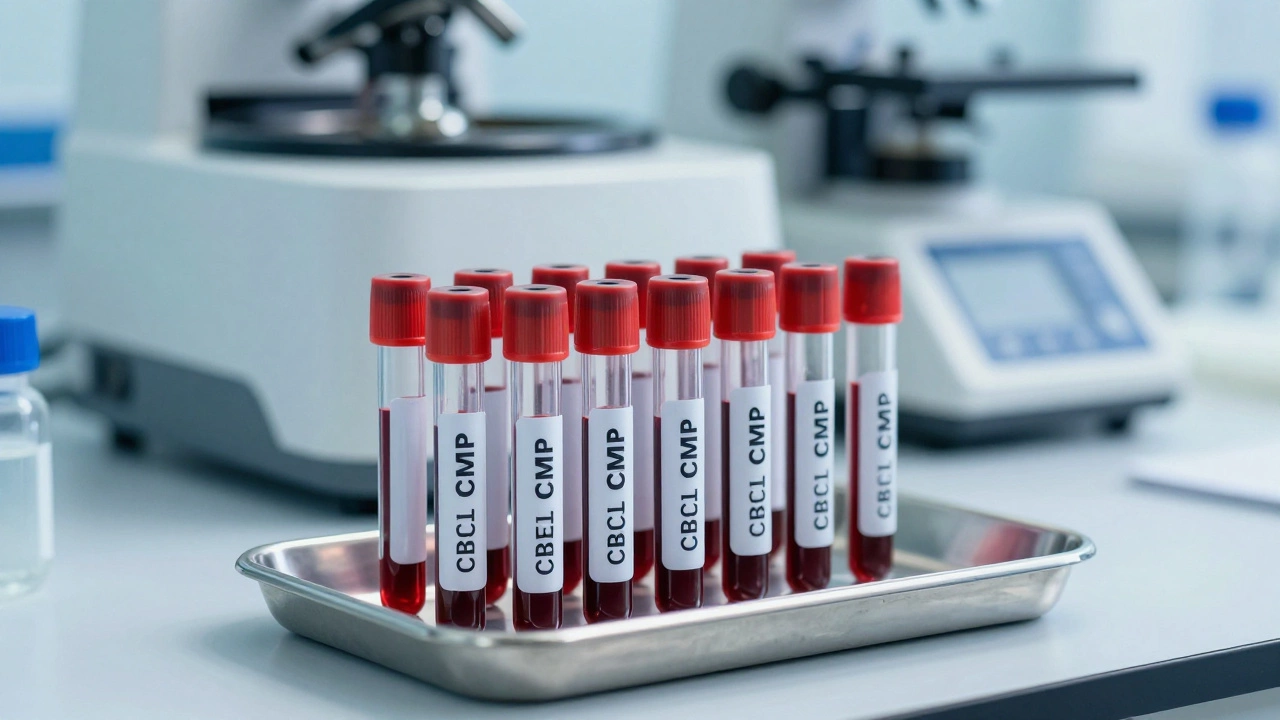
- Complete Blood Count (CBC): This checks your red blood cells, white blood cells, and platelets. Low red blood cells might indicate anemia, while high white blood cells could signal an infection or inflammation. It is a broad snapshot of your immune system and oxygen-carrying capacity.
- Comprehensive Metabolic Panel (CMP): This measures glucose, calcium, and electrolytes. More importantly, it looks at kidney function through creatinine and blood urea nitrogen (BUN), and liver function through enzymes like ALT and AST. Liver issues are often silent until advanced stages, making this crucial.
- Lipid Profile: This breaks down your cholesterol levels: Total Cholesterol, LDL (bad cholesterol), HDL (good cholesterol), and Triglycerides. High LDL is a primary driver of plaque buildup in arteries, leading to heart disease.
- HbA1c: Unlike a standard fasting glucose test that shows your sugar level at one moment, HbA1c gives you an average of your blood sugar over the past three months. It is the gold standard for detecting pre-diabetes and managing diabetes.
These four categories alone will catch the majority of common chronic conditions. However, relying only on them leaves gaps, especially regarding thyroid health and vitamin deficiencies.
Adding Depth: Thyroid, Vitamins, and Inflammation
Once the core panel is done, you need to look deeper. Many people suffer from fatigue, weight gain, or brain fog without realizing their thyroid is underactive. Thyroid Function Tests include measurements of TSH, Free T3, and Free T4 hormones that regulate metabolism. Even if you feel okay, subtle imbalances can affect your energy levels and mood significantly.
Vitamin deficiencies are also rampant. Vitamin D is a hormone-like nutrient essential for bone health, immune function, and mood regulation. Despite being called the "sunshine vitamin," many office workers living indoors have dangerously low levels. Similarly, Vitamin B12 is critical for nerve function and energy production, especially for vegetarians or those over 50 who may absorb it less efficiently.
In recent years, markers for inflammation have gained importance. High-Sensitivity C-Reactive Protein (hs-CRP) is a marker produced by the liver that indicates systemic inflammation in the body. Elevated hs-CRP is linked to heart disease risk even if your cholesterol numbers look normal. It tells you if your body is fighting an internal battle you aren't feeling yet.

Imaging and Physical Exams: Beyond the Blood
Blood tests tell you what is happening chemically, but they don't always show structural problems. This is where imaging comes in. While not every year requires an MRI, certain scans are vital depending on your age.
| Age Group | Key Additions to Basic Panel | Reason |
|---|---|---|
| 20-30 Years | Basic Metabolic, Lipid, Thyroid | Establish baseline, check for early metabolic shifts |
| 30-40 Years | Echocardiogram, Stress Test (if risk factors exist) | Cardiac risk begins to rise; stress management becomes key |
| 40-50 Years | Mammogram (women), Colonoscopy prep, PSA (men) | Cancer screening starts; bone density checks begin |
| 50+ Years | DEXA Scan, Comprehensive Cardiac Workup | Osteoporosis risk, advanced cardiac disease prevention |
A simple chest X-ray can detect lung issues, tuberculosis, or signs of heart enlargement. An echocardiogram uses sound waves to create images of your heart, showing how well it pumps blood. For men over 40, a Prostate-Specific Antigen (PSA) test is often discussed with doctors to screen for prostate issues. Women should prioritize mammograms and Pap smears as per guidelines.
Context Matters: Lifestyle and Family History
Numbers on a page mean little without context. A cholesterol level of 200 mg/dL might be manageable for one person but dangerous for another with a strong family history of heart attacks. This is why your doctor’s interpretation is part of the "test."
Your family history acts as a genetic roadmap. If your parents had diabetes, you need tighter glucose monitoring. If they had strokes, you need aggressive blood pressure and lipid management. Additionally, your lifestyle-smoking, alcohol consumption, sleep quality, and diet-directly impacts these numbers. A healthy diet can lower triglycerides quickly, while poor sleep can spike cortisol and blood sugar.
In cities like Bangalore, where sedentary jobs and air pollution are common, checking for respiratory health and oxidative stress markers can be particularly relevant. Don't ignore the environmental factors affecting your body.

How Often Should You Get Tested?
Frequency depends on your current health status. Generally, adults under 40 with no known conditions should get a basic checkup once a year. Those over 40, or individuals with risk factors like obesity, smoking, or family history, should consider testing every six months. If you are already managing a condition like hypertension or diabetes, you might need quarterly monitoring.
Consistency is key. Getting tested at the same time of day, preferably in the morning after fasting, ensures your results are comparable year over year. Fluctuations due to late-night eating or intense exercise the day before can skew results.
Finding the Right Package
When shopping for health checkup packages, avoid the cheapest option that cuts corners. Look for labs accredited by recognized bodies, ensuring accuracy and reliability. The best package is one that includes the core blood panels, thyroid tests, and appropriate imaging for your age, along with a consultation to explain the results. Remember, the test is only useful if you understand what the numbers mean and act on them.
Can I do these tests at home?
Some basic tests like blood pressure and glucose can be monitored at home. However, comprehensive blood panels require professional lab equipment for accurate results. Home kits exist for lipids and vitamins but should be verified against clinical standards.
Do I need to fast before a health checkup?
Yes, for most metabolic and lipid tests, you need to fast for 8-12 hours. Eating affects glucose and triglyceride levels. Drink water, but avoid food, coffee, and juice during the fasting window.
What if my results are slightly out of range?
Don't panic. Slight deviations are common and can be influenced by stress, diet, or hydration. Discuss them with your doctor. They may recommend lifestyle changes or a repeat test in a few weeks to confirm trends.
Are genetic tests part of a standard health checkup?
No, genetic tests are specialized and usually reserved for specific family histories or unexplained conditions. They are not part of routine annual screenings but can complement traditional tests for personalized risk assessment.
How much does a comprehensive health checkup cost?
Costs vary widely by location and lab. In India, a basic package might cost between ₹2,000 and ₹5,000, while a comprehensive executive health checkup with imaging can range from ₹10,000 to ₹25,000. Insurance often covers preventive screenings.