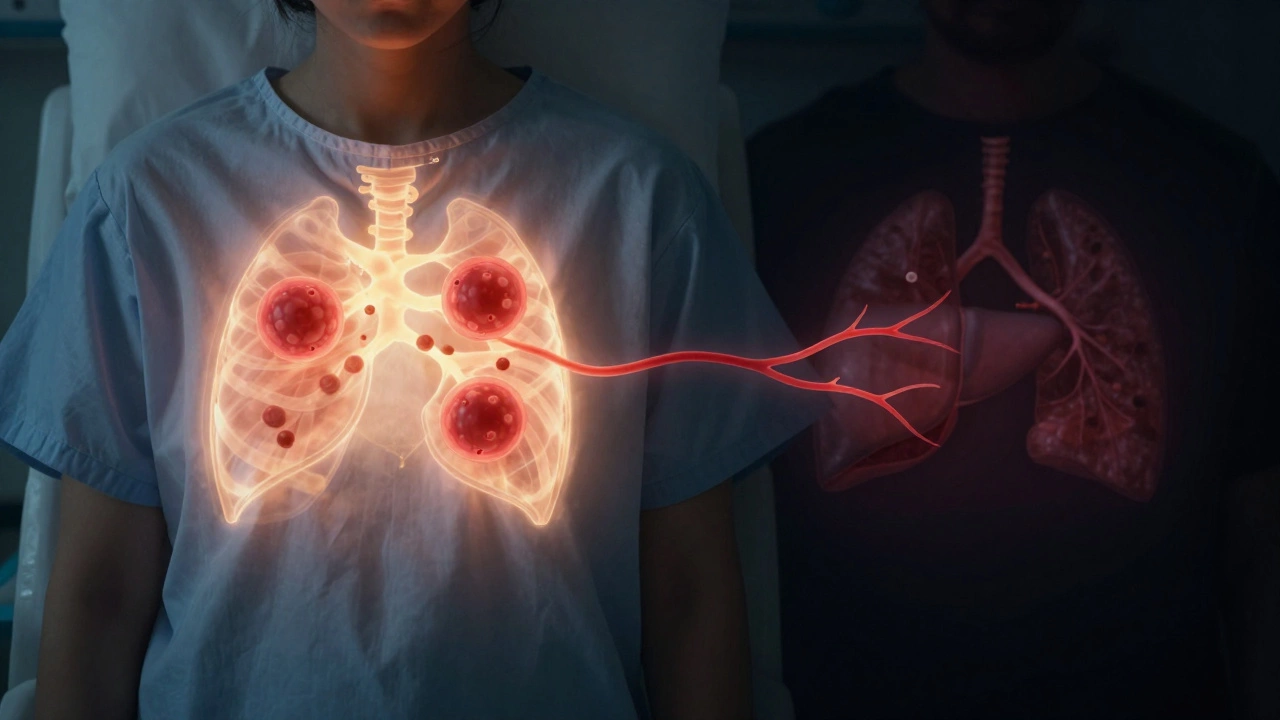
Cancer Stage Comparison Tool
Stage 3 Cancer
Cancer Spread
Localized spread to nearby lymph nodes or tissues, but not distant organs.
Treatment Focus
Surgery, radiation, and chemotherapy combined to target the tumor and nearby spread.
Survival Rates
5-year survival rates:
• Breast: ~72%
• Colon: ~70%
Quality of Life
Treatment can be aggressive (chemo, radiation) but may lead to remission and potential cure.
Stage 4 Cancer
Cancer Spread
Metastasized to distant organs (liver, lungs, bones, brain).
Treatment Focus
Systemic therapies to control disease and maintain quality of life (immunotherapy, targeted drugs).
Survival Rates
5-year survival rates:
• Breast: ~28%
• Lung: ~14%
• Colon: ~13%
Quality of Life
Chronic management with ongoing treatments, frequent monitoring, and focus on symptom control.
Key Takeaways
Stage alone doesn't determine outcomes—cancer type, genetics, and treatment response matter significantly.
Stage 4 cancer is no longer always terminal—many people manage it like a chronic condition with newer treatments.
Regular follow-up care is essential to catch recurrence early, especially after stage 3 treatment.
When someone hears they have cancer, the first thing they often ask is: How bad is it? And when doctors talk about stage 3 versus stage 4, it’s easy to assume stage 4 is automatically worse. But what does that really mean? Is stage 3 just a step before stage 4, or is there more to it? The truth isn’t as simple as numbers. It’s about spread, treatment options, survival chances, and what life looks like after diagnosis.
What Stage 3 Cancer Really Means
Stage 3 cancer means the tumor has grown larger and may have spread to nearby lymph nodes or tissues-but it hasn’t jumped to distant organs yet. Think of it like a fire that’s spread from one room to the next, but hasn’t reached the whole house. For example, in breast cancer, stage 3 might mean the tumor is over 5 cm and has reached several lymph nodes under the arm or near the breastbone. In colon cancer, it could mean the tumor has pierced the outer layer of the colon and spread to nearby lymph nodes.
The good news? Stage 3 is still considered locally advanced. That means doctors can often target it with surgery, radiation, and chemotherapy together. Many people with stage 3 cancer go into remission after treatment. In fact, according to data from the American Joint Committee on Cancer, the five-year survival rate for stage 3 breast cancer is around 72%, and for stage 3 colorectal cancer, it’s about 70%. These aren’t perfect numbers, but they show that stage 3 isn’t a death sentence.
What Stage 4 Cancer Really Means
Stage 4 cancer means the disease has metastasized. That’s the scary word doctors use when cancer cells break off from the original tumor, travel through the bloodstream or lymph system, and start growing in distant organs-like the liver, lungs, bones, or brain. This is no longer a local problem. It’s a systemic one.
For example, if lung cancer spreads to the brain, or prostate cancer spreads to the bones, it’s stage 4. The treatment goals shift. Instead of trying to cure, doctors focus on controlling the disease, slowing its spread, and keeping quality of life as high as possible. Treatments include targeted therapies, immunotherapy, hormone therapy, or palliative radiation. Some people live for years with stage 4 cancer, especially with newer drugs. But the five-year survival rate drops sharply: around 28% for stage 4 breast cancer, 14% for stage 4 lung cancer, and just 13% for stage 4 colorectal cancer.
Why Stage 4 Feels Worse-Even When Stage 3 Is Tough
Stage 3 is brutal. People lose hair, get sick from chemo, face long hospital stays, and worry about whether treatment will work. But stage 4 carries a different kind of weight. It’s the moment many people realize this isn’t something you can just "beat" with surgery and a few months of chemo. It becomes a long-term condition.
One woman I spoke with-her name’s Priya, from Pune-was diagnosed with stage 3 ovarian cancer in 2023. After surgery and six rounds of chemo, she was told she was in remission. Two years later, scans showed spots on her liver. Stage 4. "I thought I was done with cancer," she told me. "Now I’m learning to live with it. That’s harder than fighting it."
Stage 4 often means more frequent scans, more side effects from ongoing treatments, and the emotional toll of knowing the disease is always there, lurking. It’s not just about survival rates-it’s about the daily reality of managing a chronic illness that could flare up at any time.
Can Stage 3 Turn Into Stage 4?
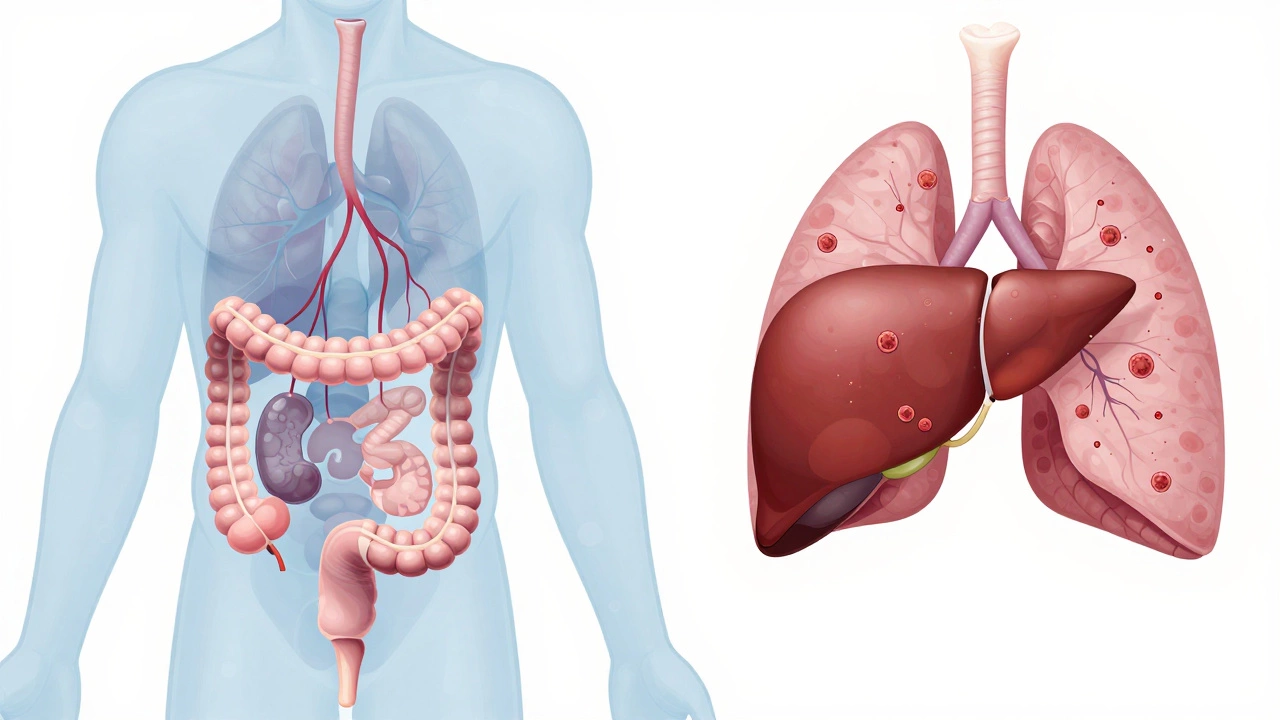
Yes. And that’s why follow-up care is non-negotiable. Even if stage 3 cancer appears to be gone after treatment, microscopic cells can remain. That’s why doctors recommend regular imaging, blood tests, and check-ups for years after treatment. Missing a scan or skipping a follow-up can mean catching a recurrence too late.
Studies show that about 30% of stage 3 colorectal cancer patients will see the disease return within five years. For stage 3 lung cancer, recurrence rates can be as high as 40%. That’s why doctors don’t just treat the visible tumor-they treat the risk of hidden spread. It’s like cleaning up a flood but still checking the pipes for leaks.
Survival Isn’t Just About Numbers
Survival statistics can feel cold. But real life isn’t a chart. A 70% five-year survival rate for stage 3 doesn’t mean 70 people out of 100 will live five years-it means some will live 10, some 15, and some won’t make it past two. Same with stage 4. Some people live for years with stable disease. Others decline quickly. It depends on the cancer type, genetics, overall health, and how well the body responds to treatment.
Take melanoma. In 2011, stage 4 melanoma had a median survival of just 6-9 months. Today, with immunotherapy drugs like pembrolizumab and nivolumab, nearly 40% of patients live five years or longer. That’s a game-changer. And it’s why doctors now say: "Stage 4 doesn’t mean the same thing it did ten years ago."
What Matters More Than the Stage
Here’s the truth no one tells you: Stage tells you where the cancer is-but not how it will behave. Two people with stage 4 lung cancer can have wildly different outcomes. One might have a mutation called EGFR that responds brilliantly to a daily pill. The other might have no targetable mutations and rely only on chemo. One might stay active, travel, and work part-time. The other might need constant oxygen and hospital visits.
What matters most isn’t the stage number-it’s:
- What type of cancer it is
- Whether there are specific gene mutations
- How well your body handles treatment
- Your age and overall health
- Access to newer therapies
That’s why two people with the same stage can have completely different journeys. One might be in remission for years. The other might need to change treatments every few months.
Is Stage 4 Always Worse Than Stage 3?
Most of the time, yes. But not always. There are rare cases where stage 3 cancer is more aggressive than some stage 4 cancers. For example, a fast-growing, poorly differentiated stage 3 pancreatic tumor might have a worse prognosis than a slow-growing, hormone-sensitive stage 4 prostate cancer that responds well to treatment.
And some stage 4 cancers are now treatable like chronic diseases-think of how people with HIV manage their condition with daily pills. Cancer is moving that way too. A 65-year-old with stage 4 kidney cancer might live longer than a 50-year-old with stage 3 liver cancer that’s resistant to all treatments.
So while stage 4 is generally more serious, the real answer is: It depends. The stage is a starting point, not a sentence.
What Should You Do If You’re Facing One of These Stages?
If you or someone you love is dealing with stage 3 or stage 4 cancer, here’s what to focus on:
- Get a second opinion. Especially if surgery or aggressive treatment is suggested. Not all hospitals have the same expertise.
- Ask about genetic testing. Many cancers now have targeted therapies based on DNA mutations.
- Don’t ignore mental health. Anxiety and depression are common. Counseling and support groups help more than you think.
- Ask about clinical trials. New drugs are being tested all the time-even for stage 4.
- Plan for quality of life. Talk about side effects, work, travel, and daily routines. Treatment shouldn’t destroy your life.
Stage 3 is a battle you can still win. Stage 4 is a long road-but it’s not a dead end. Medicine has changed. Hope isn’t just a word anymore. It’s a treatment option.
Is stage 4 cancer always terminal?
No, stage 4 cancer isn’t always terminal. While it means the cancer has spread to distant organs, many people live for years with stage 4 disease thanks to targeted therapies, immunotherapy, and hormone treatments. For example, some people with stage 4 breast or prostate cancer manage their condition like a chronic illness-with regular treatment and stable health for many years.
Can stage 3 cancer come back after treatment?
Yes, stage 3 cancer can return. Even after successful surgery and chemotherapy, microscopic cancer cells may remain. That’s why follow-up scans and blood tests are critical for years after treatment. Recurrence rates vary by cancer type-ranging from 20% to 40% in cancers like colorectal or lung cancer.
Why is stage 4 harder to treat than stage 3?
Stage 4 cancer is harder to treat because it’s no longer localized. Surgery can’t remove all the tumors if they’re scattered across the liver, lungs, or bones. Instead, doctors rely on systemic treatments like chemo, immunotherapy, or targeted drugs that travel through the bloodstream. These treatments are less precise, often come with more side effects, and may stop working over time.
Does stage 3 mean I’m closer to death than stage 2?
Not necessarily. Stage 3 means the cancer has grown larger and spread to nearby lymph nodes, but it hasn’t reached distant organs. Many people with stage 3 cancer are cured with surgery and adjuvant therapy. Stage 2 is earlier and has a higher survival rate, but stage 3 is still very treatable. The jump from stage 2 to stage 3 is significant, but it’s not a death sentence.
Are there new treatments for stage 4 cancer?
Yes. In the last five years, immunotherapy and precision medicine have transformed outcomes for many stage 4 cancers. Drugs like Keytruda (pembrolizumab) and Tecentriq (atezolizumab) help the immune system attack cancer cells. For cancers with specific gene mutations-like BRCA, ALK, or EGFR-oral targeted drugs can control the disease for years. Clinical trials are also testing new combinations that were impossible just a decade ago.