Sugar Intake Calculator
How much added sugar do you consume daily?
The WHO recommends no more than 6 teaspoons of added sugar per day. The average American consumes 17 teaspoons.
Enter your daily sugar intake to see your health risks.
When you think of unhealthy eating, you might picture fast food burgers or sugary sodas. But the real problem isn’t just what people eat-it’s what they eat every single day, for years, until their bodies break down. Some countries have diets so far off track that they’re driving a public health crisis. And it’s not about occasional indulgence. It’s about systemic, daily habits that are rewriting the health outcomes of entire populations.
The Top Contender: The United States
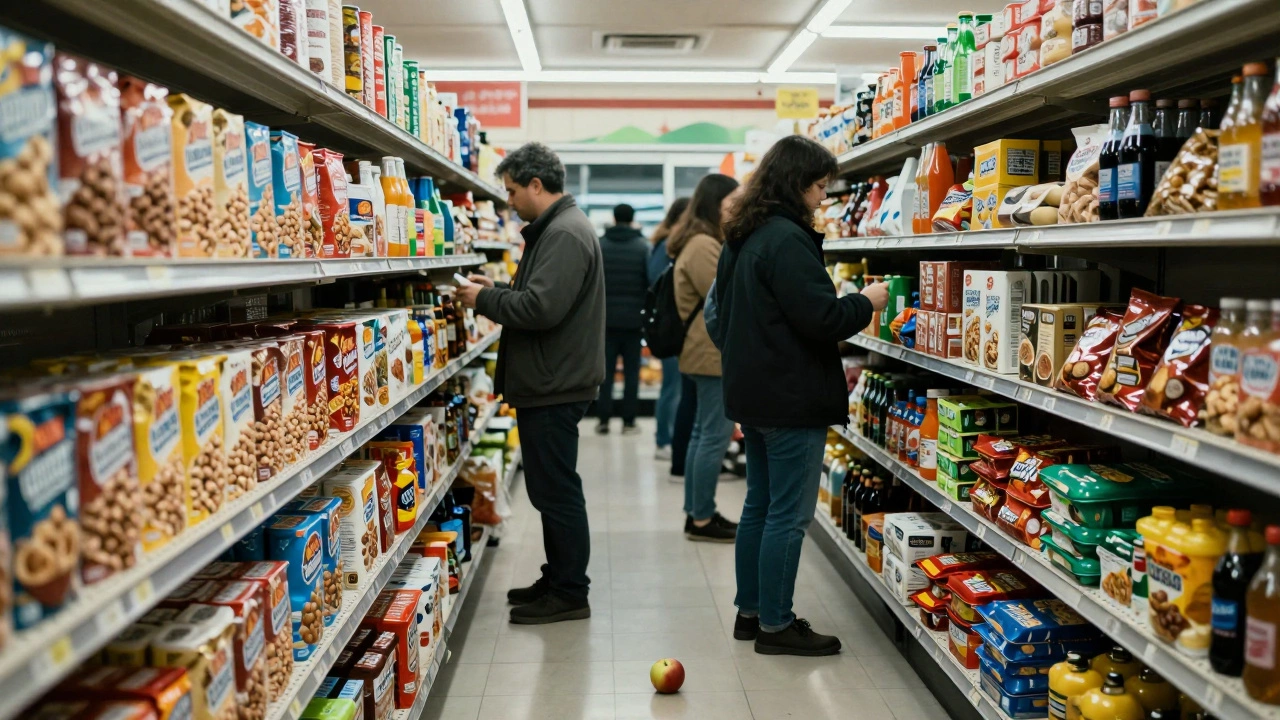
The U.S. consistently ranks as the country with the unhealthiest diet in the world, according to data from the Global Burden of Disease Study and the World Health Organization. Why? Because the average American eats more added sugar, ultra-processed foods, and sodium than almost any other nation. A typical daily diet includes sugary cereals, packaged snacks, soda, fried chicken, and refined grains. The average person consumes over 17 teaspoons of added sugar per day-nearly triple the WHO’s recommended limit.
It’s not just calories. It’s the quality. Over 60% of the American food supply comes from ultra-processed items-things you can’t find in nature. These foods are engineered to be addictive: high in salt, sugar, and fat, but low in fiber, vitamins, and protein. The result? One in three American adults has prediabetes. One in two has high blood pressure. And heart disease, the leading cause of death, is directly tied to diet.
Close Behind: Mexico and Saudi Arabia
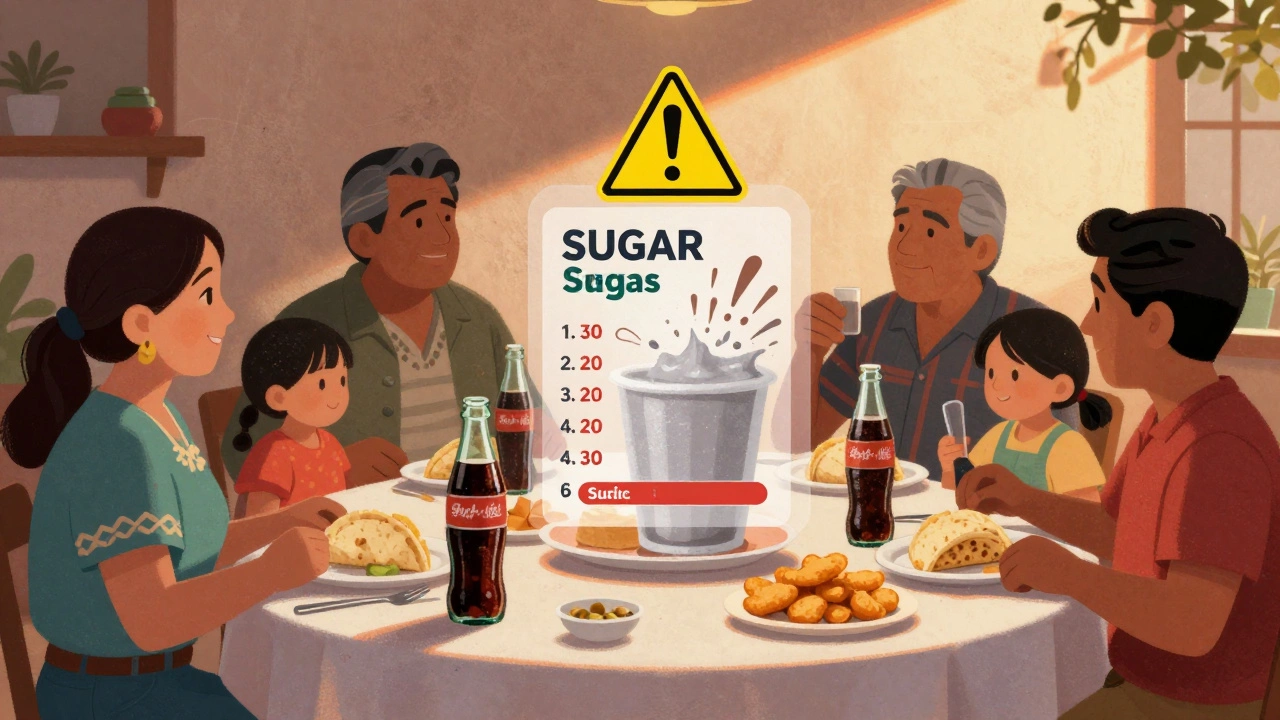
Mexico doesn’t just have the highest rate of obesity in Latin America-it has the highest rate of type 2 diabetes in the world. The shift from traditional corn-based meals to cheap, imported corn syrup and soda happened fast. Today, Mexicans drink more soda per capita than any other country. A single 20-ounce bottle of Coke has 65 grams of sugar. That’s more than the daily limit for an adult. Schools sell soda. Corner stores stock it. Families drink it with every meal.
Saudi Arabia’s story is similar but faster. In just 30 years, the country went from a diet centered on dates, whole grains, and grilled meats to one built on fast food chains, sugary drinks, and fried snacks. Over 35% of adults are diabetic. More than 70% are overweight or obese. The government now spends over $1.5 billion a year treating diet-related diseases-money that could’ve gone to education or infrastructure.
Why These Diets Took Hold
It’s not laziness. It’s not lack of willpower. It’s economics and marketing.
Ultra-processed foods are cheap to make and easy to ship. A bag of chips costs less than an apple in most places. Big food companies spend billions on ads targeting kids, low-income neighborhoods, and rural areas. In Mexico, soda ads air during telenovelas. In the U.S., fast food commercials run during children’s TV shows. These companies don’t sell food-they sell convenience, comfort, and emotional relief.
Meanwhile, healthy food is often inaccessible. In food deserts across the U.S., people live miles from a grocery store. In rural Saudi Arabia, fresh vegetables are expensive and hard to find. When your options are a gas station burrito or nothing, you choose the burrito.
The Human Cost
These diets don’t just cause weight gain. They cause organ failure.
Diabetes leads to kidney dialysis, amputations, and blindness. High sodium intake causes strokes and heart attacks. Trans fats from fried foods clog arteries. Sugar spikes insulin, which turns into fat-especially around the liver, leading to fatty liver disease, now the #1 liver condition in the U.S. and Mexico.
Children are growing up with conditions once seen only in adults. Type 2 diabetes in teens is now common. High blood pressure in kids? Routine. The World Health Organization says diet-related diseases will kill 40 million people a year by 2030-more than cancer, accidents, and HIV combined.
What This Means for Medical Tourism
If you’re considering medical tourism for diabetes care, heart surgery, or obesity treatment, you’re not just traveling for a procedure-you’re escaping a broken food system.
Many patients from the U.S., Mexico, and Saudi Arabia travel to countries like India, Thailand, and Germany for bariatric surgery, insulin management, or cardiac rehab. Why? Because they’ve seen their local healthcare system overwhelmed. A patient from Texas might pay $25,000 for gastric bypass at home. In India, the same surgery costs $5,000-and comes with a nutrition coaching program built in.
Some clinics now offer ‘diet recovery packages’-post-surgery stays with meal plans, cooking classes, and local food tours. You don’t just fix your body. You relearn how to eat. In Bangalore, clinics pair surgery with Ayurvedic dietary coaching, using turmeric, fenugreek, and bitter gourd to help reset metabolism. These aren’t gimmicks. They’re science-backed tools to break the cycle.

It’s Not Just About Food-It’s About Systems
You can’t fix a country’s diet by telling people to eat salad. You fix it by changing the system.
Some countries are trying. Mexico now taxes soda. Chile labels junk food with black warning stickers. The UK requires calorie counts on menus. These policies work. In Mexico, soda sales dropped 12% in the first year of the tax. In Chile, children’s consumption of sugary cereals fell by 25%.
But change is slow. And for people stuck in the cycle-working two jobs, living in a food desert, raising kids on cheap meals-the system feels impossible to escape. That’s why medical tourism isn’t just about saving money. It’s about finding a place where health is still possible.
What You Can Do
If you’re from one of these countries, or if you’re considering treatment abroad, here’s what actually helps:
- Start by cutting out one sugary drink a day. Swap soda for sparkling water with lime.
- Replace one processed snack with a handful of nuts or fruit. Even once a day makes a difference.
- Learn to read labels. If the ingredient list has more than five items you can’t pronounce, it’s probably ultra-processed.
- If you’re traveling for medical care, ask if the clinic includes nutrition coaching. Don’t just get the surgery-get the tools to stay healthy after.
Health isn’t about perfection. It’s about progress. One less soda. One more vegetable. One day at a time.
Which country has the unhealthiest diet in the world?
The United States has the unhealthiest diet globally, based on the highest intake of added sugar, ultra-processed foods, and sodium. Americans consume an average of 17 teaspoons of added sugar daily-nearly triple the WHO limit-and over 60% of their food supply comes from ultra-processed items. This drives the highest rates of obesity, type 2 diabetes, and heart disease among high-income nations.
Why is Mexico’s diet considered unhealthy?
Mexico has the highest rate of type 2 diabetes in the world, largely due to a dramatic shift from traditional corn-based meals to sugary soda and processed snacks. Mexicans consume more soda per capita than any other country, with an average of 720 liters per person annually. Cheap, heavily marketed soft drinks replaced water and traditional beverages, leading to widespread insulin resistance and obesity.
What role do ultra-processed foods play in poor diets?
Ultra-processed foods-like chips, frozen meals, sugary cereals, and packaged snacks-are engineered to be hyper-palatable and addictive. They’re high in salt, sugar, and unhealthy fats but low in fiber and nutrients. These foods make up over 60% of calories consumed in the U.S. and Mexico. They’re cheap, shelf-stable, and heavily advertised, making them the default choice for families with limited time and income.
How does diet affect medical tourism?
Many people from countries with poor dietary habits travel abroad for treatments like bariatric surgery, diabetes management, or heart surgery because local healthcare systems are overwhelmed. Countries like India and Thailand offer lower-cost procedures with integrated nutrition programs that teach sustainable eating habits-something often missing in home countries where fast food is everywhere and healthy options are expensive or hard to find.
Can diet-related diseases be reversed?
Yes, in many cases. Type 2 diabetes, fatty liver disease, and high blood pressure can improve or even reverse with dietary changes alone. Studies show that switching to whole foods-vegetables, legumes, whole grains, lean proteins-and cutting out sugary drinks and processed snacks can lower blood sugar and reduce liver fat within weeks. It’s not about starving or extreme diets. It’s about removing the worst offenders and adding real food.
What are the best first steps to improve your diet?
Start by eliminating one sugary drink per day. Replace it with water, unsweetened tea, or sparkling water with lemon. Swap one processed snack-like chips or cookies-for a piece of fruit or a small handful of nuts. Read ingredient labels: if you can’t recognize most of the items, it’s likely ultra-processed. Small, consistent changes add up faster than drastic overhauls.