Tulsi Comparison Tool
Why Tulsi Is the Mother of All Herbs
Tulsi is unique among Ayurvedic herbs because it works on multiple systems simultaneously. It's not just a single-purpose herb—it supports every other herb in your regimen. The ancient texts call it Amrita (nectar of immortality) because it enhances absorption, reduces toxicity, and carries the energy of other herbs deeper into the body.
Select an herb to compare with tulsi:
| Herb | Primary Use | Adaptogenic? | Immune Support | Used Daily? |
|---|---|---|---|---|
| Tulsi (Holy Basil) | General wellness, stress, immunity | Yes | Strong | Yes |
| Ashwagandha | Stress, sleep, energy | Yes | Moderate | Occasionally |
| Turmeric | Inflammation, joint pain | No | Mild | Yes |
| Neem | Detox, skin, blood purification | No | Strong | Occasionally |
| Amla | Vitamin C, digestion, hair | No | Moderate | Yes |
Tulsi's Unique Role
Tulsi is the only herb that scores high on all five key metrics. It works as a base for other herbs in Ayurvedic formulations, enhancing their effectiveness and reducing potential side effects. While other herbs focus on specific areas, tulsi provides foundational support to the entire system.
There’s one plant in Ayurveda that doesn’t just heal-it holds the whole system together. It’s not the most expensive herb, nor the rarest. But if you ask any traditional Ayurvedic practitioner in Varanasi, Kerala, or even a village in Karnataka, they’ll tell you: tulsi is the mother of all herbs.
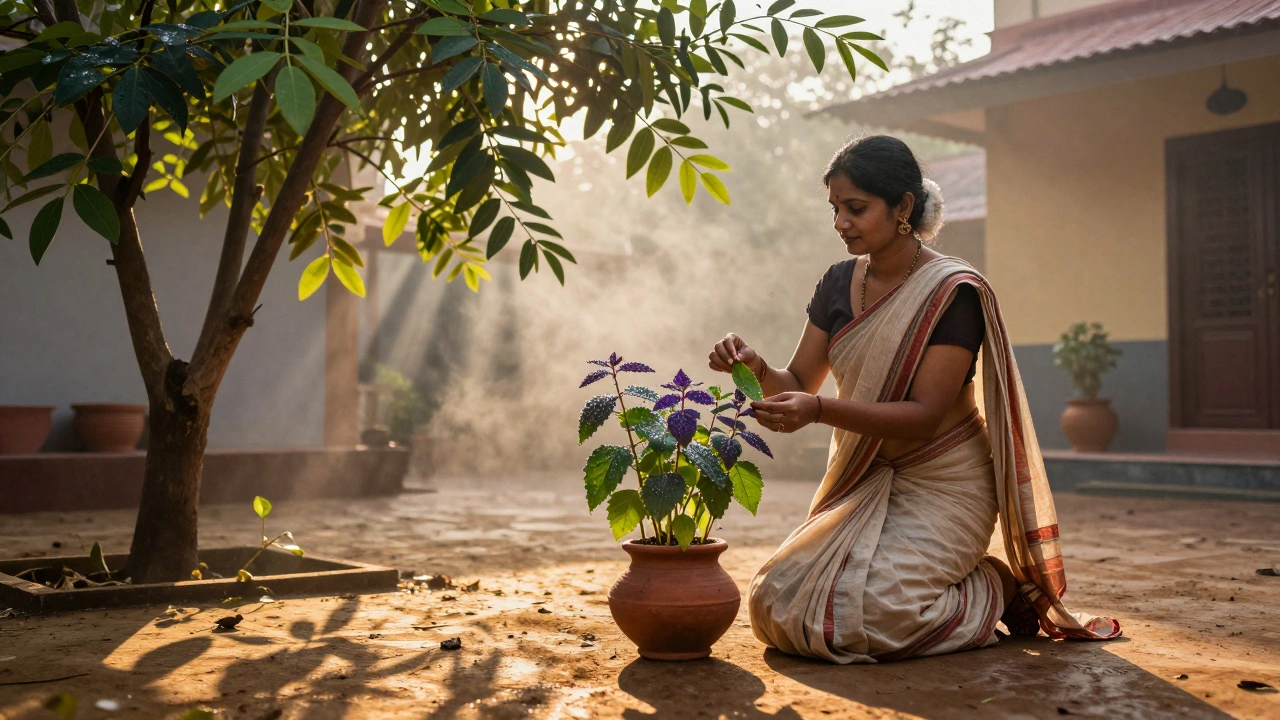
You’ve probably seen it growing wild near temple walls, in home courtyards, or tucked into small clay pots on balconies. It’s not just a plant. In India, it’s a living part of daily worship, a remedy for coughs, a stress reliever, and a protector against illness. But why does Ayurveda call it the mother of all herbs? It’s not just tradition. There’s science behind it too.
What Makes Tulsi Different From Other Herbs?
Most herbs do one thing well. Turmeric reduces inflammation. Ginger settles the stomach. Ashwagandha helps with sleep. But tulsi? It does them all-and more. It’s an adaptogen, meaning it helps your body handle stress. It’s an antioxidant, fighting free radicals that age your cells. It’s antimicrobial, antiviral, and anti-inflammatory all at once.
A 2018 study published in the Journal of Ayurveda and Integrative Medicine found that tulsi leaves contain over 100 active compounds, including eugenol, rosmarinic acid, and linalool. These aren’t just chemicals-they’re nature’s toolkit for balancing the body. Unlike synthetic drugs that target one symptom, tulsi works on multiple systems: immune, respiratory, digestive, nervous.
That’s why ancient texts like the Charaka Samhita and Sushruta Samhita list tulsi for more than 60 conditions-from fever and asthma to anxiety and skin infections. It’s not a cure-all, but it’s the closest thing Ayurveda has to a foundational medicine.
Why Is It Called the Mother of All Herbs?
The name isn’t poetic fluff. In Ayurveda, tulsi is called Vishnupriya-the beloved of Lord Vishnu-and Amrita, meaning nectar of immortality. But the real reason it’s called the mother is simple: it supports every other herb.
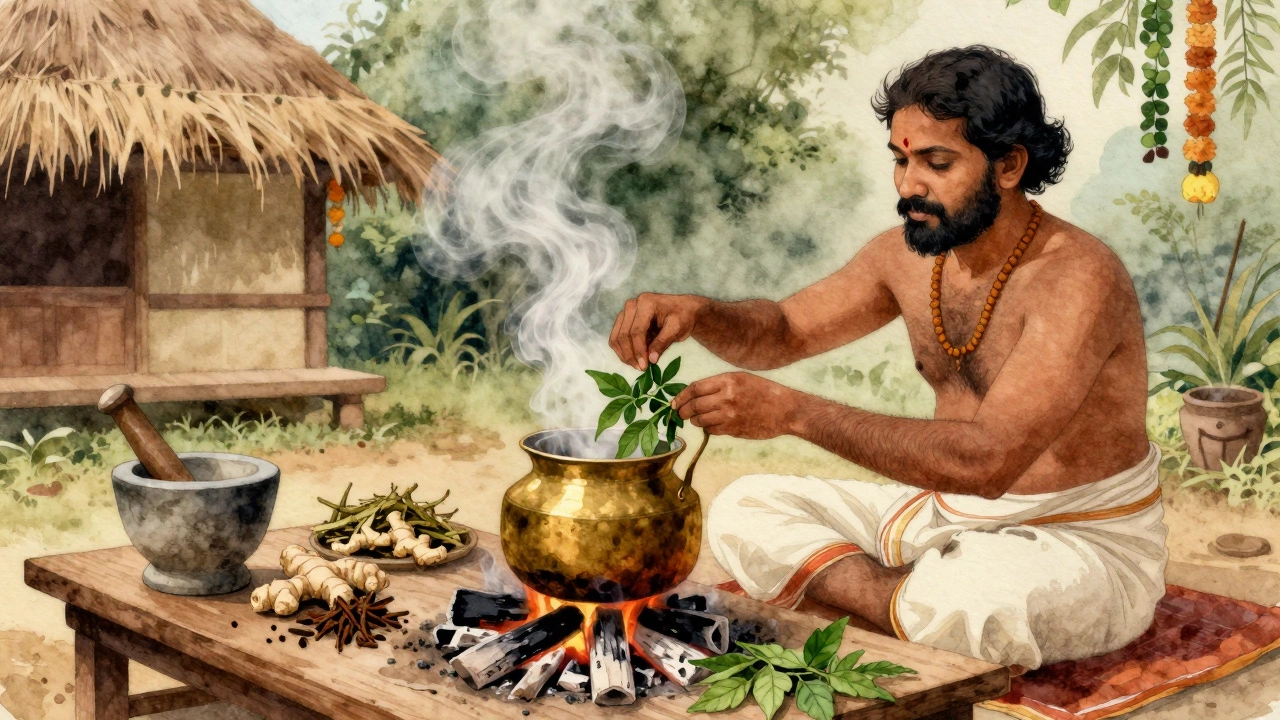
When you prepare a traditional Ayurvedic decoction, tulsi is often the base. If you’re making a tea for colds, you’ll add ginger and black pepper. But without tulsi, the blend feels incomplete. It enhances absorption. It reduces toxicity. It carries the energy of other herbs deeper into the body.
Think of it like a conductor in an orchestra. The violin, cello, and flute each play their part. But without the conductor, the music falls apart. Tulsi doesn’t overpower-it harmonizes. That’s why even in complex formulations like Chyawanprash or Triphala, tulsi is often included as a supporting agent.
How Is Tulsi Used in Daily Ayurvedic Practice?
In rural India, families still pluck fresh tulsi leaves every morning. Some chew two leaves on an empty stomach. Others boil them in water and sip the tea throughout the day. It’s common to see elderly women placing a few leaves in their water jug to purify it.
Here’s how it’s used in real life:
- For colds and coughs: Boil 5-6 leaves with ginger and honey. Drink warm twice a day.
- For stress: Chew 4-5 leaves slowly in the morning. The taste is sharp at first, then calming.
- For skin rashes: Crush leaves into a paste, apply directly. Reduces itching within hours.
- For digestion: Add dried tulsi powder to warm water after meals. Helps with bloating and gas.
- For immunity: Dry the leaves in shade, grind into powder, and take 1/4 teaspoon daily with honey.
There’s no magic dosage. It’s about consistency. People in villages don’t measure grams. They use their hands-two leaves here, a pinch there. That’s the Ayurvedic way: simple, natural, daily.
Is Tulsi Safe? Any Side Effects?
Yes, it’s safe for almost everyone. But like any herb, it’s not for everyone in every situation.
Some people report mild stomach upset if they take too much on an empty stomach. Pregnant women are often advised to avoid large quantities-though small amounts in tea are generally fine. It can lower blood sugar, so diabetics on medication should monitor their levels.
One thing to watch: tulsi has mild blood-thinning properties. If you’re on warfarin or aspirin, talk to your doctor before taking high doses daily. But for most people? A cup of tulsi tea every morning is as safe as drinking green tea.
And here’s the thing: you won’t find tulsi in a pill bottle labeled “1000 mg extract.” That’s not how it works. The power isn’t in the concentration-it’s in the whole plant, used regularly, in harmony with your rhythm.
How Does Tulsi Compare to Other “Miracle” Herbs?
Everyone talks about ashwagandha for stress. Or turmeric for inflammation. But tulsi is different. It doesn’t just treat one thing-it tunes your whole system.
Here’s a quick comparison:
| Herb | Primary Use | Adaptogenic? | Immune Support? | Used Daily? |
|---|---|---|---|---|
| Tulsi (Holy Basil) | General wellness, stress, immunity | Yes | Strong | Yes |
| Ashwagandha | Stress, sleep, energy | Yes | Moderate | Occasionally |
| Turmeric | Inflammation, joint pain | No | Mild | Yes |
| Neem | Detox, skin, blood purification | No | Strong | Occasionally |
| Amla (Indian Gooseberry) | Vitamin C, digestion, hair | No | Moderate | Yes |
Notice something? Tulsi is the only one that scores high on all five counts. That’s why it’s the mother. It doesn’t replace other herbs. It makes them work better.
Where to Find Real Tulsi-and What to Avoid
Not all tulsi is the same. There are three main types: Rama Tulsi (green leaves), Krishna Tulsi (purple leaves), and Vana Tulsi (wild variety). Krishna Tulsi is the most potent for medicinal use.
But here’s the catch: many brands sell “tulsi tea” that’s 90% mint or lemongrass with a sprinkle of dried tulsi. Check the label. If it says “natural flavor” or lists tulsi as the last ingredient, you’re not getting the real thing.
Buy whole leaves from a local Ayurvedic shop or grow it yourself. It’s easy. Plant it in a pot with sunlight and water it every 2-3 days. Within weeks, you’ll have your own supply. No shipping, no additives, no mystery.
Why Tulsi Still Matters Today
In a world of pills, apps, and AI doctors, tulsi reminds us that the best medicine is often the one you can grow in your backyard. It doesn’t need a patent. It doesn’t cost a fortune. It’s been trusted for 5,000 years because it works-slowly, steadily, quietly.
It’s not a quick fix. But if you want to build real resilience-against stress, pollution, seasonal illness, and burnout-tulsi is the quiet foundation most people overlook.
Start small. Pluck two leaves tomorrow morning. Chew them slowly. Notice how your throat clears. How your mind feels lighter. That’s not placebo. That’s the mother of all herbs, doing her job.
Is tulsi the same as basil?
No. Culinary basil (like sweet basil used in Italian cooking) is a different plant-Ocimum basilicum. Tulsi is Ocimum tenuiflorum. They look similar, but tulsi has a stronger, spicier scent and medicinal properties that culinary basil doesn’t have. Don’t substitute one for the other in Ayurvedic use.
Can I drink tulsi tea every day?
Yes. Most people drink 1-2 cups daily without issues. It’s gentle on the stomach and helps with digestion, immunity, and stress. If you’re pregnant, nursing, or on blood thinners, limit it to one cup a day and check with your doctor.
Does tulsi help with anxiety?
Yes. Studies show tulsi lowers cortisol, the stress hormone. People who chew 4-5 leaves daily report feeling calmer within 2-3 weeks. It’s not a replacement for therapy or medication, but it’s a powerful daily support for mild to moderate anxiety.
Can tulsi cure COVID-19 or other infections?
No. Tulsi boosts immunity and helps ease symptoms like cough and fever, but it does not cure viral infections like COVID-19. It should be used as supportive care, not as a treatment. Always follow medical advice during serious illness.
How long does it take for tulsi to work?
For acute issues like a sore throat or cold, you might feel relief in 1-2 days. For long-term benefits like stress reduction or immunity building, it takes 3-6 weeks of consistent use. Ayurveda doesn’t rush results. It builds strength over time.
If you want to feel the difference tulsi makes, don’t wait for the perfect moment. Start today. Pluck a few leaves. Chew them. Let the sharpness clear your head. That’s the first step to letting the mother of all herbs do her work.