
Silent Symptom & Risk Factor Checklist
Check Your Status
Select any factors that apply to you.
Subtle Physical Signs
Risk Factors
Assessment Score
Recommended Action:
You feel great. Your energy is high, you’re sleeping well, and your appetite hasn’t changed. So, logically, you assume your body is healthy. But what if that assumption is wrong? It is entirely possible to have cancer and feel absolutely fine. In fact, for many types of the disease, the early stages are completely silent. This disconnect between how you feel and what is happening inside your cells is one of the most dangerous misconceptions in modern medicine.
We often wait for pain or obvious changes before seeing a doctor. By then, the window for easy treatment may have closed. Understanding why some cancers hide so well can save your life. Let’s look at the reality of asymptomatic disease and why relying on "feeling fine" is a risky strategy.
Why Some Cancers Don't Cause Pain
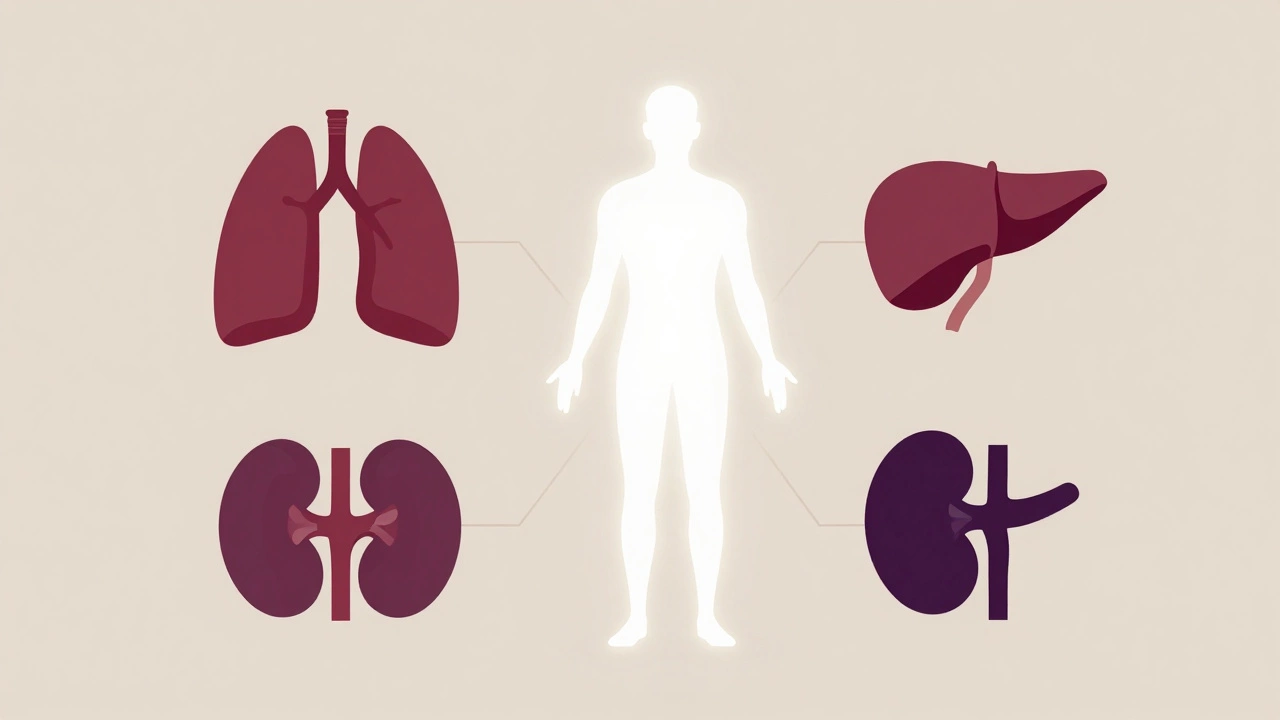
To understand why you might not feel sick, we need to look at biology. Many organs in your body do not have pain receptors (nociceptors) until they are stretched or invaded by other tissues. For example, your liver, lungs, and kidneys are largely silent when it comes to internal damage. A tumor can grow quite large within these organs before it presses on a nerve or disrupts function enough to cause discomfort.
Early-stage cancer is often microscopic or small enough that it does not interfere with daily bodily functions. Your body compensates efficiently. If a small mass forms in the colon, it might not block digestion. If a few cells mutate in the breast tissue, they won’t necessarily cause swelling or lumps you can feel from the outside. This biological stealth mode is why screening exists-not because you feel bad, but because statistics show you can be sick while feeling healthy.
The Most Common "Silent" Killers
Not all cancers are equally quiet, but several major types are notorious for lacking early warning signs. Knowing which ones to watch out for is crucial.
- Lung cancer: Often detected only after it has spread. Early tumors rarely cause coughing or chest pain unless they irritate airways. Many patients feel perfectly normal until shortness of breath becomes severe.
- Ovarian cancer: Known as the "silent killer" because its symptoms-like bloating or mild pelvic pressure-are easily mistaken for digestive issues or stress. By the time pain is significant, the cancer is often advanced.
- Pancreatic cancer: Located deep in the abdomen, early growths don't press on nerves. Jaundice (yellowing skin) usually appears only when the tumor blocks bile ducts, which happens later in the disease progression.
- Kidney cancer: Can grow significantly without causing blood in urine or flank pain until it reaches a substantial size.
- Prostate cancer: Early stages rarely affect urination or cause pain. It is almost always found through routine blood tests rather than patient complaints.
When "Feeling Fine" Becomes Dangerous
The danger isn't just the lack of pain; it's the false sense of security. When you feel energetic and vibrant, you skip check-ups. You ignore vague sensations like occasional fatigue or slight weight loss, attributing them to work stress or aging. This delay allows the disease to progress from Stage I (localized and highly treatable) to Stage III or IV (spread and harder to manage).
Consider this scenario: You are a non-smoker in your 50s. You feel fantastic. You skip your annual physical. Six months later, you develop a persistent cough. Tests reveal lung cancer that has already metastasized to the bones. The difference between survival and tragedy wasn't luck-it was the absence of symptoms masking a growing threat.
Subtle Signs You Might Be Missing
While you may not feel "sick," your body often sends subtle signals that are easy to dismiss. These aren't dramatic pains, but deviations from your personal baseline.
- Unexplained Weight Loss: Losing more than 5% of your body weight without dieting or exercise changes is a red flag. Cancer cells consume a lot of energy, stealing nutrients from your body.
- Persistent Fatigue: Not just tiredness after a long day, but a deep exhaustion that sleep doesn't fix. Anemia caused by internal bleeding (common in colon cancer) can make you feel drained without obvious pain.
- Skin Changes: A mole that changes shape, color, or size, or skin that turns yellow (jaundice), can indicate melanoma or liver issues.
- Changes in Bowel or Bladder Habits: Persistent diarrhea, constipation, or changes in stool caliber can signal colorectal cancer. Blood in urine may point to bladder or kidney issues.
- Non-Healing Sores: A sore in the mouth or on the skin that doesn't heal after two weeks could be oral or skin cancer.
These symptoms are common and often benign. However, their persistence is the key. If something feels "off" for more than a few weeks, investigate it. Do not wait for it to become painful.
The Power of Screening: Finding What You Can't Feel
Since you cannot rely on feelings, you must rely on data. Screening tests are designed specifically to detect asymptomatic cancer before it causes harm. They are the bridge between feeling fine and being healthy.
| Cancer Type | Screening Method | Starting Age | Frequency |
|---|---|---|---|
| Colorectal cancer | Colonoscopy or FIT test | 45 years | Every 10 years (colonoscopy) or annually (FIT) |
| Breast cancer | Mammogram | 40-50 years | Every 1-2 years |
| Cervical cancer | Pap smear / HPV test | 21 years | Every 3-5 years |
| Lung cancer | Low-dose CT scan | 50 years (if smoker) | Annually |
| Prostate cancer | PSA blood test | 50 years (or 45 if high risk) | As advised by doctor |
Note that guidelines vary based on family history and ethnicity. If you have a parent or sibling who had cancer, start earlier and talk to your doctor about genetic testing. Genetic mutations like BRCA1/BRCA2 significantly increase risk for breast and ovarian cancer, requiring more frequent monitoring.
Risk Factors That Demand Attention
Even if you feel fine, certain factors put you in a higher risk category. Ignoring these is playing Russian roulette with your health.
- Age: Risk increases exponentially after 50. Cell division errors accumulate over time.
- Family History: Having a first-degree relative with cancer doubles or triples your risk for certain types.
- Lifestyle Choices: Smoking, excessive alcohol consumption, and poor diet contribute to inflammation and DNA damage.
- Environmental Exposure: Long-term exposure to asbestos, radon, or UV radiation increases likelihood of specific cancers.
- Chronic Inflammation: Conditions like hepatitis B/C (liver cancer) or H. pylori infection (stomach cancer) create a breeding ground for malignancy.
What To Do If You Feel Fine But Are Worried
Anxiety about health is real, but panic is unhelpful. Instead, take proactive steps.
- Know Your Baseline: Understand what is normal for your body. Track changes in bowel habits, skin, and energy levels.
- Stay Up-to-Date on Screenings: Treat your annual physical as non-negotiable maintenance, like servicing a car.
- Discuss Family History: Share your medical pedigree with your doctor. They can tailor screening schedules to your specific risks.
- Adopt Preventive Habits: Quit smoking, limit alcohol, maintain a healthy weight, and use sunscreen. These actions reduce risk regardless of current symptoms.
- Listen to Intuition: If something feels "wrong," even if you can't pinpoint it, get checked. Doctors would rather rule out nothing than miss something serious.
The Bottom Line
Feeling fine is wonderful, but it is not a diagnostic tool. Cancer is a cellular disease that often operates below the threshold of human sensation in its earliest, most treatable stages. By understanding that silence does not equal safety, you empower yourself to seek care proactively. Regular screenings and awareness of subtle changes are your best defenses against the silent onset of disease.
Can you have stage 4 cancer and feel no symptoms?
It is rare but possible to have late-stage cancer with minimal symptoms initially, especially if the tumor grows slowly or in an area with few pain receptors. However, most stage 4 cancers eventually cause significant symptoms like fatigue, weight loss, or organ dysfunction as they spread. Feeling fine does not guarantee early stage, nor does pain guarantee late stage.
How often should I get screened for cancer if I feel healthy?
Follow general guidelines: annual physicals starting at age 40-45, with specific screenings like mammograms, colonoscopies, and Pap smears according to age and gender recommendations. If you have risk factors like family history, consult your doctor for a personalized schedule that may require more frequent testing.
Are there blood tests that can detect cancer early?
Some blood tests, like PSA for prostate cancer or CA-125 for ovarian cancer (though less reliable), can raise flags. Liquid biopsies and multi-cancer early detection (MCED) tests are emerging technologies that analyze circulating tumor DNA. However, these are not yet standard for everyone due to cost and false-positive rates. Traditional imaging and endoscopic screenings remain the gold standard.
Why doesn't cancer hurt in the beginning?
Pain occurs when nerves are compressed, inflamed, or damaged. Early tumors are small and often located in organs without dense nerve networks (like the liver or lungs). They do not interfere with organ function significantly until they grow large enough to obstruct pathways or invade surrounding tissues, which takes time.
What are the first signs of cancer that people often ignore?
Common ignored signs include persistent indigestion, unexplained bruising, chronic cough, changes in bowel habits, lumps that don't go away, and extreme fatigue. Because these symptoms overlap with common conditions like stress or minor infections, people often delay seeking medical advice, allowing potential cancer to progress.