
IVF Fertility Outlook Estimator
Based on data regarding "Second-Generation" IVF success rates and hereditary factors.
Select your details and click analyze to see your estimated fertility outlook based on current medical literature.
It is the question that keeps many parents who used assisted reproduction up at night. You spent months, maybe years, navigating clinics, injections, and emotional highs and lows to bring your child into the world. Now, as they grow older, you might find yourself wondering: will they face the same hurdles when it is their turn to start a family? Has an IVF baby had a baby?
The short answer is yes. Absolutely. In fact, thousands of children conceived through in vitro fertilization (IVF) are now adults, and many have successfully become parents themselves. Some conceive naturally, while others may need medical assistance. But does being born via IVF make it harder for them to reproduce later? Let’s look at what the science actually says, stripping away the fear-mongering and focusing on real data.
The First Wave of IVF Children Is Growing Up
To understand where we stand today, we have to look back. The first "test-tube baby," Louise Brown, was born in the United Kingdom in 1978. She gave birth to her first child, a son named Billy, in 2006 via natural conception. This was a massive moment for reproductive medicine. It proved that children born through IVF could not only survive but thrive and reproduce without assistance.
Louise Brown is just one example among many. As the first generation of IVF babies enters their thirties and forties, researchers have been tracking their health outcomes. Large-scale studies from countries with long histories of IVF, like Sweden, the UK, and Australia, show that the vast majority of these individuals have normal fertility profiles. They ovulate regularly, produce healthy sperm, and form families just like anyone else.
However, "most" doesn't mean "all." There is a nuanced conversation happening in the medical community about whether IVF-born individuals have a slightly higher risk of subfertility compared to the general population. The key is understanding why that might be and how significant it really is.
Natural Conception vs. Medical Assistance
When we ask if an IVF baby can have a baby, we usually mean: can they do it naturally? For most, the answer is a resounding yes. Data suggests that the majority of second-generation IVF individuals conceive spontaneously. Their bodies function within normal parameters regarding hormonal cycles and gamete production.
That said, some studies indicate a modest increase in the likelihood of needing fertility treatment themselves. A large cohort study published in *Human Reproduction* followed tens of thousands of IVF-conceived individuals. While most conceived naturally, those who did experience infertility were slightly more likely to seek help than peers conceived naturally. Does this mean IVF caused their infertility? Not necessarily. It often points to underlying genetic or environmental factors that affected the parents’ fertility in the first place.
If the parents struggled with infertility due to genetic issues, endometriosis, or unexplained causes, there is a chance those same biological tendencies could pass down to their child. So, the correlation between IVF birth and future fertility challenges might be linked more to heredity than the laboratory process itself.
| Metric | IVF-Conceived Adults | Naturally Conceived Adults |
|---|---|---|
| Natural Conception Rate | High (Majority) | High (Baseline) |
| Risk of Subfertility | Slightly Elevated (Context Dependent) | Standard Population Risk |
| Need for ART (Assisted Reproductive Technology) | Marginally Higher | Lower |
| Pregnancy Complications | Similar to General Population | Standard Baseline |
The Role of Epigenetics and Environment
This is where things get interesting for scientists. Epigenetics refers to changes in gene expression that do not involve changes to the underlying DNA sequence. Think of it as software running on hardware. The hardware (DNA) stays the same, but the software (epigenetic markers) tells genes when to turn on or off.
Some research suggests that the early stages of embryo development in a lab dish might influence these epigenetic markers. Conditions like temperature, oxygen levels, and culture media composition could theoretically leave subtle marks on the developing embryo. These marks might affect metabolic health or reproductive function decades later.
For instance, some studies have looked at blood pressure and BMI in IVF-conceived adults. The results have been mixed, but there is a cautious note that IVF individuals might have a slightly higher predisposition to certain metabolic conditions. Since reproductive health is closely tied to overall metabolic health, this could indirectly impact fertility. However, lifestyle factors-diet, exercise, stress management-play a much larger role in determining these outcomes than the method of conception alone.
It is crucial to remember that correlation is not causation. Just because an IVF-born person has a child via IVF does not mean the first IVF procedure broke something. It often means that the family line has a history of fertility challenges that span generations, regardless of technology.
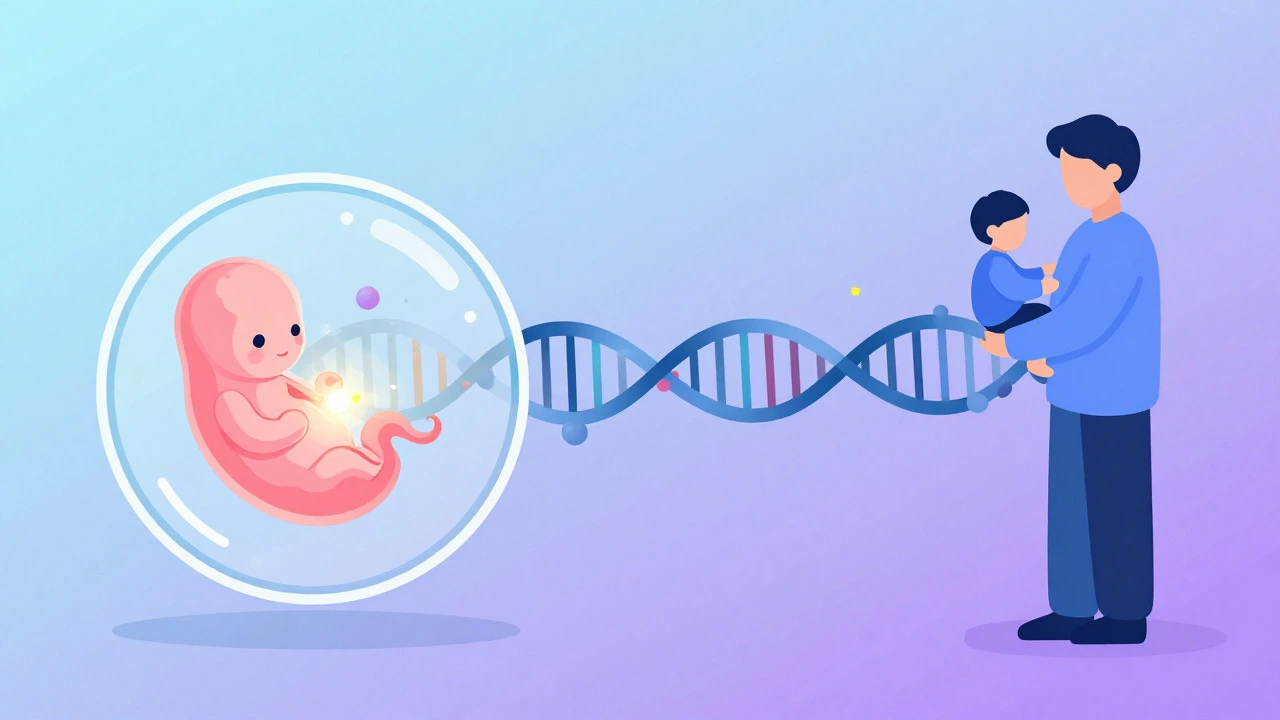
Male Fertility: Sperm Quality in Second Generation
A specific area of concern has been male fertility. Men whose fathers underwent IVF, particularly Intracytoplasmic Sperm Injection (ICSI), are sometimes scrutinized for potential sperm quality issues. ICSI involves injecting a single sperm directly into an egg, often used when severe male factor infertility is present.
If a man had poor sperm quality, his son might inherit similar genetic traits affecting spermatogenesis. Studies on sons of men treated with ICSI show that while their sperm counts might be lower than the average population, they are generally sufficient for natural conception or standard IVF. There is no evidence that ICSI causes permanent damage to the sperm’s ability to create viable offspring in the next generation.
In fact, many sons of ICSI patients have fathered children naturally. When they do require assistance, the success rates for their treatments are comparable to other men seeking fertility care. The takeaway here is reassurance: being born via ICSI does not condemn a boy to infertility.
Female Fertility: Ovarian Reserve and Cycle Health
For women born via IVF, the focus is often on ovarian reserve-the number and quality of eggs remaining. Current data indicates that IVF-conceived women have anti-Müllerian hormone (AMH) levels and antral follicle counts similar to naturally conceived women. This suggests that their "egg supply" is not depleted by their own conception method.
Menstrual regularity is another key indicator. Surveys of adult IVF offspring show that the vast majority report regular cycles. Irregular periods can signal hormonal imbalances like Polycystic Ovary Syndrome (PCOS). Interestingly, PCOS can run in families. If a mother had PCOS and needed IVF, her daughter is statistically more likely to have PCOS too. Again, this highlights the role of genetics over the IVF procedure itself.
Age remains the biggest factor in female fertility, regardless of how one was conceived. An IVF-born woman at age 35 faces the same biological clock as any other woman. Early family planning and preconception health checks are beneficial for everyone, not just those with an IVF background.

Psychological Factors and Family Planning
We cannot ignore the emotional weight carried by second-generation IVF individuals. Knowing you were "wanted" through intense medical effort can shape your identity. Some feel pressure to prove their fertility by conceiving naturally. Others might fear repeating their parents' struggles.
This anxiety can sometimes manifest physically. Stress impacts hormonal balance, which can affect conception. Counseling and open communication with parents can help alleviate this burden. Many fertility clinics now offer specialized support for "second-generation" patients, acknowledging that their journey is unique.
Understanding your family’s medical history is powerful. If you know exactly why your parents needed IVF-whether it was blocked tubes, low sperm count, or endometriosis-you can take proactive steps. For example, if endometriosis runs in the family, getting checked early if you experience pain can prevent long-term fertility damage. Knowledge is your best tool.
What Should You Do If You Were Born Via IVF?
If you are an adult conceived through IVF and thinking about starting a family, here is a practical approach:
- Know Your History: Ask your parents specifically why they needed treatment. Was it male factor? Female factor? Unexplained? This context matters more than the technique used.
- Preconception Checkup: Schedule a visit with a gynecologist or reproductive endocrinologist before trying to conceive. Basic blood work, ultrasound, and semen analysis (for men) provide a baseline.
- Healthy Lifestyle: Maintain a balanced diet, regular exercise, and healthy weight. These factors improve fertility outcomes for everyone, regardless of conception origin.
- Don’t Panic: Remember that most IVF-born people conceive naturally. Avoid doom-scrolling forums that amplify rare cases.
- Seek Support: If you struggle to conceive, seek help early. There is no shame in using technology, just as your parents did.
The Future of Third-Generation IVF
As we move further into the 2020s, we are seeing the emergence of third-generation IVF individuals-those whose parents were also born via IVF. Early data is promising. These individuals appear to have normal health and fertility metrics. Continued long-term tracking by global registries will provide even more clarity, but current trends suggest that assisted reproduction is a safe and effective way to build multi-generational families.
Technology continues to evolve. Preimplantation Genetic Testing (PGT) allows embryos to be screened for chromosomal abnormalities before transfer. This reduces the risk of passing down certain genetic conditions that might affect fertility. As these tools become more accessible, the gap between IVF-born and naturally born individuals in terms of health outcomes continues to narrow.
Can IVF babies have babies naturally?
Yes, the majority of individuals conceived through IVF can and do conceive naturally. Studies show that most second-generation IVF individuals have normal fertility functions, including regular ovulation and healthy sperm production. While a small percentage may require fertility assistance, natural conception is the norm rather than the exception.
Does being born via IVF increase the risk of infertility?
Research suggests a very slight increase in the likelihood of experiencing subfertility compared to the general population. However, this is often attributed to underlying genetic factors or parental health conditions that caused the original infertility, rather than the IVF procedure itself. The absolute risk remains low for most individuals.
Are there health risks for grandchildren of IVF parents?
Current data indicates that grandchildren of IVF parents (third-generation) have similar health outcomes to the general population. Long-term studies continue to monitor for subtle epigenetic effects, but no major health risks have been identified that would deter families from pursuing IVF.
Should IVF-conceived individuals see a fertility specialist before trying?
While not strictly mandatory, a preconception checkup is highly recommended. Knowing your family’s specific history of infertility allows for targeted screening. For example, if endometriosis or PCOS ran in the family, early detection can significantly improve chances of successful conception.
How does ICSI affect the fertility of sons born via IVF?
Sons born via ICSI may have slightly lower sperm counts than the average population, often reflecting the genetic traits of their fathers. However, these levels are typically sufficient for natural conception or standard fertility treatments. There is no evidence that ICSI causes permanent sterility in subsequent generations.