Post-Knee Replacement Bathroom Safety Checker
1. Pre-Toilet Setup Check
Ensure these items are ready before you attempt to go to the toilet. This reduces strain on your new knee.
2. Choose Your Technique
The Sit-and-Pivot Method
- Sit, don't stand: Standing risks falls due to leg weakness.
- Leg Position: Keep operated leg straight out in front.
- Lean Forward: Slightly lean forward to relax pelvic floor muscles.
- Don't Push: Let gravity and bladder muscles do the work.
Stability & Hygiene Strategy
- Knee Support: Place a pillow under the calf if full extension hurts.
- Wiping: Reach from front between legs, not back over shoulder.
- Hygiene: Use peri-bottle rinse instead of aggressive wiping to avoid torque.
- Balance: Use grab bars for every movement.
3. Urinary Retention Troubleshooter
If you feel the urge but can't go, try these natural triggers before calling a nurse/doctor:
- Run Water: The sound triggers a reflex response.
- Warm Compress: Apply warm (not hot) towel to lower abdomen to relax sphincters.
- Privacy: Close door, dim lights, deep belly breaths. Anxiety tightens muscles.
- Change Position: Ask for help to stand briefly with support if sitting fails.
4. Red Flags: Call Surgeon
- Fever > 101°F (38.3°C) UTI Risk
- Burning / Cloudy Urine Infection
- No Urine > 8 Hours Retention
- Persistent Blood in Urine Hematuria
Ready for Safe Toileting
Reminder: Stay hydrated (8-10 glasses/day) unless restricted. Limit fluids 2 hours before bed to reduce night-time fall risks.
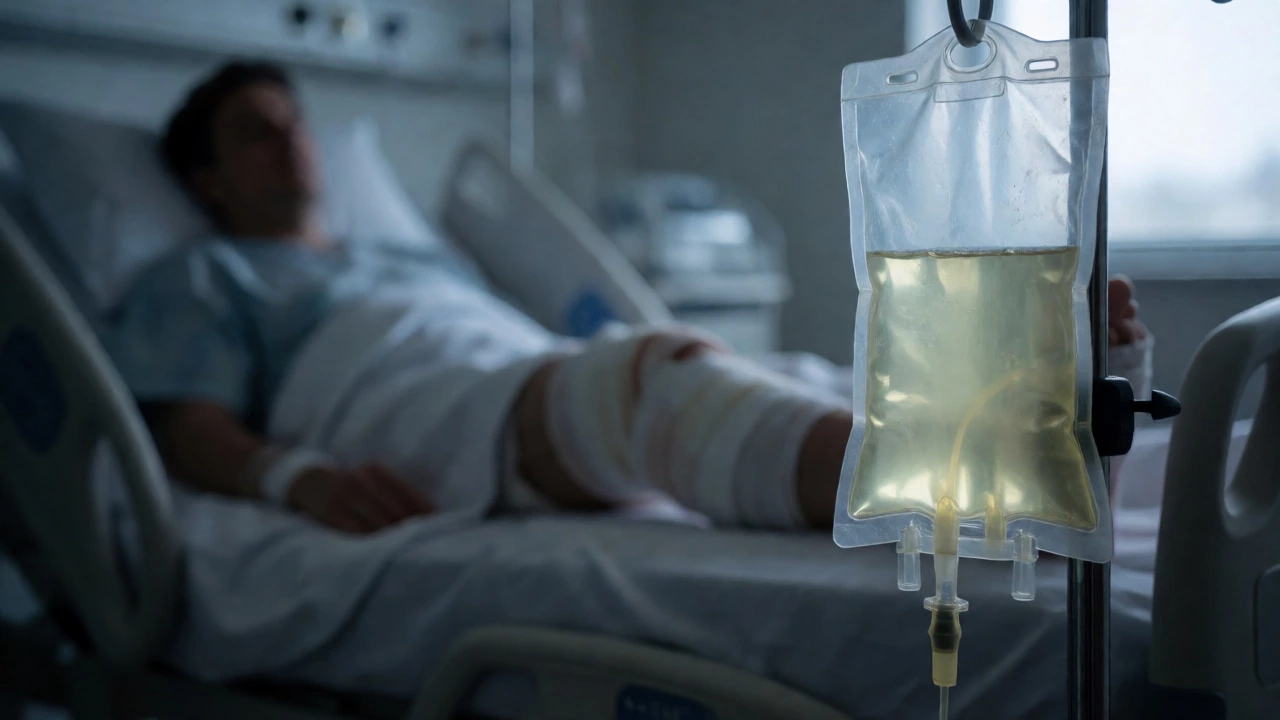
You just woke up from anesthesia. Your new knee is wrapped in bulky bandages, your leg feels heavy, and there’s a strange urgency in your bladder. It’s a universal panic moment for patients: how do you pee after knee replacement? The fear isn't just about the act itself-it's about navigating a hospital room or home bathroom with a stiff, painful joint while trying to maintain dignity and hygiene. If you’re currently facing this hurdle, know that struggling to urinate immediately after surgery is incredibly common. In fact, studies suggest that up to 30% of patients experience some degree of difficulty due to anesthesia effects and physical limitations. But with the right techniques and tools, you can manage it safely without compromising your surgical outcome.
The Immediate Post-Op Reality
In the first 6 to 12 hours after surgery, you likely won’t be walking to the toilet. Most hospitals use a temporary catheter-a thin tube inserted into the urethra-to drain urine while you are still groggy from spinal or general anesthesia. This prevents you from straining, which could spike your blood pressure or stress the fresh incision. Once the catheter is removed, usually within 24 hours, the real challenge begins. Your body needs to relearn the signal-to-action loop. Anesthesia suppresses the nerves that tell your brain "it’s time to go," and pain medications (opioids) tighten the muscles around the bladder neck. So, if you feel like you have to go but nothing comes out, don’t panic. It’s a physiological delay, not a failure.
Techniques for Men: The Standing vs. Sitting Debate
For men, the question often shifts to posture. Should you stand or sit? Traditionally, men stand. But after a total knee arthroplasty, standing on one leg or balancing on two weak legs is risky. Gravity helps with flow when standing, but stability is paramount. Here is the practical approach:
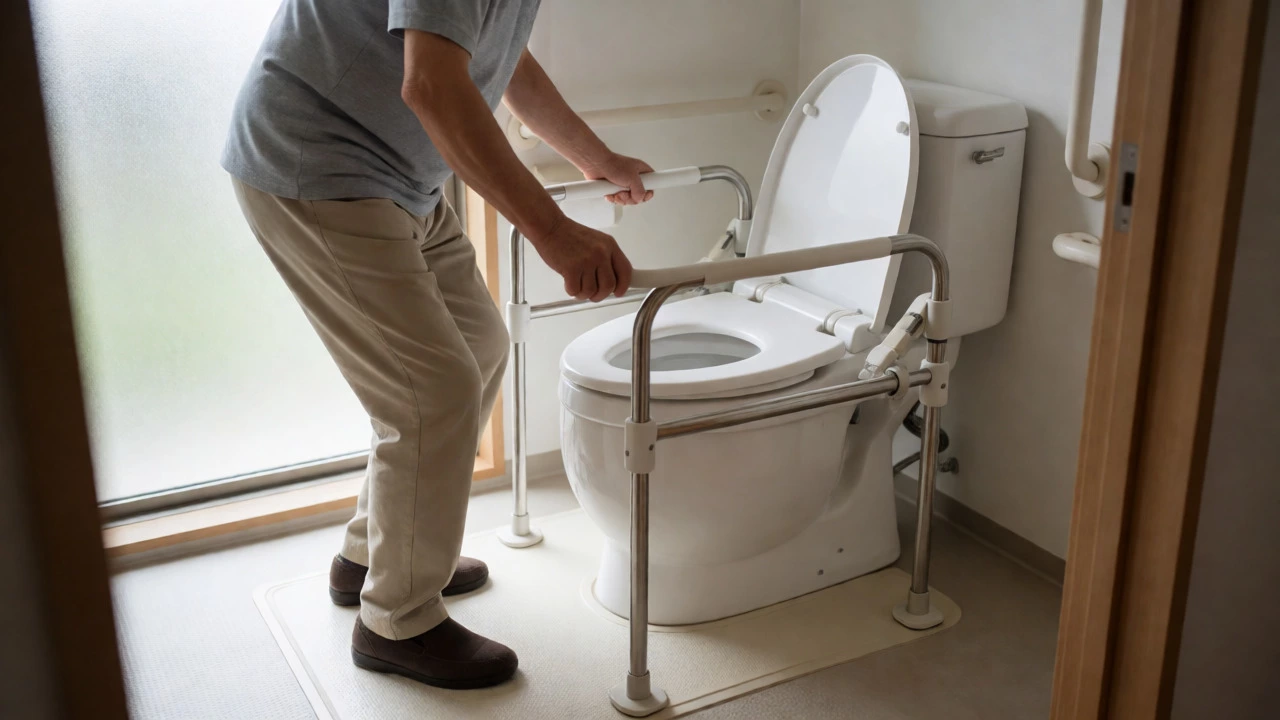
- The Sit-and-Pivot Method: Keep your operated leg extended straight out in front of you. Use your hands on the toilet seat rails (or grab bars) to lower yourself down slowly. Let your non-operated leg bend naturally to take your weight.
- Use a Raised Toilet Seat: Standard toilets are too low. Bending your new knee past 90 degrees can strain the repair. A raised seat reduces the depth of the squat, making it easier to get up and down without bending the knee excessively.
- Leaning Forward: While seated, lean slightly forward. This relaxes the pelvic floor muscles and opens the urethral angle, facilitating easier flow. Avoid holding your breath or pushing hard; let the bladder muscle (detrusor) do the work.
Techniques for Women: Stability and Hygiene
Women face similar balance issues but also need to manage wiping mechanics carefully. Reaching behind to wipe can twist the torso and put torque on the hip and knee joints.
- The Bidet Advantage: If available, use a bidet attachment. It eliminates the need for awkward twisting motions. If you don’t have one, consider a peri-bottle (a squeeze bottle used for postpartum care) to rinse rather than wipe aggressively.
- Knee Positioning: When sitting on the toilet, try to keep the operated leg as straight as possible. If your knee stiffness prevents full extension, place a small pillow under the calf to support it in a comfortable position. Do not force the knee into an uncomfortable angle just to sit normally.
- Wiping Strategy: Reach from the front between your legs rather than reaching back over the shoulder. This keeps your spine neutral and reduces rotational stress on the healing knee.
Troubleshooting Urinary Retention
If several hours pass after removing the catheter and you still haven’t peed, you might be experiencing urinary retention. This is when the bladder fills but cannot empty completely. Signs include discomfort above the pubic bone, a feeling of fullness, or dribbling instead of a steady stream.
Try these natural triggers before calling the nurse or doctor:
- Run Water: The sound of running water can trigger a reflex response in the bladder.
- Warm Compress: Place a warm (not hot) towel over the lower abdomen. Heat relaxes the sphincter muscles.
- Privacy and Relaxation: Anxiety tightens muscles. Close the door, dim the lights, and take deep belly breaths. Tensing your abs to push actually makes it harder to void; focus on relaxing the pelvic floor.
- Change Position: If sitting doesn’t work, ask a caregiver to help you stand briefly with support. Sometimes the change in hydrostatic pressure helps initiate flow.
If these fail after 6-8 hours, medical intervention may be needed. A quick scan with a bladder scanner can measure residual urine, and a one-time catheterization might be required to prevent infection or kidney stress.
Bathroom Safety Modifications
Your bathroom setup matters more than you think. A slippery tile floor combined with a swollen, painful knee is a recipe for a fall. Before discharge, ensure these modifications are in place:
| Tool | Purpose | Safety Benefit |
|---|---|---|
| Raised Toilet Seat | Increases height by 4-6 inches | Reduces knee flexion angle; easier to stand up |
| Toilet Safety Frame | Sturdy handles on both sides | Provides leverage without putting weight on knees |
| Non-Slip Mat | Adhesive-backed rubber mat | Prevents slipping on wet tiles |
| Grab Bars | Wall-mounted supports near toilet/shower | Secure anchor points for balance |
Avoid using towels or shower curtains as handholds-they aren’t designed to support body weight. Install permanent grab bars or use freestanding frames specifically rated for bariatric or orthopedic use.

Managing Incontinence and Leaks
It’s embarrassing, but leaking urine during the first few days is normal. Coughing, sneezing, or laughing puts pressure on the bladder (stress incontinence), especially since your core muscles might be weakened from bed rest. Additionally, strong painkillers can cause sedation, leading to accidental release before you realize you need to go. Don’t skip fluids to avoid leaks; dehydration leads to concentrated urine, which irritates the bladder and causes spasms. Instead, wear absorbent pads if needed, and prioritize hydration to flush out bacteria.
When to Call Your Surgeon
While minor delays are expected, certain symptoms require immediate attention. Contact your healthcare provider if you notice:
- Fever above 101°F (38.3°C), which could indicate a urinary tract infection (UTI).
- Burning sensation or cloudy, foul-smelling urine.
- Inability to urinate for more than 8 hours despite feeling the urge.
- Blood in the urine (hematuria) that persists beyond the first day.
UTIs are a common complication after joint replacement because catheters introduce bacteria. Early treatment with antibiotics prevents the infection from spreading to the bloodstream, which could jeopardize the artificial joint.
Can I hold my urine after knee replacement?
No, it is better to respond to the urge promptly. Holding urine stretches the bladder wall, which can weaken the detrusor muscle and make future voiding difficult. Also, rushing to the bathroom later increases the risk of falls due to urgency. Plan trips every 2-3 hours during the day.
Why is it so hard to pee after spinal anesthesia?
Spinal anesthesia blocks nerve signals from the bladder to the brain and from the brain to the bladder sphincter. This creates a temporary disconnect where you may not feel the fullness until it is critically high, or you cannot voluntarily relax the sphincter to let urine out. This effect typically wears off within 12-24 hours.
Should I use a bedside commode?
Yes, for the first week. Walking to the bathroom, even a short distance, can be tiring and risky. A portable commode placed next to your bed eliminates the need to navigate hallways or slippery floors at night. Ensure it has armrests and lockable wheels for stability.
Do opioids affect urination?
Absolutely. Opioid painkillers increase tone in the urinary sphincter and decrease bladder sensation. This combination makes it harder to start the stream and reduces the urge to go. As you taper off opioids and switch to NSAIDs or acetaminophen, bladder function usually improves significantly.
How much water should I drink?
Aim for 8-10 glasses (approx. 2 liters) daily unless restricted by other conditions like heart failure. Adequate hydration keeps urine dilute, reducing irritation and infection risk. However, limit fluids 2 hours before bedtime to minimize nighttime bathroom trips, which are high-risk times for falls.
Next Steps for Smooth Recovery
Mastering the bathroom routine is a milestone in your recovery. Start by practicing the transfer technique (sit-to-stand) with a therapist before attempting it alone. Keep your path clear of rugs and cords. If you live alone, arrange for someone to stay with you for the first 48 hours. They can assist with positioning and monitor for signs of retention. Remember, patience is key. Your body is healing from major trauma, and bladder control will return gradually. Celebrate the small wins-like successfully using the toilet without assistance-as proof that you are regaining independence.