
Cancer Prognosis & Survival Rate Estimator
Patient Profile
Select your parameters and click "Estimate Prognosis" to see data-driven insights based on current medical statistics.
Estimated 5-Year Survival
--%
Prognosis Goal
--
Detailed Analysis
Recommended Questions for Your Doctor:
...
Receiving a cancer diagnosis often triggers one immediate, terrifying question: "How much time do I have?" It is the most human reaction to fear. You want a number. You want a deadline. But if you ask an oncologist this question, they will likely pause. They won't give you a single date on a calendar. Instead, they will talk about statistics, stages, and probabilities. This can feel like evasion, but it isn't. The truth is that cancer is not one disease; it is hundreds of different diseases with vastly different outcomes.
The answer to how long someone can live with cancer ranges from weeks to decades. Some forms are aggressive and fatal within months without treatment. Others, like certain types of thyroid or prostate cancer, allow people to live full, normal lifespans, dying with cancer rather than from it. Understanding this spectrum requires looking past the headline numbers and understanding what actually drives longevity in cancer patients.
Understanding the Five-Year Survival Rate
When doctors discuss life expectancy, they rarely use "years left." Instead, they use a metric called the five-year survival rate. This statistic represents the percentage of people who are still alive five years after their diagnosis. It is crucial to understand what this number does-and does not-mean.
First, it is based on historical data. If you are diagnosed today, your outlook might be better than the current statistics suggest because treatments improve rapidly. Second, being "alive at five years" does not mean cured. Many cancers, especially blood cancers like leukemia or lymphoma, are managed as chronic conditions. A patient might survive ten, fifteen, or twenty years while taking medication daily.
According to recent data from organizations like the American Cancer Society and the National Cancer Institute, the overall five-year survival rate for all cancers combined in the United States is approximately 68%. However, this average hides massive disparities between specific types:
- Melanoma (skin cancer): When detected early, the five-year survival rate exceeds 99%.
- Breast cancer: Localized breast cancer has a five-year survival rate of nearly 99%, but drops significantly if it spreads to distant organs.
- Pancreatic cancer: This remains one of the deadliest forms, with an overall five-year survival rate hovering around 12-13%.
- Lung cancer: Historically low, but rising due to new targeted therapies, now sitting around 24% overall.
These numbers are averages. They do not account for your age, your general health, or the specific genetic mutations driving your tumor. An average is a tool for population planning, not a crystal ball for individual fate.
The Critical Role of Cancer Stage
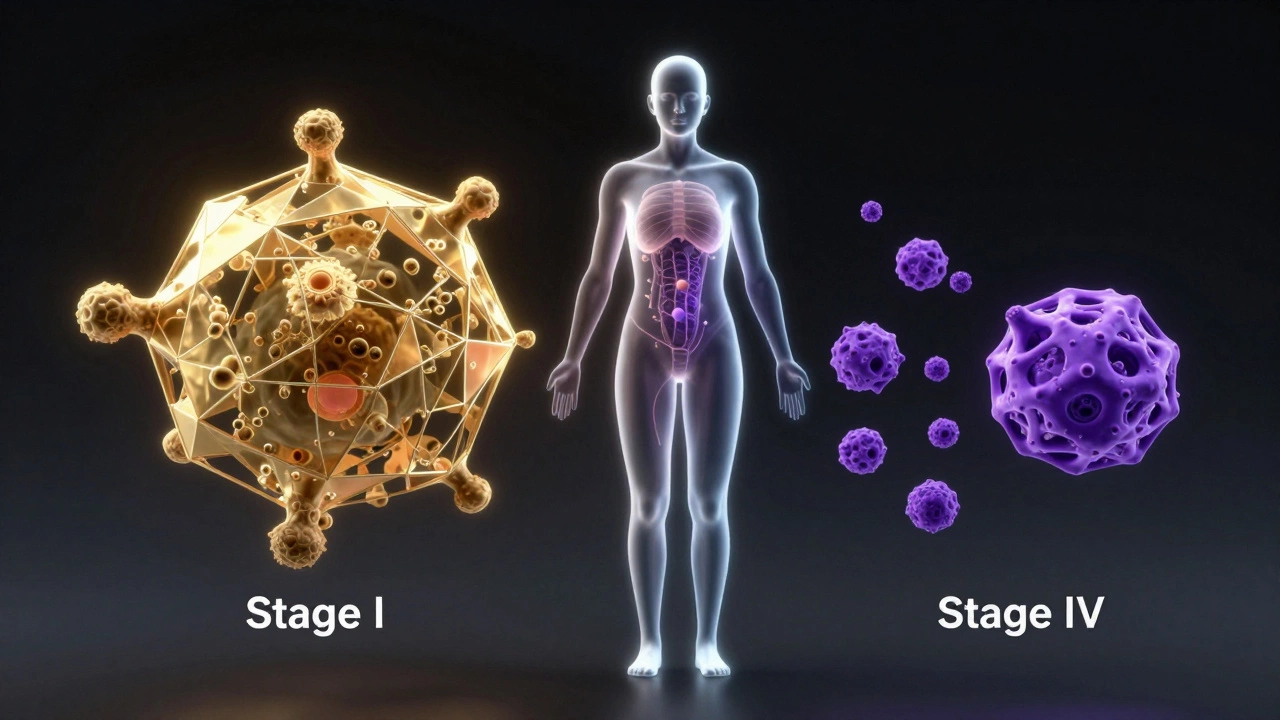
If there is one factor that predicts lifespan more accurately than any other, it is the stage of the cancer at diagnosis. Doctors use the TNM system (Tumor, Node, Metastasis) to classify severity, generally grouping them into four main stages.
| Stage | Description | Typical Prognosis |
|---|---|---|
| Stage 0 / I | Carcinoma in situ or localized tumor | Often curable; near-normal life expectancy |
| Stage II / III | Tumor has grown locally or spread to nearby lymph nodes | Variable; often treatable with surgery and adjuvant therapy |
| Stage IV | Metastatic cancer; spread to distant organs (lungs, liver, bones) | Generally considered incurable; focus shifts to extending quality life |
Stage I cancers are often contained within the organ of origin. Surgery alone can sometimes remove them entirely. For example, a Stage I non-small cell lung cancer has a five-year survival rate of over 80%. In contrast, Stage IV indicates metastasis. Once cancer cells break away and travel through the bloodstream to seed new tumors in other parts of the body, complete eradication becomes extremely difficult. The goal then shifts from cure to control-managing the disease like diabetes or hypertension to extend life by months or years.
How Modern Treatments Are Changing Lifespans
The landscape of cancer care has shifted dramatically in the last decade. We are moving away from the blunt instrument of traditional chemotherapy toward precision medicine. This shift is directly impacting how long patients live.
Immunotherapy has been a game-changer. Drugs like checkpoint inhibitors (e.g., pembrolizumab, nivolumab) teach the immune system to recognize and attack cancer cells. In some patients with advanced melanoma or lung cancer, immunotherapy has led to durable remissions lasting many years, even when all other options failed. Before these drugs, those patients might have had a median survival of less than a year. Now, a subset of patients survives five, ten, or more years.
Targeted therapy attacks specific genetic mutations. For instance, patients with non-small cell lung cancer harboring the EGFR mutation can take oral pills that shrink tumors and extend life significantly compared to standard chemo. Similarly, HER2-positive breast cancer, once aggressive, is now highly manageable thanks to drugs like trastuzumab (Herceptin).
Even in India, access to these global-standard treatments is expanding. Hospitals in cities like Bangalore, Mumbai, and Delhi offer immunotherapy and targeted agents, often at a fraction of Western costs. This accessibility means that geographic location matters less than it did ten years ago, though insurance coverage remains a hurdle for many families.
Personal Factors That Influence Survival
Statistics assume an "average" patient. You are not average. Your personal biology and lifestyle play a massive role in your trajectory.
- Age and Fitness: Younger patients generally tolerate aggressive treatments better. However, "biological age" matters more than chronological age. A fit 70-year-old may survive longer than a frail 50-year-old because they can withstand higher doses of radiation or surgery.
- Comorbidities: Conditions like heart disease, diabetes, or obesity complicate treatment. They increase the risk of side effects and infections, which can delay or stop cancer therapy.
- Tumor Biology: Two people can have Stage III colon cancer, but one tumor might grow slowly (low grade), while the other is aggressive (high grade). Genetic testing of the tumor helps predict this behavior.
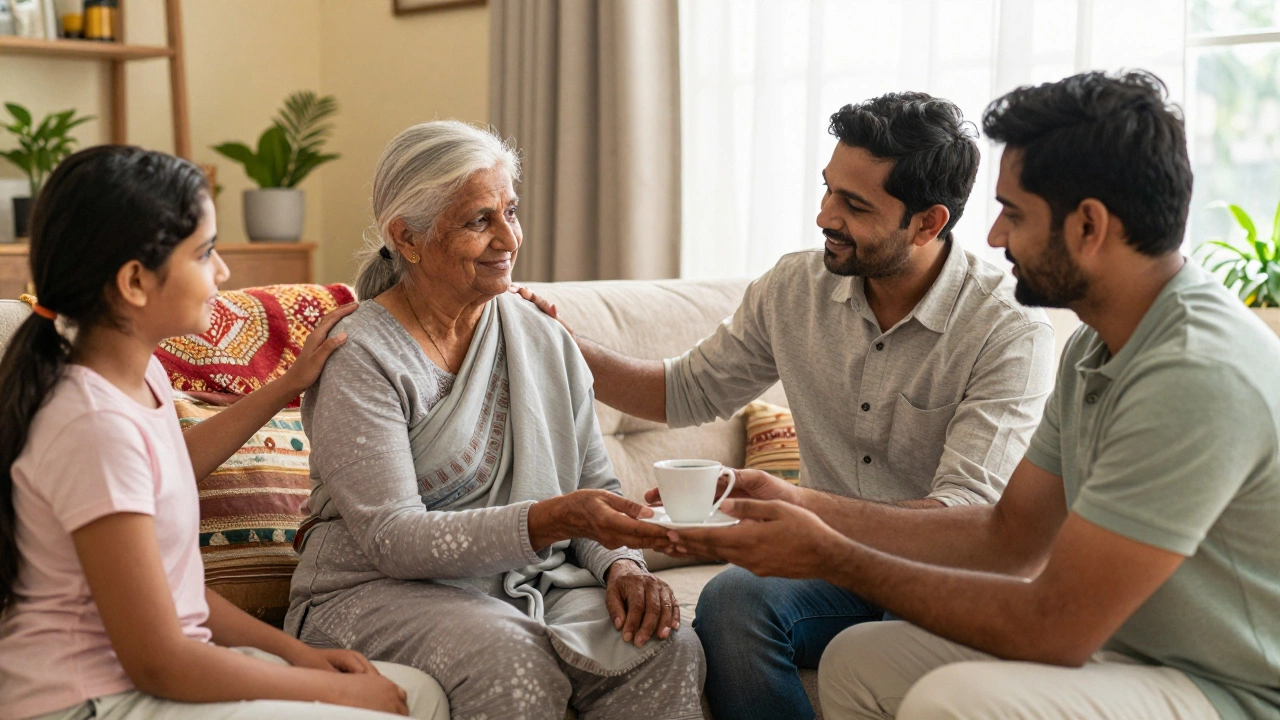
- Mental Health and Support: While mindset doesn't cure cancer, depression and isolation worsen outcomes. Patients with strong social support systems adhere better to treatment plans and recover faster from surgeries.
Living With Advanced Cancer: Quality vs. Quantity
For many, the question isn't just "how long," but "how well." Palliative care is often misunderstood as end-of-life care only. In reality, palliative care is specialized medical care focused on relieving symptoms and stress. It works alongside curative treatment.
Studies consistently show that patients who start palliative care early-not just in their final weeks-live longer. Why? Because managing pain, nausea, and fatigue allows patients to maintain strength, eat better, and continue receiving chemotherapy. It’s about maximizing the quality of every day gained.
In the context of Indian healthcare, family dynamics play a huge role. Caregiver burnout is real. Ensuring that the support network is healthy ensures that the patient receives consistent, compassionate care, which indirectly supports longevity.
What To Ask Your Doctor About Prognosis
Don't accept vague answers. Prepare specific questions for your next oncology visit:
- "What is the stage and grade of my cancer?"
- "Are there genetic markers in my tumor that qualify me for targeted therapy or immunotherapy?"
- "What is the goal of this treatment: cure, control, or comfort?"
- "Based on similar cases, what is the realistic range of survival times?"
- "How will this treatment affect my daily life and quality of life?"
Remember, a prognosis is a snapshot, not a destiny. Medicine evolves. New trials emerge. Today's "untreatable" cancer might be tomorrow's manageable condition. Stay informed, stay engaged, and focus on the steps you can control right now.
Is a 5-year survival rate the same as being cured?
Not necessarily. A 5-year survival rate means the patient is alive five years after diagnosis. For some cancers, like early-stage breast or prostate cancer, surviving five years often implies a cure. For others, like chronic leukemias or metastatic melanoma, patients may live beyond five years but still require ongoing treatment to manage the disease.
Can lifestyle changes extend life with cancer?
Yes. While diet and exercise cannot cure cancer, they significantly impact treatment tolerance and recovery. Maintaining muscle mass, eating a nutrient-rich diet, and avoiding smoking/alcohol can reduce complications, allowing patients to complete full courses of chemotherapy or radiation, which improves survival odds.
Why do survival rates vary so much between countries?
Survival rates depend heavily on early detection and access to advanced treatments. Countries with robust screening programs (like mammography or colonoscopy) detect cancers at earlier, more curable stages. Additionally, access to newer drugs like immunotherapy varies by region and insurance coverage, affecting outcomes.
What is the difference between median survival and mean survival?
Median survival is the time point at which 50% of patients are still alive. It is often used because it is less skewed by outliers (patients who live exceptionally long or short periods). Mean survival is the average. In cancer statistics, median is more commonly cited because it provides a clearer picture of the "typical" outcome.
Does stress cause cancer to spread?
There is no direct evidence that stress causes cancer to metastasize. However, chronic stress weakens the immune system and can lead to unhealthy coping behaviors (poor diet, lack of sleep), which may indirectly hinder the body's ability to fight the disease and tolerate treatment. Managing stress is part of holistic care.