Medicare Abroad Coverage Checker
Most people assume their Medicare card works everywhere. It doesn't. Use this tool to check if your specific scenario might be covered or if you are fully liable for costs.
Fill out the form to see if Medicare covers your situation.
Medicare May Pay
Your scenario fits one of the rare exceptions where Medicare Part A/B may apply.
Estimated Patient Cost:
Standard Deductible + Copay
*Always verify with your provider before treatment.*
You Are Fully Liable
Medicare generally does not pay for healthcare outside the US network.
Estimated Out-of-Pocket Cost:
$1,000 - $20,000+
Partial Reimbursement Possible
Medicare won't pay directly, but your Medigap plan might reimburse a portion after deductibles.
Estimated Net Cost:
Reduced by ~80% (up to limit)
*Subject to lifetime limits and deductibles. Call your insurer first.*
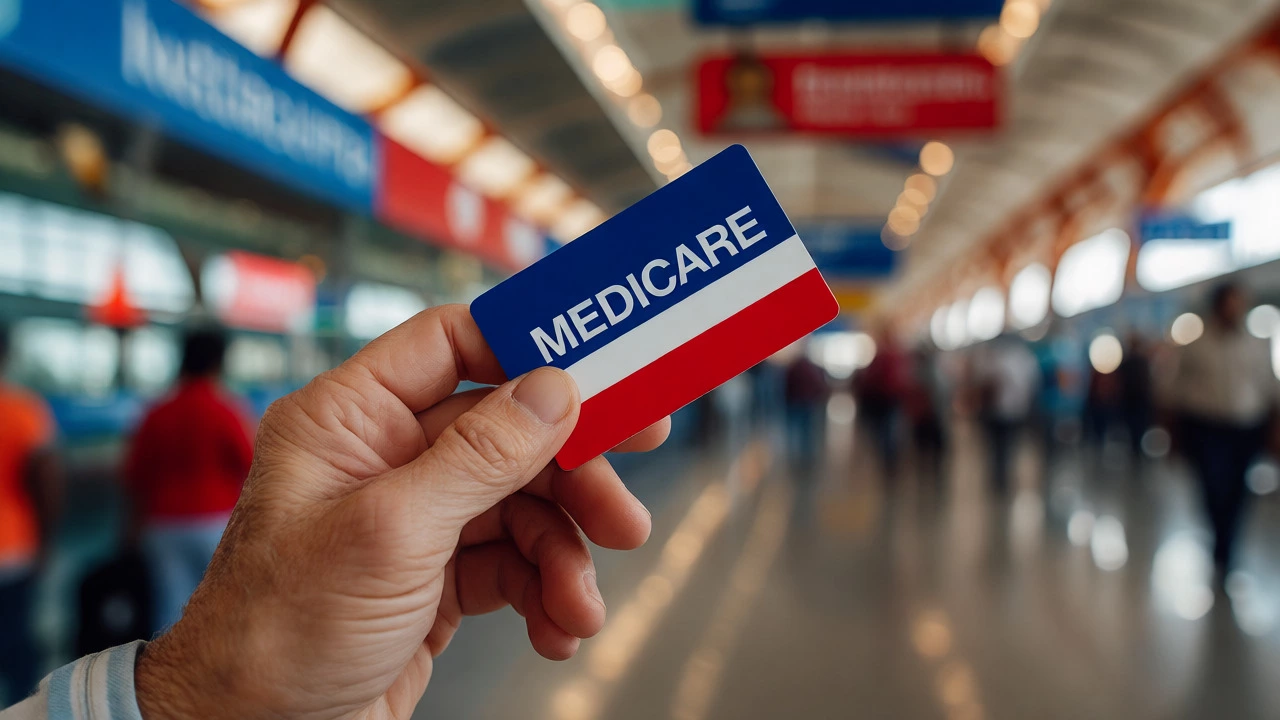
You’re packing for a trip to Costa Rica or maybe heading to Bangalore for some dental work. Your wallet is full of passports, boarding passes, and credit cards. But there’s that little red, white, and blue Medicare card sitting in your back pocket. Should you bring it? Most people assume yes, because it’s their health ID. But here’s the hard truth: Medicare generally doesn’t pay for healthcare outside the United States. Carrying it might actually cause more confusion than help.
If you are an American senior planning to cross borders, whether for leisure or medical tourism, understanding what your Medicare card can and cannot do is critical. It’s not just about having a piece of plastic; it’s about avoiding massive out-of-pocket bills if things go wrong. Let’s break down why this card is mostly useless abroad, when exceptions exist, and what you should carry instead.
The Core Rule: Medicare Doesn’t Travel Well
Medicare is a federal health insurance program primarily for people aged 65 and older. Its geographic scope is strictly limited to the United States. This includes the 50 states, Washington D.C., Puerto Rico, the U.S. Virgin Islands, Guam, American Samoa, and the Northern Mariana Islands. If you step foot in Canada, Mexico, Europe, or Asia, you are outside Medicare’s network.
Why does this matter? Because if you get sick or injured abroad, Medicare won’t cover hospital stays, doctor visits, or emergency room fees. You will be responsible for 100% of the costs unless you have other coverage. Many travelers mistakenly believe their card acts as a universal guarantee. It doesn’t. In fact, presenting it at a foreign hospital often leads to administrative headaches. The billing department won’t know how to process it, and you might end up paying cash upfront anyway.
When Can You Actually Use Medicare Abroad?
There are three specific, narrow scenarios where Medicare Part A (hospital insurance) or Part B (medical insurance) might cover services overseas. These are rare, but knowing them prevents panic.
- Near the Border: If you live near the Canadian or Mexican border and the nearest foreign hospital is closer than the nearest U.S. hospital, Medicare may cover emergency care. For example, if you live in San Diego and rush into a Tijuana hospital after a heart attack, it might qualify.
- Cruises on Navigable Waters: If you are on a cruise ship in U.S. navigable waters (like the Great Lakes) and the ship provides emergency services, Medicare might cover it. This does not apply to open ocean cruises in international waters.
- Traveling Through Canada: If you are traveling between Alaska and another U.S. state by the most direct route through Canada, and an emergency occurs, Medicare may cover necessary emergency services. This is a very specific logistical exception.
Notice what’s missing? Routine check-ups, elective surgeries, and non-emergency treatments in popular medical tourism destinations like Thailand, India, or Turkey are never covered. Even if you fly from New York to London for a knee replacement, Medicare pays zero dollars toward that procedure.
The Medical Tourism Reality Check
Millions of Americans travel abroad for healthcare every year. They go to countries like India, Thailand, and Mexico for procedures that cost 50-80% less than in the U.S. This is known as medical tourism.
Here is the trap: You book a hip replacement in Bangkok for $15,000 instead of $40,000 in Miami. You feel great about the savings. But if complications arise, who pays for the follow-up care? Medicare won’t touch it. If you need to stay longer in the hospital due to infection, you’re writing checks from your own pocket. Some private insurers offer global plans, but traditional Medicare does not.
| Service Type | Location | Medicare Coverage Status | Typical Patient Responsibility |
|---|---|---|---|
| Emergency Room Visit | U.S. | Covered (after deductible) | $0 - $500 copay |
| Emergency Room Visit | Abroad | Not Covered (except 3 exceptions) | Full Cost ($1,000+) |
| Elective Surgery | U.S. | Covered (if medically necessary) | Deductible + 20% |
| Elective Surgery | Abroad | Not Covered | Full Cost ($5,000 - $20,000+) |
| Prescription Drugs | Abroad | Not Covered | Full Retail Price |

What to Carry Instead of Just Your Medicare Card
So, should you leave the Medicare card at home? Not necessarily. Keep it in your wallet for identification purposes, especially if you return to the U.S. mid-trip. But do not rely on it for payment. Here is what you actually need in your travel kit.
1. Comprehensive Travel Insurance with Medical Evacuation
This is non-negotiable. Standard travel insurance covers trip cancellations, but you need a policy that explicitly includes high-limit medical coverage. Look for plans offering at least $100,000 in medical expenses. More importantly, ensure it includes medical evacuation. If you break your leg hiking in Peru, flying you back to the U.S. in a medical jet can cost over $50,000. Medicare never pays for air ambulance services internationally. Only a specialized travel policy will.
2. Proof of Private Insurance
If you have a supplemental plan like Medigap (Medicare Supplement Insurance), check its benefits. Some plans, such as Plan G or Plan N, offer limited foreign travel emergency coverage. Typically, they cover 80% of costs after you meet a lifetime limit (often $50,000). However, this usually applies only to emergencies, not planned procedures. Call your provider before you fly to confirm exactly what is covered.
3. Cash and Credit Cards
In many countries, hospitals require a deposit or full payment upfront for foreigners. Credit cards are widely accepted, but inform your bank of your travel dates to avoid fraud blocks. Having local currency is also wise for smaller clinics or pharmacies that might not take cards.
4. Detailed Medical Records
Bring a copy of your current medication list, allergies, and recent test results. Foreign doctors don’t have access to your U.S. electronic health records. If you have a pacemaker, diabetes, or heart condition, carry a translated summary of your history. This saves time and prevents dangerous drug interactions.
Special Considerations for Medical Tourists
If you are traveling specifically for treatment, the rules change slightly. You aren’t just visiting; you are a patient. Before booking any procedure, ask the foreign clinic two questions:
- Do they accept international direct billing from any U.S. insurers? (Most do not.)
- What is their policy for complications requiring extended stays?
Many top-tier hospitals in cities like Bangalore or Istanbul speak English and understand American expectations. They often provide package deals that include hotel stays. However, these packages rarely include insurance reimbursement. You must budget for potential extra days in the country if recovery takes longer than expected.
Also, consider the continuity of care. When you return home, will your local doctor accept records from a surgeon in Thailand? Usually, yes, but it helps to get everything in English and on official letterhead. Bring physical copies, not just digital files on your phone, in case you lose your device.

Common Myths Debunked
Myth 1: "I have a Medigap plan, so I'm fully covered."
False. Medigap plans vary. Only certain plans offer foreign travel coverage, and even then, it’s capped and subject to deductibles. Read your policy fine print.
Myth 2: "The hospital will bill Medicare directly."
Rarely. Most foreign providers are not enrolled in the U.S. system. You will likely pay out-of-pocket and try to submit claims yourself later, which is a slow and uncertain process.
Myth 3: "I don't need insurance because I'm young enough."
If you are under 65 and using Medicare due to disability, the same rules apply. Age doesn’t change the geographic limits of the program.
Final Verdict: To Carry or Not to Carry?
Carry your Medicare card for identification and peace of mind, but treat it as a secondary document. Your primary financial shield abroad is robust travel insurance with medical evacuation coverage. Do not let the presence of the card give you a false sense of security. If you are going for medical tourism, verify all costs upfront and secure a separate policy that covers complications.
Traveling internationally as a Medicare beneficiary requires planning. The world is vast, and healthcare systems differ wildly. By preparing with the right insurance and documentation, you protect both your health and your bank account.
Does Medicare cover prescriptions bought abroad?
No. Medicare Part D does not cover prescription drugs purchased outside the United States. You must pay full retail price for medications in foreign pharmacies. Always bring enough supply of your regular meds to last the entire trip, plus a few extra days in case of delays.
Can I use my Medicare card to prove identity abroad?
Yes, but it's not ideal. While it has your name and photo, foreign entities may not recognize it. Your passport is the universally accepted form of ID. Keep the Medicare card in your wallet for quick reference if you need to call your U.S. provider, but rely on your passport for formal identification.
What happens if I have a heart attack in France?
You will receive immediate emergency care. However, you will be billed for the treatment. Medicare typically will not pay. You would need to file a claim with your travel insurance provider. If you have no insurance, you are personally liable for the hospital bills, which can be substantial.
Is Medicare Advantage different from Original Medicare abroad?
Generally, no. Medicare Advantage plans replace Original Medicare benefits but still adhere to the same geographic restrictions regarding international coverage. Some Advantage plans may offer additional perks, but core international emergency coverage remains similar. Always check your specific plan documents.
Should I buy insurance from the hospital where I'm getting surgery?
Sometimes hospitals offer their own warranty or insurance packages. These can be useful for surgical complications. However, they often don't cover unrelated illnesses or injuries during your trip. Compare their terms against a comprehensive third-party travel medical insurance policy.