
Post-Knee Surgery Bowel Movement Tracker
Select your current post-surgery day to see what is normal, what to expect, and how to manage your bowel movements safely.
-
Day 0-1: Waking Up
-
Day 2-3: The Struggle
-
Day 4-5: Action Time
-
Week 2+: Regularity
Action Plan
- Hydrate: Sip warm water or herbal tea frequently.
- Movement: Do gentle ankle pumps while in bed.
- Medication: Start stool softeners if prescribed.
Common Medication Guide
| Type | Examples | Mechanism | Onset |
|---|---|---|---|
| Osmotic Laxatives | MiraLAX, Milk of Magnesia | Draws water into bowel to soften stool | 1-3 Days |
| Stimulant Laxatives | Senna, Dulcolax | Triggers intestinal contractions | 6-12 Hours |
| Stool Softeners | Colace (Docusate) | Adds moisture to ease passage | 1-3 Days |
| Suppositories | Glycerin, Bisacodyl | Irritates rectal lining for reflex | 15-60 Mins |
Red Flags: Call Your Doctor If...
- No bowel movement for more than 4-5 days despite using laxatives.
- Severe abdominal pain or bloating.
- Nausea or vomiting.
- Blood in stool (bright red or black/tarry).
- Inability to pass gas.
You just walked out of the operating room, your new knee replacement is in place, and you’re feeling that familiar mix of relief and grogginess. But there’s one question nobody puts on the discharge pamphlet in big bold letters: When am I going to poop?
If you haven’t had a bowel movement for two or three days post-op, don’t panic. It’s weirdly common. In fact, it’s so common that surgeons expect it. The combination of anesthesia, painkillers, and lying around in bed creates a perfect storm for constipation. Most patients manage their first bowel movement within 2 to 4 days after surgery. If it takes longer than that, you need to act before things get uncomfortable.
Why Your Gut Stops Working After Knee Surgery
Your digestive system isn’t broken; it’s just confused. Several factors team up to slow down your colon during recovery. Understanding these triggers helps you tackle them head-on rather than guessing what’s wrong.
The biggest culprit is usually opioid pain medication, like oxycodone or tramadol. These drugs are fantastic for managing surgical pain but terrible for gut motility. They bind to receptors in your intestines, effectively telling your muscles to stop contracting. This condition, known as Opioid-Induced Constipation (OIC), can halt bowel movements entirely if left unchecked.
Then there’s the anesthesia. General anesthesia temporarily paralyzes the smooth muscles of the gut. While this effect wears off within hours, the residual sluggishness can linger, especially when combined with reduced physical activity. You’re not moving much because your knee hurts, and lack of movement means less mechanical stimulation for your bowels.
Diet plays a role too. Hospital food is often low in fiber, and dehydration is common right after surgery because you might be afraid to drink too much water before urinating. Without enough fluid, stool becomes hard and difficult to pass.
The Typical Timeline: What to Expect Day by Day
Every body reacts differently, but here is a realistic breakdown of what most patients experience after total knee arthroplasty:
- Day 0-1: No bowel movement is normal. Your gut is still waking up from anesthesia. Focus on hydration and gentle ankle pumps.
- Day 2-3: Many patients feel the urge but struggle to go. Stool may be small and hard. This is when preventive measures become critical.
- Day 4-5: By now, most people have had at least one bowel movement. If you haven’t, you likely need medical intervention beyond just drinking water.
- Week 2+: Regularity should return as you taper off opioids and increase walking.
If you hit day four without a movement, call your surgeon’s office. Don’t wait until you’re in agony. Early intervention prevents impaction, which is far more painful than the surgery itself.
Proactive Strategies to Get Things Moving
You shouldn’t wait for constipation to happen. Start prevention the morning after surgery. Here’s what actually works, ranked by effectiveness based on patient outcomes.
Hydration is Non-Negotiable
Fiber needs water to work. If you eat bran but don’t drink fluids, you’re creating concrete in your intestines. Aim for at least 8 to 10 glasses of water daily. Warm liquids, like herbal tea or warm lemon water, can also stimulate the gastrocolic reflex, which signals your colon to contract.
Movement, Even Tiny Bits
You don’t need to run a marathon. Just getting out of bed and standing up helps gravity do its job. Physical therapy exercises, even simple leg lifts while sitting, engage your core slightly. Walking short distances in the hallway stimulates peristalsis-the wave-like muscle contractions that move food through your digestive tract.
Smart Dietary Choices
Hospital meals often lack sufficient fiber. Ask for high-fiber options or bring snacks from home. Prunes are the gold standard here. Eating 3-4 prunes daily or drinking prune juice provides sorbitol, a natural sugar alcohol that draws water into the bowel. Kiwi fruit is another underrated hero; eating two kiwis a day has been shown in clinical studies to improve bowel frequency significantly.
Medications: When Natural Isn’t Enough
Most orthopedic surgeons prescribe a prophylactic bowel regimen. If they didn’t, ask for one. Do not rely solely on over-the-counter guesses without checking with your doctor, especially if you have kidney issues or other health conditions.
| Medication Type | Examples | How It Works | Onset Time |
|---|---|---|---|
| Osmotic Laxatives | Polyethylene Glycol (MiraLAX), Milk of Magnesia | Draws water into the bowel to soften stool | 1-3 Days |
| Stimulant Laxatives | Senna, Bisacodyl (Dulcolax) | Triggers intestinal contractions | 6-12 Hours |
| Stool Softeners | Docusate Sodium (Colace) | Adds moisture to stool to ease passage | 1-3 Days |
| Suppositories | Glycerin, Bisacodyl suppository | Irritates rectal lining to trigger reflex | 15-60 Minutes |
Note: Osmotic laxatives like MiraLAX are generally gentler and preferred for long-term use during recovery. Stimulants like Senna work faster but can cause cramping. Use stimulants sparingly unless directed otherwise.
The Bathroom Mechanics Problem
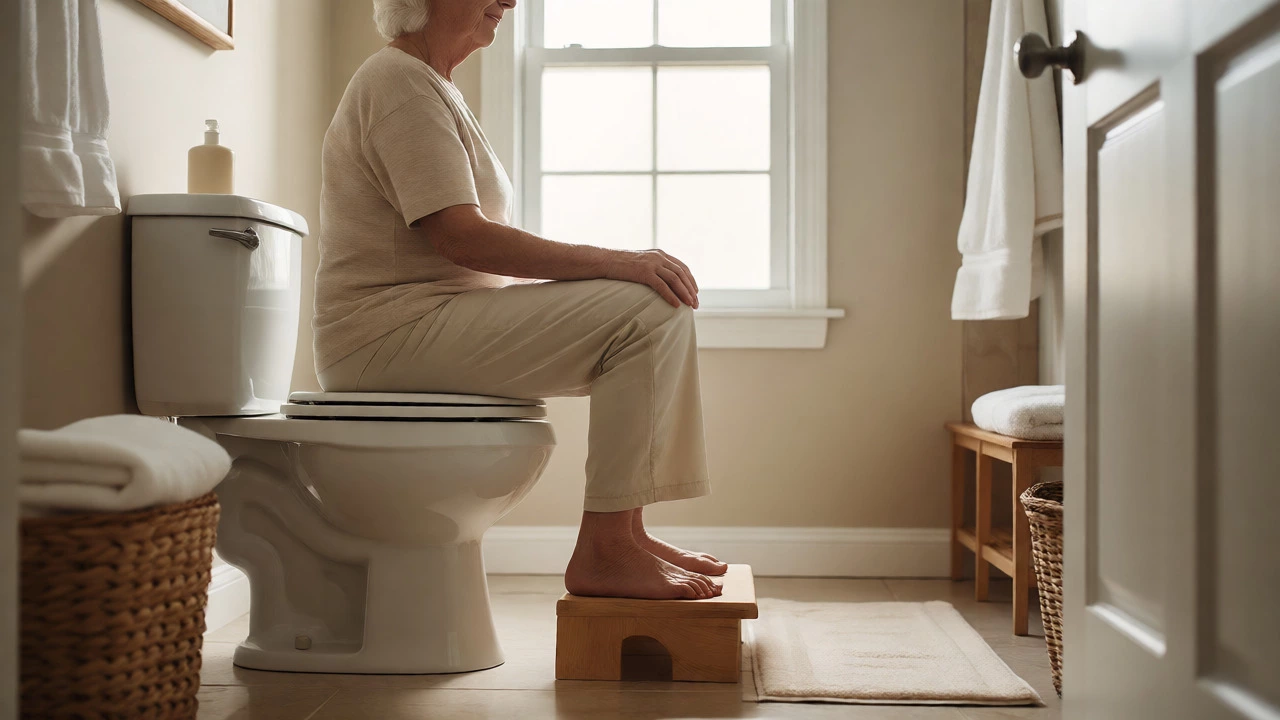
Here’s a specific issue for knee replacement patients: positioning. Sitting on a standard toilet puts stress on your knees. However, squatting is the anatomically correct position for defecation. To solve this, use a footstool. Elevating your feet above your hips straightens the anorectal angle, making it easier to pass stool without straining.
Straining is dangerous post-surgery. It raises blood pressure and can interfere with healing tissues. If you feel the need to push hard, stop. You might need a suppository or an enema to clear the blockage gently. Never hold your breath and bear down excessively; breathe out as you push lightly.
Red Flags: When to Call the Doctor
While constipation is annoying, some symptoms require immediate attention. Contact your healthcare provider if you experience:
- No bowel movement for more than 4-5 days despite using laxatives.
- Severe abdominal pain or distension (bloating).
- Nausea or vomiting accompanying the constipation.
- Blood in the stool (bright red or black/tarry).
- Inability to pass gas.
Vomiting with constipation could indicate a bowel obstruction, which is rare but serious. Don’t tough it out if you’re throwing up.

Real-Life Scenario: Managing Recovery in Bangalore
Living in a city like Bangalore, where traffic and heat are realities, staying hydrated is extra important. The dry air conditioning in hospitals and homes can dehydrate you faster than you think. Keep a large bottle of water at your bedside. Also, local dietary habits matter. If you’re used to spicy foods, reintroduce them slowly. Spicy food doesn’t cure constipation, but it can irritate an already sensitive gut if you’re taking strong laxatives.
Many patients in India rely on traditional remedies like Triphala powder. While some find it helpful, always inform your surgeon if you’re taking Ayurvedic supplements, as they can interact with medications or affect bleeding risks.
FAQs About Bowel Movements After Knee Surgery
Is it normal to not poop for 3 days after knee surgery?
Yes, it is very normal. Anesthesia and opioid painkillers slow down digestion significantly. Most patients have their first bowel movement between day 2 and day 4. As long as you are passing gas and not experiencing severe pain, waiting a few days is expected.
Can I take Miralax every day after knee replacement?
Generally, yes. Polyethylene glycol (Miralax) is considered safe for daily use during recovery periods. It works by pulling water into the bowel rather than stimulating nerves, so it causes less cramping. However, always confirm dosage with your surgeon, especially if you have kidney issues.
What if I strain too hard on the toilet?
Straining can cause hemorrhoids, anal fissures, or increased blood pressure. For knee patients, the main risk is discomfort and potential dizziness. Use a footstool to elevate your knees, keep your back straight, and avoid holding your breath. If straining persists, use a glycerin suppository instead of forcing it.
Does walking help with post-surgery constipation?
Absolutely. Even short walks around the house or hospital corridor stimulate peristalsis. Movement helps massage the intestines mechanically. Try to walk for 5-10 minutes every few hours as tolerated by your pain levels.
Are prunes effective for opioid-induced constipation?
Prunes contain sorbitol, a natural osmotic agent that draws water into the intestines. They are effective for mild cases but may not be enough for severe opioid-induced constipation. Combine them with adequate water intake and possibly a mild laxative for best results.
Final Thoughts: Patience and Preparation
Dealing with bathroom issues after major surgery feels undignified, but it’s a physiological hurdle, not a personal failure. Prepare your kit before you go to the hospital: include a stool softener, a stimulant laxative, and perhaps a footstool for home use. Communicate openly with your care team about your bowel habits. They’ve seen it all, and they’d rather help you prevent a blockage than treat an emergency later.
Once you’re back to regular habits, you’ll wonder why you worried so much. Focus on healing your knee, and let your gut catch up. It will.