Cancer Dying Process: What to Expect and How to Support Loved Ones
When someone is nearing the end of life from cancer, a group of diseases characterized by uncontrolled cell growth that spreads and damages vital organs. It’s not a sudden event—it’s a gradual shift in the body and mind, often lasting days to weeks. Many families feel lost because no one talks about what this phase really looks like. The cancer dying process, the natural progression of symptoms as the body shuts down due to advanced disease. It’s not the same for everyone, but there are common patterns that help you know what’s normal and when to call for help.
As the body weakens, palliative care, specialized medical care focused on relieving symptoms and improving quality of life for people with serious illness. It’s not giving up—it’s shifting focus from curing to comforting. Pain, shortness of breath, loss of appetite, and confusion are common. These aren’t signs of failure; they’re signs the body is changing. hospice care, a type of care for people with terminal illness, providing comfort, emotional support, and practical help at home or in a facility. It’s often misunderstood as giving up, but it’s really about making the final days as peaceful as possible. Many people sleep more, talk less, and withdraw from food and water. That’s not starvation—it’s the body slowing down naturally. Family members often worry they’re not doing enough, but holding a hand, playing quiet music, or just being present means more than any treatment ever could.
What you won’t see in movies is how quiet it gets. The loud machines, the frantic rush—those fade. What remains is the human connection. A loved one might not respond, but they can still hear you. Speak to them like they’re listening, because they are. This isn’t about fixing things. It’s about being there without fear. You don’t need to say the right thing. Just say something. Say their name. Say you love them. Say you’re sorry for the pain. Say you’ll miss them. These words matter more than any medicine.
The posts below don’t offer medical advice or miracle cures. They offer real stories, clear explanations, and practical guidance from people who’ve walked this path. You’ll find what to expect in the final days, how to manage symptoms at home, how to talk to doctors about comfort care, and how to support children or other family members through it. These aren’t abstract ideas—they’re tools for real people in real moments. What you read here won’t change the outcome, but it might change how you remember the time you had.
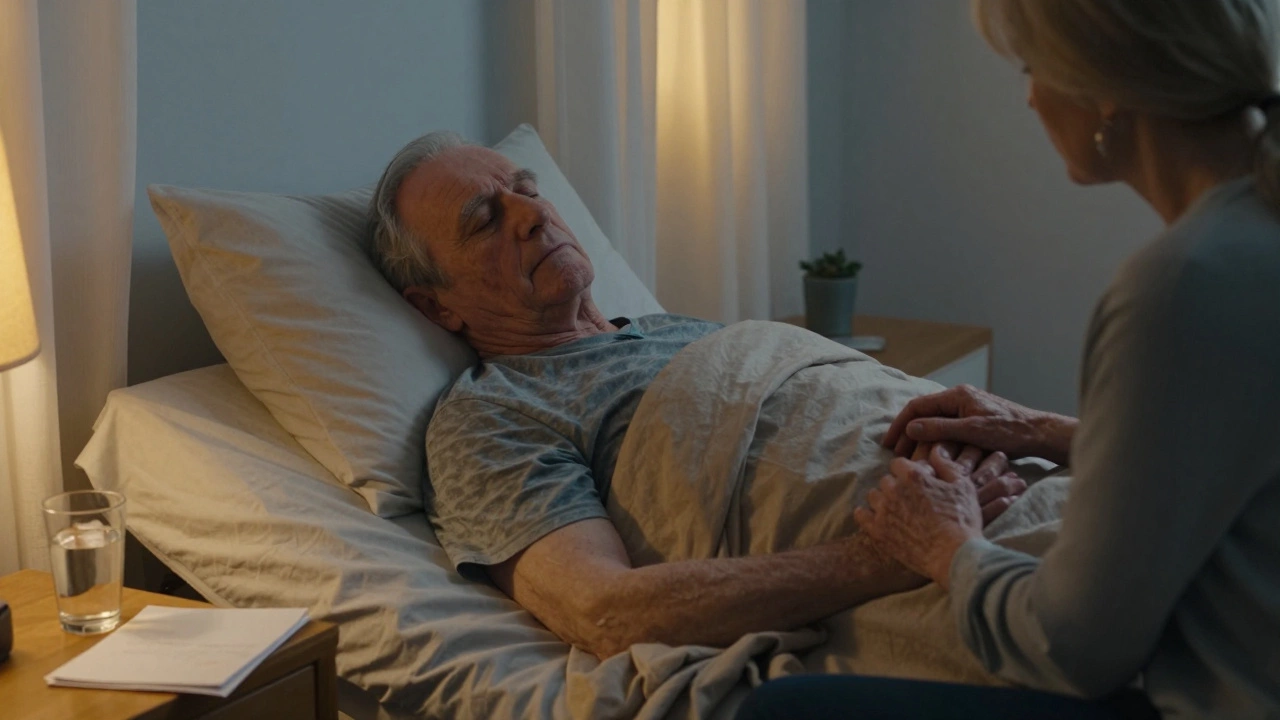
What to Expect Two Weeks Before Death in Advanced Cancer
•5 Dec 2025
Two weeks before death from advanced cancer, the body begins shutting down quietly. Signs include loss of appetite, increased sleep, changed breathing, cold skin, and withdrawal. Understanding these changes helps families provide comfort, not fight the inevitable.