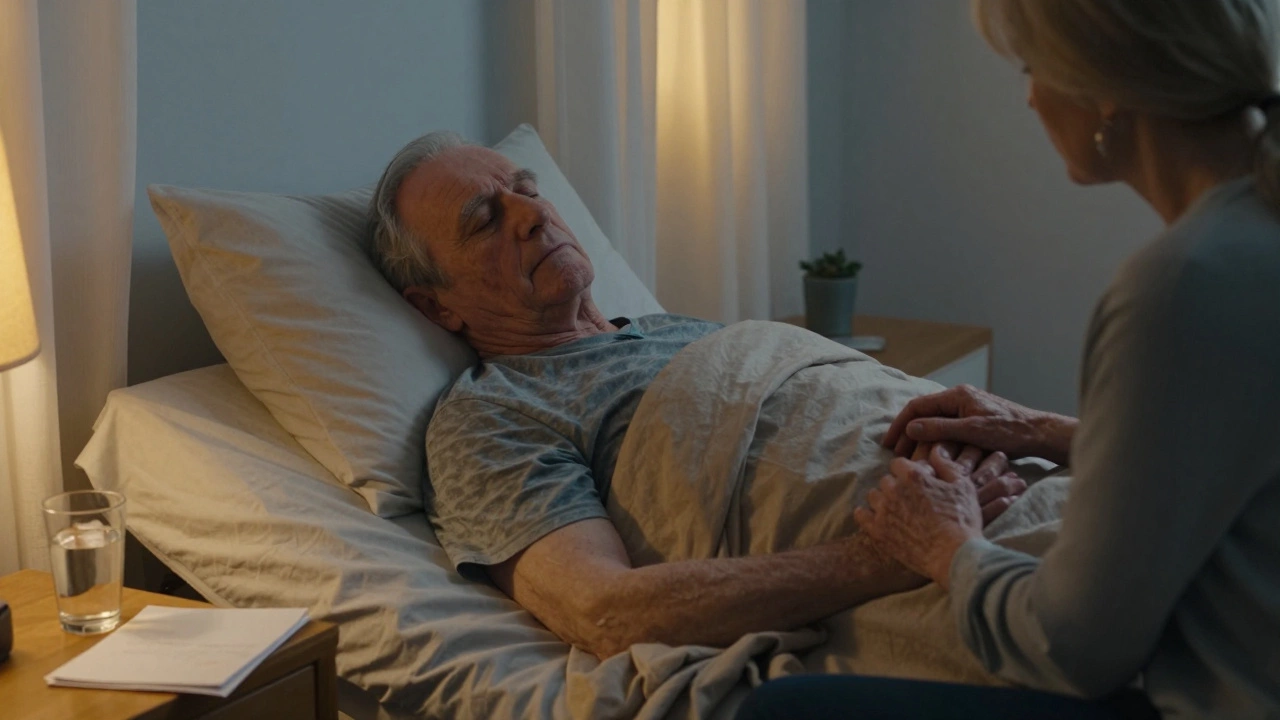
Two weeks before death, the body begins shutting down in ways that are quiet but unmistakable. This isn’t about sudden collapse-it’s a slow, steady fading. For families watching a loved one with advanced cancer, these changes can feel confusing, even frightening. But they’re not random. They’re part of the body’s natural process of letting go.
Loss of Appetite and Thirst
Food and water stop being a priority. A person who once loved meals may push food away or eat only a few bites. This isn’t stubbornness or depression. It’s biology. The body no longer needs energy to repair tissues or fight cancer. Digestion slows. The liver and kidneys, already stressed from treatment or disease, can’t process food the way they used to. Thirst fades too. Offering ice chips or sips of water is fine, but forcing fluids won’t help. The body is preparing to stop.
Increased Sleep and Reduced Awareness
Sleep becomes longer, deeper, and harder to break. A person may sleep 18 to 20 hours a day. When awake, they might seem distant, confused, or unresponsive. They may not recognize familiar faces. This isn’t a sign of pain or neglect. It’s the brain conserving energy. Blood flow shifts away from non-essential functions-like thinking, speaking, and remembering-to keep the heart and lungs working. Talking to them matters, even if they don’t respond. Hearing is often the last sense to go.
Changes in Breathing
Breathing patterns shift. There might be long pauses between breaths-sometimes 10 or 15 seconds. Then a few quick, shallow breaths. This is called Cheyne-Stokes respiration. It’s not choking or suffocating. It’s the brain’s control center slowing down. You might also hear a rattling sound, called the death rattle. That’s not fluid in the lungs-it’s saliva pooling because the person can’t swallow or clear their throat anymore. Suctioning doesn’t help much and can be uncomfortable. Turning them gently to the side often helps.
Cold Skin and Color Changes
Hands, feet, and lips may turn blue or gray. Skin feels cool to the touch. This isn’t because they’re cold-it’s because blood is being pulled inward, toward the heart and brain. The extremities get less circulation. Covering them with a light blanket is comforting, but don’t overheat them. Their core temperature may stay normal. Mottling-a patchy, bluish-purple pattern on the legs or arms-often appears in the last few days. It’s a sign that circulation is slowing further.
Decreased Urine and Bowel Function
Urine output drops. It may become dark, infrequent, or stop altogether. Bowel movements cease. Constipation from pain meds or lack of food is common, but laxatives won’t help now. The body isn’t processing waste because it’s not taking in anything. Catheters or enemas are usually avoided at this stage unless they’re relieving real discomfort.
Withdrawal and Emotional Shifts
Many people withdraw from conversation, even from loved ones. They may stare at the wall, look past you, or seem lost in thought. This isn’t rejection. It’s often a sign they’re turning inward, perhaps processing something deeply personal. Some report seeing people who have passed away-family members, pets. These aren’t hallucinations from delirium. They’re common near the end. Don’t argue. Just say, “I’m here.”
Pain and Comfort
Pain doesn’t always increase. In fact, many people feel less pain as their body shuts down. Nerve signals slow. But if pain was present before, it’s managed with medication-usually morphine or similar opioids. Doses are adjusted not to make them numb, but to keep them comfortable. The goal isn’t to sedate. It’s to keep them at peace. If they’re restless, moaning, or grimacing, it’s likely pain or discomfort. Tell the hospice team. They can adjust quickly.
What Doesn’t Happen
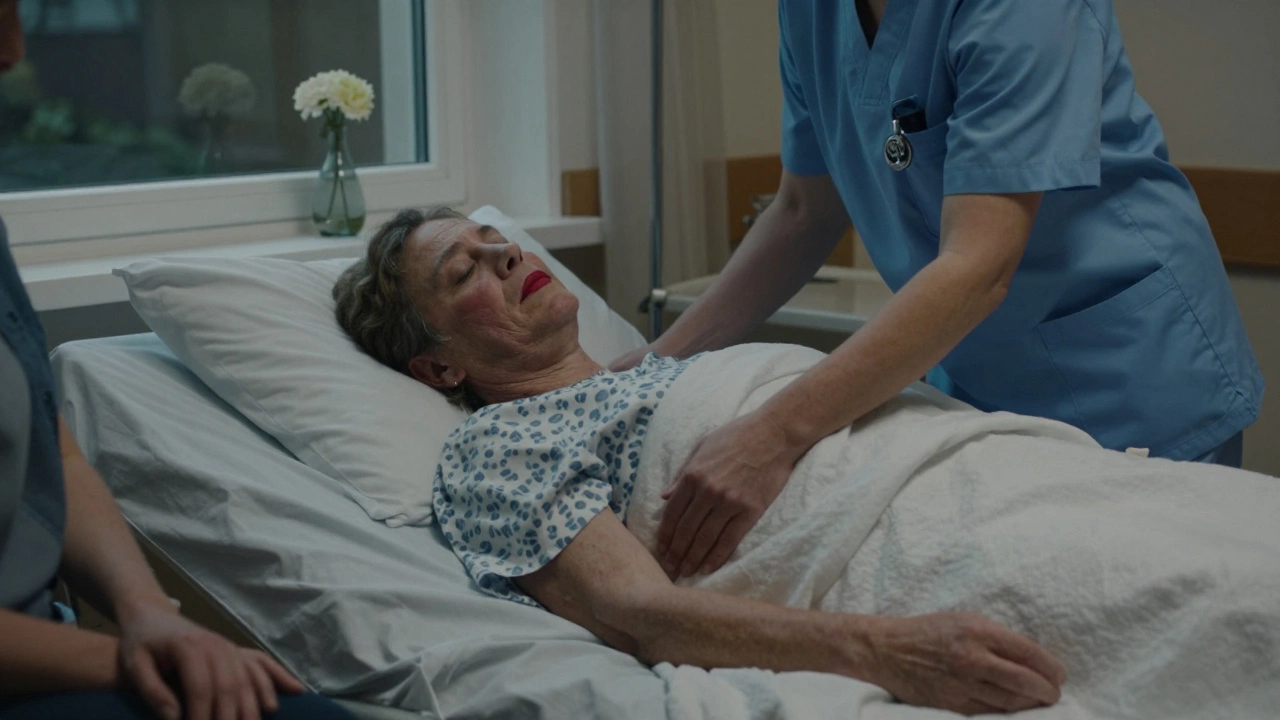
People don’t suddenly scream, thrash, or cry out in agony. That’s rare. Death from cancer isn’t dramatic. It’s quiet. There’s no last-minute revelation or burst of energy. No final words, unless they’ve already spoken them. And there’s no sudden collapse-unless there’s a stroke or heart attack, which is uncommon in this phase.
What Families Can Do
Be present. Hold their hand. Play music they love. Read a letter. Tell them you’re sorry, you love them, you’re proud. Say goodbye. Even if they don’t respond, they likely hear you.
Don’t rush. Don’t feel guilty for eating, sleeping, or stepping out. You need to care for yourself too. Hospice nurses aren’t just for medical care-they’re there to guide you through this. Ask them anything. No question is too small.
It’s okay to cry. It’s okay to sit in silence. It’s okay to not know what to say. Your presence is enough.
Why This Matters
Understanding what’s happening helps you stop fighting the inevitable. Many families spend these final days trying to “do more”-more tests, more treatments, more visits. But the real work now is being there. Not fixing. Not saving. Just holding space.
One woman in Bangalore, whose husband had stage IV lung cancer, told me: “I thought I had to make him eat. I felt like I was failing when he didn’t. Then the nurse said, ‘He’s not refusing food. His body is saying no.’ That changed everything.”
Two weeks before death isn’t the end of care. It’s the shift to a different kind of care-gentle, quiet, and deeply human.
Is it normal for someone to stop talking two weeks before death?
Yes. As the body conserves energy, the brain reduces activity in areas responsible for speech and communication. Many people become nonverbal in the final days. They may still respond to touch or familiar voices, even if they don’t speak. Talking to them isn’t wasted-it’s one of the last ways you can connect.
Should I force my loved one to eat or drink?
No. Forcing food or fluids can cause discomfort, nausea, or even aspiration. The body naturally loses its need for sustenance as it shuts down. Offer small sips or ice chips if they’re interested, but don’t insist. Their body is signaling it’s ready to let go, and resisting that can cause more stress than peace.
Does pain get worse near the end?
Not necessarily. Pain often decreases as nerve signals slow and inflammation reduces. But if pain was present before, it’s managed with medication like morphine. Doses are adjusted to keep the person comfortable, not to make them unconscious. If you notice signs of discomfort-grimacing, restlessness, or moaning-tell the hospice team. They can adjust the medication quickly.
Why do people see people who have passed away?
Seeing deceased loved ones is a common experience in the final days. It’s not a sign of psychosis or delirium. It’s often linked to changes in brain chemistry, reduced oxygen flow, or deep emotional processing. Many cultures view this as a natural part of the transition. The best response is to listen, not correct. Say, “That must mean a lot to you,” or “I’m glad they’re with you.”
How long does the final two weeks usually last?
The timeline varies. Some people decline rapidly over 48 hours. Others linger for 10 to 14 days. It depends on the type of cancer, overall health before diagnosis, and whether they’re receiving palliative care. There’s no exact clock. But once breathing changes, skin mottling appears, and urine stops, death is often within 24 to 72 hours.
Should I call the doctor if my loved one stops eating?
Not unless there’s sudden distress. Stopping eating is expected in the final phase of cancer. Calling for more IV fluids or feeding tubes usually adds discomfort without extending life. Talk to the hospice or palliative care team instead. They know the signs and can guide you through what’s normal.