Ayurvedic Hair Care Routine Planner
Click the button below to generate your natural routine
Your Recommended Ayurvedic Blend
Key Takeaways
- Natural cleansers like Shikakai and Reetha replace harsh sulfates.
- Amla is the gold standard for strengthening follicles and preventing premature greying.
- Oil massaging (Champi) is a non-negotiable pre-wash ritual.
- Modern routines often blend these ancient herbs with mild organic shampoos.
The Natural Cleansers: Beyond the Shampoo Bottle
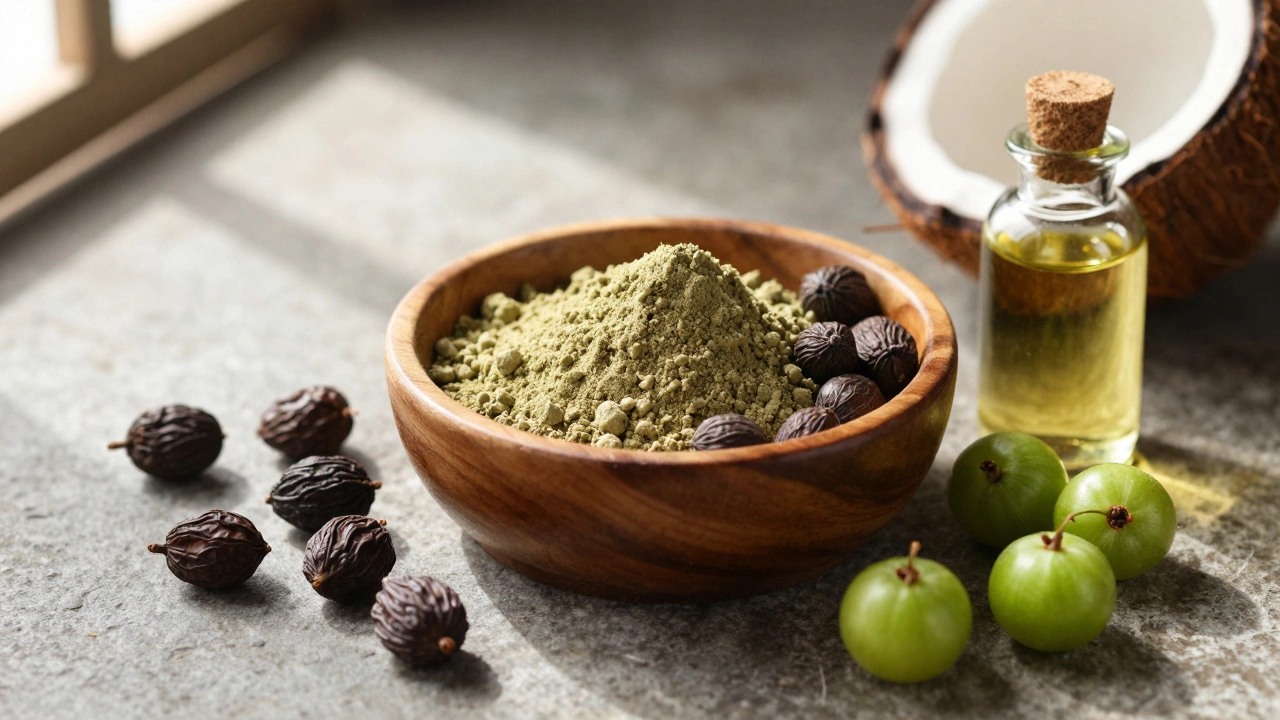
Before the arrival of commercial shampoos, Indians used plants that contain natural surfactants. You won't find "sulfates" in a forest, but you will find Reetha is also known as soapnut, a fruit that produces a natural lather when soaked in water due to its high saponin content. Reetha doesn't just clean; it removes dirt without destroying the acid mantle of the scalp.
Then there is Shikakai is a pod from the Acacia concinna tree, often called 'fruit for hair,' which acts as a mild detangling agent and natural cleanser. While Reetha provides the bubbles, Shikakai provides the conditioning. If you use only Reetha, your hair might feel a bit dry; adding Shikakai ensures the hair remains silky. Many households still brew these two together into a concentrated liquid, straining out the seeds and pods to create a traditional wash that costs pennies compared to luxury salon products.
Amla: The Vitamin C Powerhouse
You can't talk about Indian hair without mentioning Amla is the Indian gooseberry, one of the richest natural sources of Vitamin C and a cornerstone of Ayurvedic hair treatments. It isn't a cleanser in the soapy sense, but it is almost always included in the washing process, either as a powder mixed with water or as an infused oil.
Amla works by strengthening the hair shaft and stimulating the follicles. In a typical household, a woman might mix Amla powder with Reetha and Shikakai to create a "triple threat" powder. This mixture is soaked overnight and applied to the scalp. The result is a deep cleanse that also prevents the hair from turning grey too early. It's not just about cleanliness; it's about adding nutrients back into the hair while you wash it.
| Ingredient | Primary Role | Key Attribute | Effect on Hair |
|---|---|---|---|
| Reetha | Cleansing | High Saponins | Removes grease and dirt |
| Shikakai | Conditioning | Low pH | Smoothes cuticle, detangles |
| Amla | Nourishing | Vitamin C / Antioxidants | Prevents grey hair, adds strength |
The Ritual of Champi: Pre-Wash Preparation
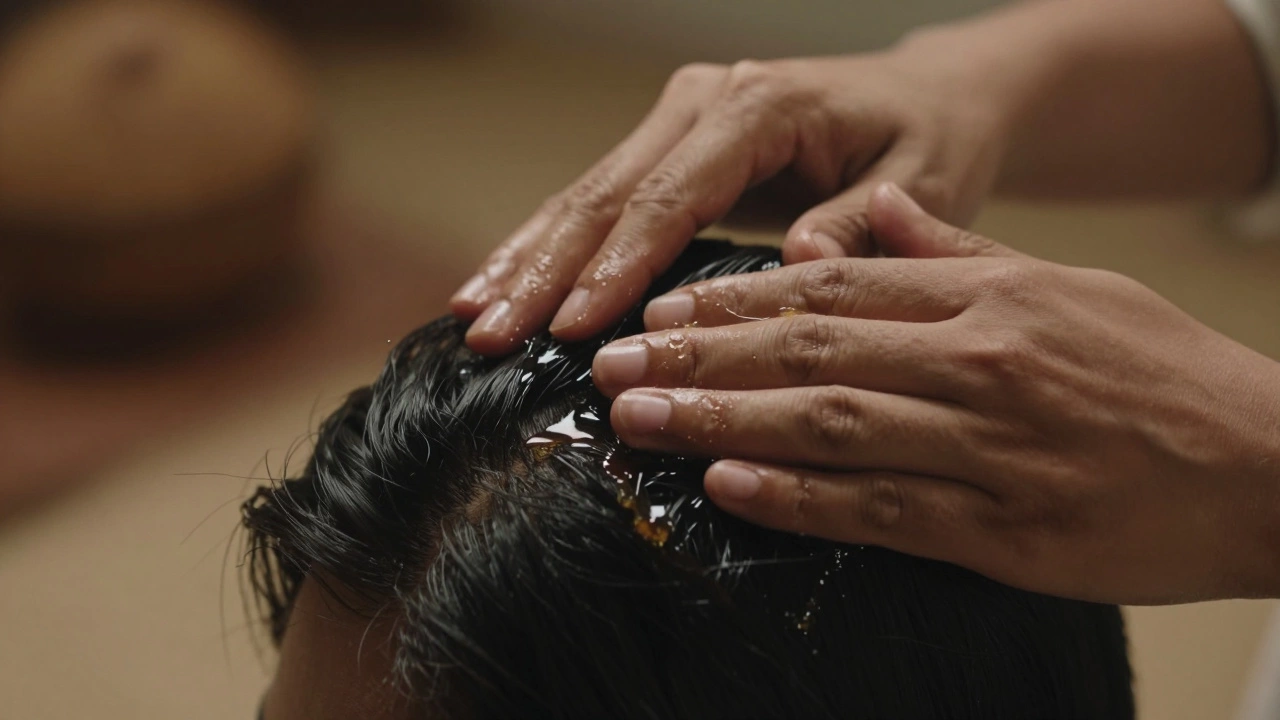
In an Indian home, the washing is actually the last step. The real work happens hours-or even a day-before with a process called Champi is the traditional Indian head massage using warm oil to stimulate blood flow and hydrate the scalp. You'll rarely see someone jump straight into a shower with shampoo. Instead, they'll apply a generous amount of Coconut Oil is a saturated fat extracted from the coconut kernel, prized for its ability to penetrate the hair shaft and prevent protein loss.
Why do this? Because natural cleansers like Reetha and Shikakai can be slightly more drying than a heavy conditioner. By saturating the hair in oil first, you create a protective barrier. The massage also increases circulation to the scalp, which ensures that the nutrients from the subsequent wash are absorbed more effectively. This cycle of "oil then wash" is why Indian hair often maintains its luster even in harsh, humid climates.
Ayurvedic Principles and Scalp Health
This approach is rooted in Ayurveda is the ancient Indian system of medicine that focuses on balancing the three doshas (Vata, Pitta, and Kapha) for holistic health. From an Ayurvedic perspective, hair loss or dandruff isn't just a surface problem; it's an imbalance of internal heat (Pitta). To counter this, ingredients like aloe vera or hibiscus are often added to the hair wash.
For instance, if someone has an oily scalp (Kapha imbalance), they might increase the proportion of Reetha in their mix. If they have a dry, flaky scalp (Vata imbalance), they'll lean more on Shikakai and Coconut Oil. It's a personalized chemistry set based on the individual's body type, rather than a one-size-fits-all product bought from a supermarket.
Modern Transitions: How it's Done Today
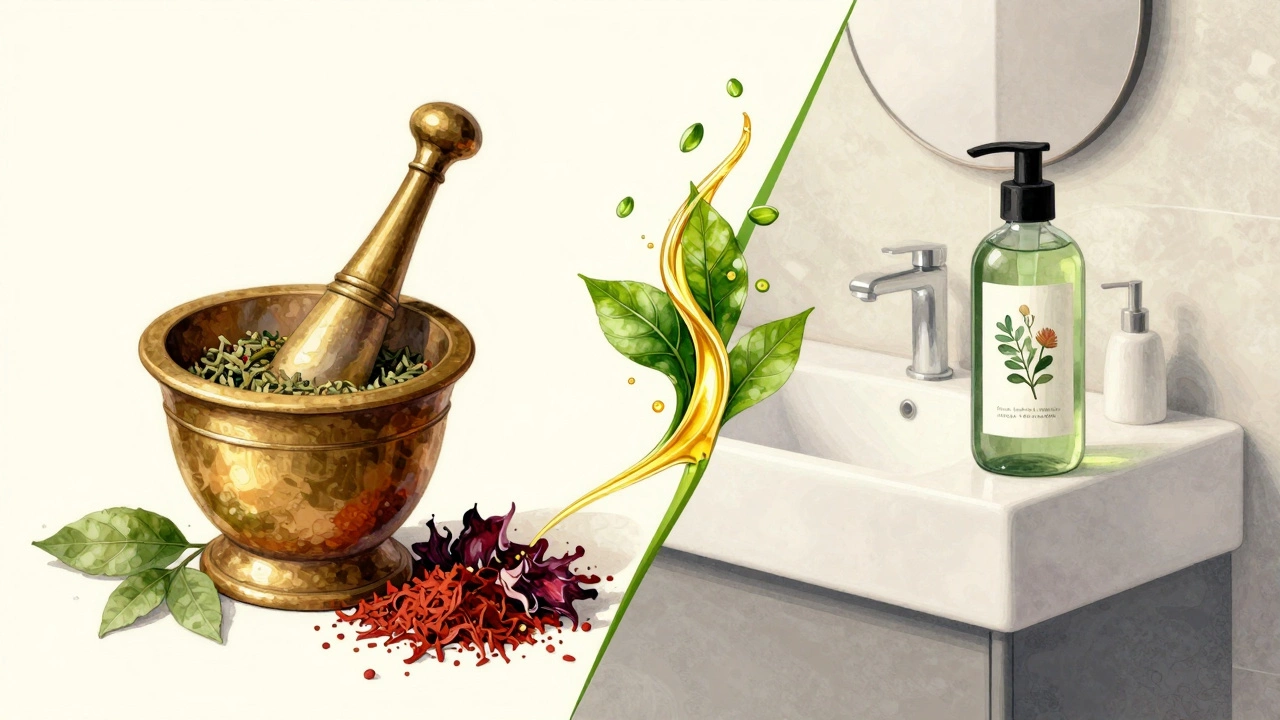
Let's be real-not everyone in a bustling city like Mumbai or Bangalore has the time to soak pods and strain liquids every Tuesday. Modern Indians have adapted. You'll now find "Ayurvedic Shampoos" that contain extracts of Amla and Shikakai but are formulated for convenience. However, the core philosophy remains. Many still use a "hybrid" method: a deep oil massage on Sunday, followed by a mild, sulfate-free shampoo on Monday.
Another common modern practice is the use of Henna is a dye derived from the Lawsonia inermis plant, used in India for both coloring hair and as a natural conditioner. While mostly known for the red color, Henna is often mixed with yogurt or lemon juice and applied as a mask. It coats the hair shaft, making it feel thicker and more resilient, acting almost like a natural keratin treatment.
Common Pitfalls When Trying These Methods
If you're looking to swap your shampoo for a Reetha-Shikakai mix, don't expect a mountain of foam. These natural surfactants don't produce the same artificial bubbles as Sodium Lauryl Sulfate. Some people panic and use more product, which can actually lead to a sticky residue if not rinsed properly. The trick is to use lukewarm water and focus on the scalp, letting the suds run down the length of the hair.
Another mistake is ignoring the pH balance. Natural cleansers are generally more acidic than soap, which is great for closing the hair cuticle. However, if you use a commercial soap (which is very alkaline) and then try to "fix" it with an Ayurvedic rinse, you might find your hair feeling straw-like. Stick to one system-either fully natural or a balanced modern routine.
Will Reetha and Shikakai make my hair dry?
If used alone, Reetha can be a bit stripping for some hair types. This is why it's almost always paired with Shikakai, which acts as a natural conditioner. To ensure your hair stays moisturized, always perform a pre-wash oil massage (Champi) and rinse with cool water at the end to seal the cuticles.
How often should I use Amla for my hair?
Amla can be used weekly. Whether you use it as a powder mask or an oil, its antioxidant properties are gentle enough for regular use. Most traditional routines involve an Amla-based treatment once a week to maintain scalp health and prevent premature greying.
Can I use these natural washes if I have dyed hair?
Be cautious. Natural cleansers like Reetha and Shikakai are mild, but they can still strip some artificial dyes over time. Henna, however, is a permanent natural dye that actually helps "lock in" color and protect the hair shaft from the damage caused by chemical bleaches.
What is the best oil for an Indian hair massage?
Coconut oil is the most common due to its ability to penetrate the hair shaft. However, depending on the season, some prefer Mustard oil in winter for its warming properties or Almond oil for a lighter, more nourishing feel. The key is to warm the oil slightly before applying.
Do I need to use a conditioner after a natural Ayurvedic wash?
Generally, no. Shikakai is a natural conditioner that smooths the hair cuticle. If your hair still feels tangled, a diluted Apple Cider Vinegar rinse or a tiny amount of aloe vera gel on the ends is a better, more natural alternative than a silicone-heavy commercial conditioner.