
Understanding Incurable Cancer Diagnoses
Explore specific cancer types often classified as incurable, their treatment goals, and emerging areas of hope.
It is a question that keeps many patients awake at night. You sit in the doctor's office, the air feels heavy, and you hear words like "advanced," "metastatic," or "incurable." Your mind races to one terrifying conclusion: Is there no cure for my cancer? The short answer is yes, some cancers are currently considered incurable. But the long answer is much more complex-and significantly more hopeful.
We need to clear up a major misconception right away. "Incurable" does not mean "untreatable." It also does not necessarily mean "imminent death." In modern oncology, we often treat certain aggressive cancers as chronic conditions, similar to diabetes or hypertension. The goal shifts from total eradication to long-term management, keeping the disease in check while maintaining quality of life.
The Reality of "Incurable" Cancers
When doctors say a cancer has no cure, they usually mean that current medical technology cannot completely remove every single cancer cell from the body without causing fatal damage to healthy tissue. This typically happens in two scenarios: widespread metastasis (spread to distant organs) or biological resistance to treatment.
Glioblastoma is the most common and aggressive form of primary brain tumor in adults, characterized by rapid growth and infiltration into surrounding brain tissue. Due to the blood-brain barrier, which blocks many chemotherapy drugs from reaching the tumor, and the difficulty of surgically removing brain tissue without causing neurological deficits, glioblastoma is rarely curable. Median survival is often cited between 12 to 18 months with standard care, though some patients live longer with newer approaches like tumor-treating fields (TTF) and personalized vaccines.
Here are the specific types of cancer that are frequently classified as having no definitive cure:
- Pancreatic Cancer: As mentioned above, its stealthy nature means it is often found too late. Only about 3-4% of cases are caught early enough for complete surgical removal.
- Glioblastoma Multiforme (GBM): The blood-brain barrier protects the brain from infections but also shields tumors from drugs. Surgery can debulk the tumor, but microscopic cells always remain.
- Advanced Lung Cancer: Specifically non-small cell lung cancer (NSCLC) that has spread to other parts of the body. While targeted therapies have revolutionized this space, stage IV lung cancer is generally managed rather than cured.
- Metastatic Melanoma: If melanoma spreads to the brain, liver, or bones, it becomes incredibly difficult to eradicate completely, despite impressive response rates to immunotherapy.
- Esophageal Cancer: Often detected late due to vague symptoms like difficulty swallowing, leading to poor prognosis if it has invaded nearby structures.
Why Are These Cancers So Hard to Beat?
Understanding the "why" helps demystify the diagnosis. It’s not just about the location; it’s about biology. Some cancers develop mechanisms to hide from the immune system or mutate rapidly to outsmart drugs.
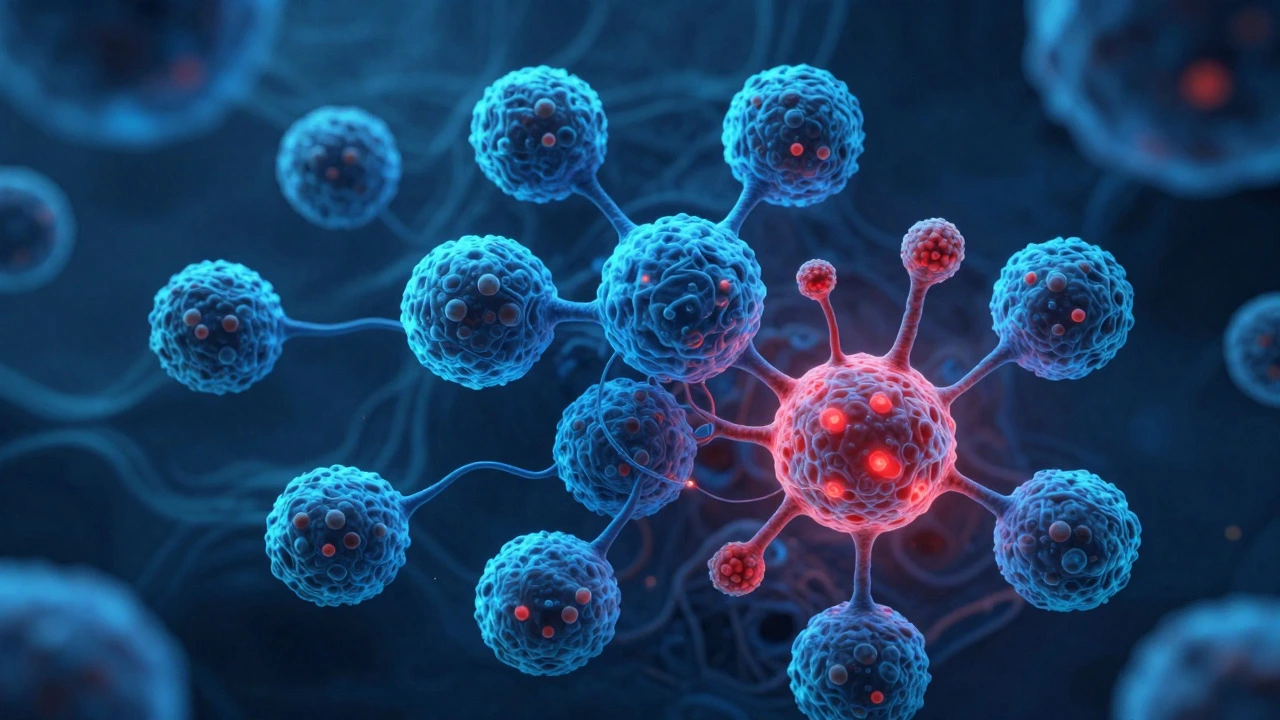
Tumor heterogeneity is a key culprit. A tumor isn't a single block of identical cells. It’s a diverse ecosystem. When you use chemotherapy, it might kill 99% of the cells-the ones sensitive to the drug. But that 1%? They survive because they have a genetic mutation that makes them resistant. Those survivors then multiply, creating a new, tougher version of the cancer. This is why treatments work for a while and then stop.
Another factor is the microenvironment. Tumors create their own supportive network, recruiting blood vessels to feed themselves and suppressing local immune responses. Breaking down this fortress is harder than just killing the cells inside it.
Treatment vs. Cure: Shifting the Goalposts
If a cure isn't possible, what is the point of treatment? The goal changes from "eradication" to "control." Think of it like managing high blood pressure. You take medication daily not to permanently fix your arteries overnight, but to keep your numbers in a safe range so you can live a normal life.
In oncology, this is called disease control. We use a combination of tools:
- Chemotherapy: Systemic drugs that travel through the bloodstream to kill fast-dividing cells.
- Immunotherapy: Drugs like checkpoint inhibitors (e.g., pembrolizumab, nivolumab) that take the brakes off your immune system, allowing T-cells to recognize and attack cancer cells.
- Targeted Therapy: Medications designed to attack specific genetic mutations within the cancer cells, such as EGFR inhibitors in lung cancer.
- Radiation: Used locally to shrink tumors that cause pain or blockage, improving quality of life.
For many patients with "incurable" cancer, these treatments extend life by years, not just months. Some people live five, ten, or even fifteen years with stage IV cancer. They die with the cancer, not from it immediately.
The Role of Palliative Care
There is a stigma around palliative care. Many people think it means "giving up" or "end-of-life hospice." This is a dangerous myth. Palliative care is specialized medical care focused on relieving symptoms and stress. It is appropriate at any age and at any stage in a serious illness.
You can receive palliative care alongside curative or life-prolonging treatments. In fact, studies show that patients who start palliative care early often live longer. Why? Because they are stronger, less nauseous, less anxious, and better able to tolerate aggressive treatments. It addresses the whole person, not just the tumor.
| Aspect | Curative Intent | Palliative/Life-Prolonging Intent |
|---|---|---|
| Primary Goal | Eradicate all cancer cells | Control growth, manage symptoms |
| Treatment Aggressiveness | High (surgery, intense chemo) | Moderate to Low (balanced with quality of life) |
| Side Effects | Often severe | Managed carefully to maintain function |
| Duration | Finite course | Ongoing, adaptive |
| Outcome Metric | Disease-free survival | d>Quality-adjusted life years (QALYs)
New Horizons: What Gives Hope?
Science moves fast. What was terminal five years ago might be manageable today. Here are three areas bringing hope to patients with previously "incurable" diagnoses:
CAR T-Cell Therapy: This involves taking a patient’s own T-cells, genetically engineering them in a lab to target specific cancer markers, and infusing them back into the body. While currently most successful in blood cancers like leukemia and lymphoma, trials are expanding to solid tumors like pancreatic and glioblastoma.
MRNA Vaccines: Following the success of mRNA vaccines in infectious diseases, researchers are developing personalized cancer vaccines. These teach the immune system to recognize unique mutations in a patient’s specific tumor. Early trials in melanoma and pancreatic cancer have shown promising reductions in recurrence rates.
AI-Driven Drug Discovery: Artificial intelligence is accelerating the identification of new drug targets. By analyzing millions of genetic sequences, AI can predict which drugs will work on specific tumor profiles, reducing the trial-and-error phase of treatment.
Living Well with an "Incurable" Diagnosis
Receiving this news is traumatic. But how you respond matters. Here are practical steps to navigate this journey:
- Get a Second Opinion: Always seek a second opinion, preferably from a comprehensive cancer center. Newer clinical trials or specialized expertise might offer options your local doctor hasn’t considered.
- Ask About Clinical Trials: Trials give access to cutting-edge treatments before they are widely available. Ask your oncologist: "Am I eligible for any Phase I, II, or III trials?"
- Focus on Nutrition and Movement: You don’t need extreme diets. Just eat enough protein to maintain muscle mass and move your body as tolerated. Exercise reduces fatigue and improves mental health.
- Mental Health Support: Anxiety and depression are common. Therapy, support groups, or meditation can help you process fear and stay present.
- Define Your Priorities: If time is limited, what matters most? Travel? Family gatherings? Finishing a project? Align your treatment decisions with these values.
Remember, statistics are population-level data. They do not predict your individual outcome. You are not a number. You are a person with unique genetics, resilience, and circumstances. Many "statistical outliers" live far beyond expectations.
Is pancreatic cancer always fatal?
Not always, but it is very serious. If caught early (Stage I), surgery can sometimes cure it. However, most cases are found late. Even then, treatments like chemotherapy and targeted therapy can extend life and improve quality, turning it into a manageable chronic condition for some patients.
What is the difference between terminal and incurable?
"Incurable" means the cancer cannot be completely eliminated, but it may be controlled for years. "Terminal" implies that the disease is progressing despite treatment and life expectancy is limited, often measured in months. All terminal cancers are incurable, but not all incurable cancers are immediately terminal.
Can immunotherapy cure advanced cancer?
In rare cases, yes. Immunotherapy has led to long-term remission in some patients with advanced melanoma, lung cancer, and kidney cancer. For others, it shrinks tumors temporarily. It is not a universal cure, but it offers hope where none existed before.
Should I try alternative medicine if conventional treatment fails?
Complementary therapies like acupuncture, yoga, or mindfulness can help with symptoms and stress. However, avoid unproven "cures" that promise miracles. Always discuss supplements with your oncologist, as some can interfere with chemotherapy or radiation.
How do I find clinical trials for incurable cancer?
Start by asking your oncologist. You can also search databases like ClinicalTrials.gov (US) or WHO ICTRP (global). Look for trials matching your cancer type, stage, and genetic markers. Comprehensive cancer centers often have dedicated navigators to help you enroll.
Does stage IV cancer mean end-of-life?
No. Stage IV means the cancer has spread, but many people live for years with stage IV cancer thanks to modern treatments. Survival depends on the cancer type, overall health, and response to therapy. Focus on quality of life and ongoing management.
What is the role of diet in fighting incurable cancer?
Diet doesn't cure cancer, but it supports your body during treatment. A balanced diet rich in fruits, vegetables, lean proteins, and whole grains helps maintain strength and immunity. Avoid extreme restrictive diets unless supervised by a registered dietitian.
Can stress make incurable cancer worse?
Chronic stress weakens the immune system and may affect treatment tolerance. Managing stress through therapy, exercise, or relaxation techniques can improve your overall well-being and potentially enhance treatment outcomes.
Is there a cure for glioblastoma?
Currently, there is no cure for glioblastoma. Treatment focuses on extending life and preserving quality through surgery, radiation, and chemotherapy. Research into new therapies like CAR-T and vaccines is ongoing, offering future hope.
How long can someone live with incurable cancer?
Survival varies widely. Some patients live months, while others live decades. Factors include cancer type, stage, genetics, age, overall health, and treatment response. Statistics provide averages, not individual predictions.