Post-Knee Replacement Complaint Analyzer
Identify potential causes for your symptoms based on common post-operative feedback and medical data.
Analysis Results
Recommended Proactive Strategies
Imagine you finally did it. You booked the surgery, endured the hospital stay, and walked out with a shiny new metal-and-plastic joint. The promise was simple: no more pain, full mobility, back to hiking or gardening. But three months later, you’re sitting on the couch, rubbing your thigh, wondering why it still feels weird. You aren’t alone. While knee replacement success rates are high, patient satisfaction isn't always perfect. So, what is the biggest complaint after knee replacement? It’s not usually one single thing, but a cluster of issues centered around persistent discomfort, stiffness, and the feeling that the leg just doesn't feel "normal" anymore.
The Top Complaint: Persistent Anterior Knee Pain
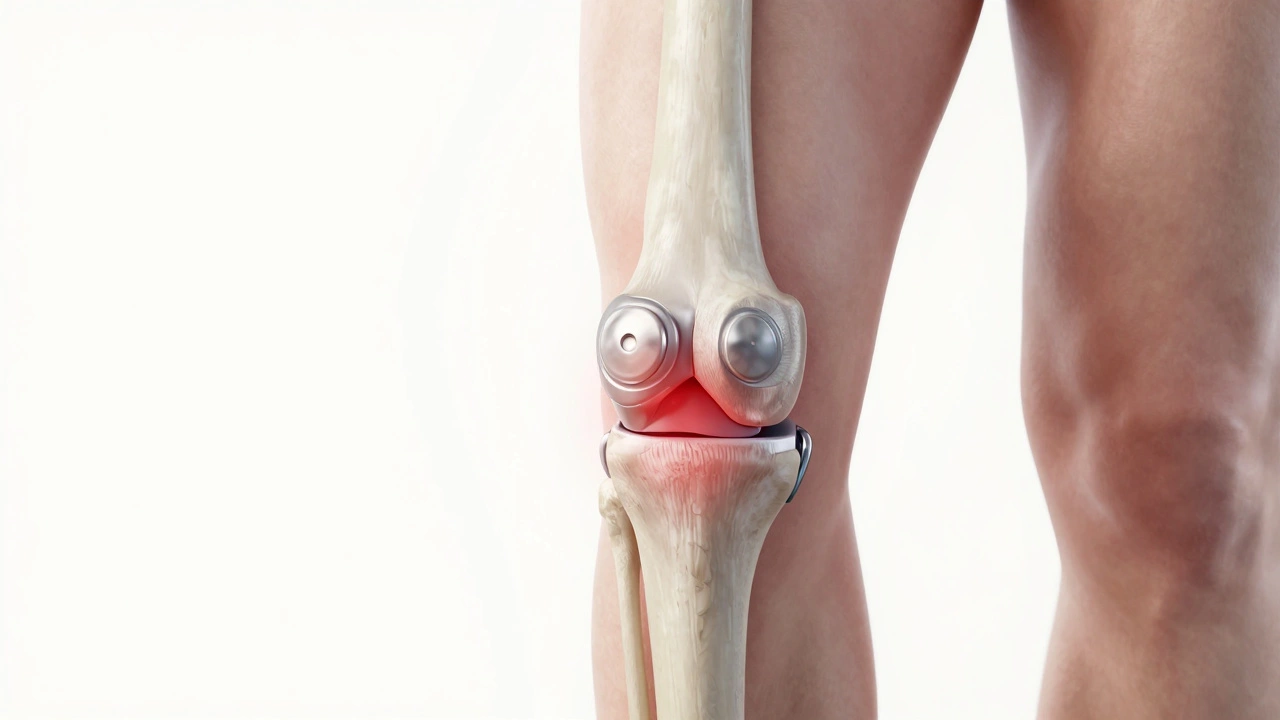
If you ask orthopedic surgeons what keeps them up at night regarding patient feedback, the answer is almost always persistent anterior knee pain. This is pain located at the front of the knee, right behind the kneecap (patella). Even though the main joint surfaces have been replaced, the patellofemoral compartment-the track where your kneecap slides-can remain a trouble spot.
Why does this happen? In many total knee replacements (TKR), the surgeon resurfaces the back of the kneecap, but sometimes arthritis remains in the surrounding cartilage. Or, the tracking of the kneecap might be slightly off due to soft tissue imbalance. For patients who spend a lot of time squatting, kneeling, or climbing stairs, this area takes a beating. A study published in the *Journal of Arthroplasty* noted that while 80-90% of patients are satisfied, about 10-20% report some level of ongoing pain, with anterior pain being the most common subtype.
This isn't necessarily a sign of failure. Often, it's a sign of irritation. The nerves in the front of the knee are hypersensitive after surgery. If you jump into heavy activity too soon, or if your quadriceps muscles haven't fully regained strength, the kneecap grinds against its groove, causing that sharp, achy sensation.
Stiffness and Limited Range of Motion
Closely tied to pain is stiffness. Many patients complain that their new knee feels like a rusty hinge. You might get the knee to bend 90 degrees easily, but hitting that crucial 110 or 120 degrees needed for sitting comfortably in a low chair or picking something up from the floor feels impossible.
This issue often stems from arthrofibrosis-a fancy term for excessive scar tissue formation inside the joint capsule. When the body heals, it lays down collagen. Sometimes, it lays down too much, creating adhesions that physically block movement. Other times, the stiffness is muscular. Your quadriceps muscle, which acts as the primary stabilizer for the knee, undergoes "arthrogenic muscle inhibition." Essentially, the brain shuts down the muscle signal to protect the injured joint. If you don't aggressively retrain that connection through physical therapy, the muscle stays weak, and the joint stays stiff.
Patients who complain about stiffness often share a common trait: they stopped physical therapy too early or didn't perform their home exercises consistently during the first six weeks. That initial window is critical. Once scar tissue matures and hardens, breaking it down becomes exponentially harder, sometimes requiring manipulation under anesthesia or even revision surgery.
The "Foreign Body" Sensation and Numbness
Another frequent complaint is the feeling that the leg doesn't belong to you. Patients describe a sense of alienation, numbness, or tingling along the outer side of the shin or the inner ankle. This is usually due to nerve damage during the incision.
The infrapatellar branch of the saphenous nerve runs right across the front of the knee. During the surgical approach, this nerve is often stretched or cut. Surgeons try to preserve it, but it's thin and fragile. When it's damaged, you lose sensation in a small patch of skin. While this doesn't affect the function of the knee, it can be psychologically unsettling. Some patients also experience neuroma pain-a burning, electric-shock sensation-if the nerve ends heal incorrectly and form a painful bundle.
Additionally, the hardware itself can cause issues. The metal implants sit just under the skin, especially in thinner patients. You might feel the edges of the tibial tray or the femoral component when you press on your knee. This "hardware awareness" is normal but can be annoying, particularly if you sleep on your side and roll onto the operated leg.
Swelling That Won't Go Away
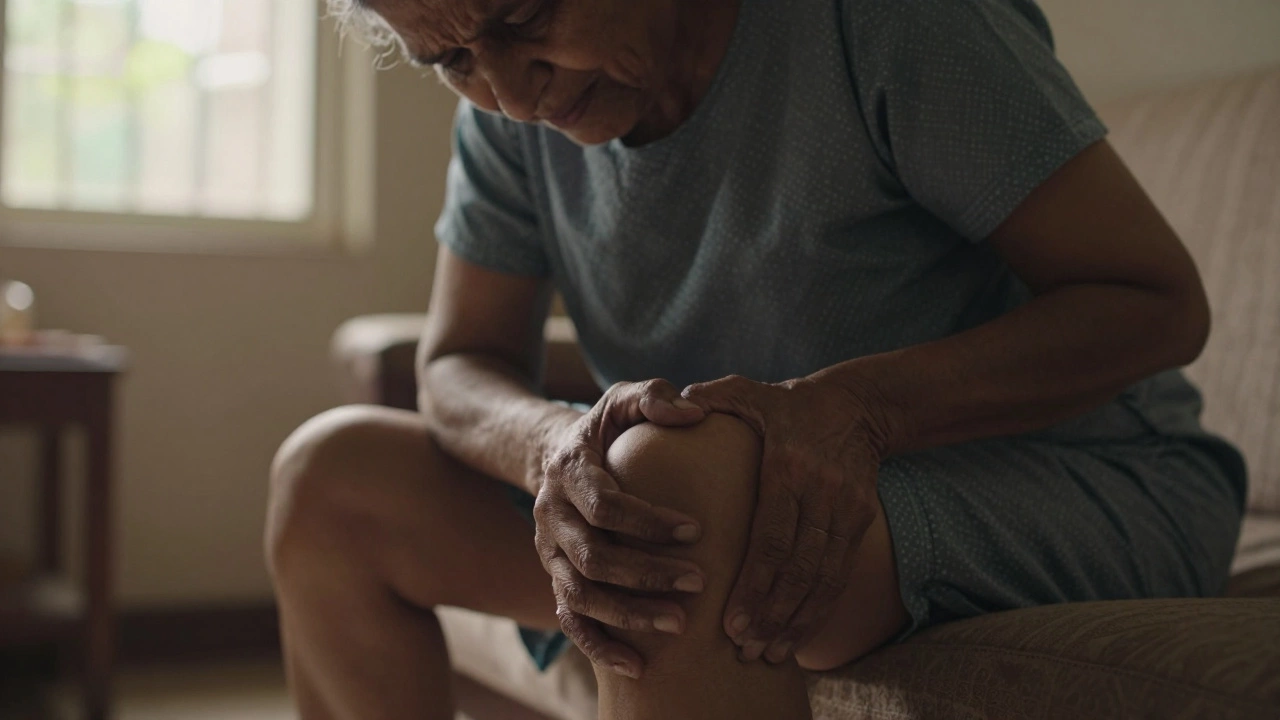
Chronic swelling is another major source of frustration. Most patients expect swelling for the first few weeks. But when it persists for six months or a year, it becomes a significant complaint. Swelling indicates inflammation. It could be due to overuse, an allergic reaction to the metal components (nickel or cobalt sensitivity), or a low-grade infection.
In rare cases, persistent swelling signals periprosthetic joint infection (PJI). This is a serious complication where bacteria colonize the implant surface. Symptoms include warmth, redness, and increased pain, especially at night. If you have chronic swelling accompanied by fever or chills, you need to see your surgeon immediately. However, more commonly, chronic swelling is mechanical. If your gait is uneven because you're favoring the other leg, or if your calf muscles aren't pumping fluid back up effectively, fluid accumulates in the knee joint.
| Complaint | Primary Cause | Typical Onset | Severity Level |
|---|---|---|---|
| Anterior Knee Pain | Patellofemoral irritation, quad weakness | 3-6 months post-op | Mild to Moderate |
| Stiffness/Limited ROM | Arthrofibrosis (scar tissue), poor PT compliance | Immediate to 3 months | Moderate to Severe |
| Numbness/Tingling | Saphenous nerve injury | Immediate | Mild |
| Chronic Swelling | Overuse, metal allergy, or low-grade infection | Variable | Mild to Severe |
| Instability/Looseness | Implant loosening, ligament imbalance | 1-5 years post-op | Severe |
Psychological Impact and Unrealistic Expectations
We can't ignore the mental aspect. One of the biggest complaints isn't physical-it's emotional disappointment. Many patients enter surgery expecting a "cure-all." They imagine running marathons or playing tennis. When reality sets in-that the knee will never feel exactly like the original, healthy knee-they feel let down.
Chronic pain changes brain chemistry. Living with knee osteoarthritis for years rewires your nervous system to anticipate pain. Even after the source of pain (the bone-on-bone friction) is removed, the brain may continue to send pain signals. This is known as centralized sensitization. Patients often complain that "nothing helps," not because the surgery failed, but because their pain perception hasn't reset. Managing expectations before surgery is crucial. A successful knee replacement aims to eliminate disabling pain and restore functional mobility, not to return you to elite athletic performance.

When to Worry: Red Flags vs. Normal Recovery
Not all complaints are equal. Some are part of the healing process; others require immediate medical attention. Here is how to distinguish between normal post-op quirks and serious complications.
- Normal: Mild ache after long walks, occasional popping sounds (crepitus), slight numbness around the incision, swelling that improves with elevation.
- Concerning: Sudden increase in pain after a period of improvement, inability to bear weight, fever above 101°F (38.3°C), redness spreading from the incision, calf pain (potential blood clot).
If you experience sudden instability-where the knee gives way without warning-it could indicate a ligament imbalance or implant loosening. This requires imaging (X-rays or CT scans) to assess the alignment and fixation of the prosthesis.
Mitigating Complaints: Proactive Strategies
You can significantly reduce the likelihood of these complaints by taking control of your recovery. First, prioritize quadriceps strengthening. Use straight leg raises and terminal knee extensions daily. Strong quads stabilize the patella and reduce anterior pain. Second, manage swelling aggressively. Ice for 20 minutes every two hours for the first week, then as needed. Compression stockings help prevent deep vein thrombosis (DVT) and reduce fluid buildup.
Third, communicate openly with your surgeon. Don't brush off persistent pain. If you have anterior knee pain, ask about patellar tracking exercises or consider a cortisone injection to calm inflammation. If stiffness is the issue, consult a specialized physical therapist who can use manual therapy techniques to break up scar tissue.
Finally, maintain a healthy weight. Every pound of body weight puts four pounds of pressure on the knee joint. Losing even 10 pounds can dramatically reduce stress on the new implant, extending its lifespan and reducing pain.
How long does pain last after knee replacement?
Most acute pain subsides within 6 to 12 weeks. However, mild soreness or aching, especially after activity, can persist for 6 to 12 months as the tissues fully remodel and strengthen. If severe pain persists beyond three months, it warrants further investigation.
Is it normal to feel numbness after knee surgery?
Yes, numbness around the incision site and the inner side of the lower leg is very common. This is due to the temporary or permanent damage to small sensory nerves during the incision. It usually doesn't affect knee function and may improve slightly over time, though some numbness can be permanent.
What causes stiffness in a new knee replacement?
Stiffness is primarily caused by arthrofibrosis (excessive scar tissue) and quadriceps weakness. Poor adherence to physical therapy protocols, especially in the first six weeks, is a major contributor. Maintaining consistent range-of-motion exercises is key to preventing stiffness.
Can a knee replacement fail?
Yes, although modern implants last 15-20 years or more for most patients. Failure can occur due to infection, implant loosening, fracture, or wear of the plastic spacer. Revision surgery is more complex than the initial procedure and has higher complication rates, so prevention through proper care is essential.
Does weather affect knee replacement pain?
Many patients report increased pain or stiffness during cold or humid weather. While scientific evidence is mixed, changes in barometric pressure can affect the viscosity of synovial fluid and the expansion of tissues around the joint, leading to discomfort. Keeping the knee warm can help mitigate this.