Cancer Pain Type Identifier
Select a pain type below to understand its characteristics, common causes, and management strategies.
Somatic Pain
Deep ache or stiffness
Visceral Pain
Crampy, squeezing, sharp
Neuropathic Pain
Burning, shooting, electric shocks
Somatic Pain Overview
Description
Feels like a deep ache or stiffness. It occurs when a tumor presses on bones, muscles, or organs. Think of the dull, throbbing pain of a bruised rib.
Common Causes
- Bone metastases
- Tumors pressing on soft tissue
- Joint involvement
Visceral Pain Overview
Description
Comes from internal organs. It can feel crampy, squeezing, or sharp. It is often hard to pinpoint exactly where it is coming from.
Common Causes
- Organ distension (e.g., liver swelling)
- Duct blockages
- Inflammation in abdominal cavity
Neuropathic Pain Overview
Description
Widely considered the most difficult to treat. Occurs when cancer damages nerves directly or compresses them. Described as burning, shooting, electric shocks, or tingling.
Common Causes
- Pancreatic cancer invading celiac plexus
- Head and neck cancers affecting trigeminal nerve
- Spinal cord compression
There is no single "winner" for the title of the most painful cancer. Pain is subjective, biological, and highly individual. One person might describe a headache as a 10/10, while another shrugs it off. However, oncologists and palliative care specialists agree that certain cancers consistently rank higher on the severity scale due to where they grow and how they interact with the body’s nervous system.
If you are asking this question because you or a loved one is suffering, please know that modern medicine has advanced significantly in pain control. The goal here isn't just to label the worst offenders, but to understand why they hurt so much and, more importantly, how we manage that pain today.
The Anatomy of Cancer Pain
To understand which cancer hurts the most, you first need to understand Cancer Pain is discomfort caused by tumor growth, treatment side effects, or nerve damage. Not all pain is created equal. Doctors generally categorize it into three types:
- Somatic Pain: This feels like a deep ache or stiffness. It happens when a tumor presses on bones, muscles, or organs. Think of the dull, throbbing pain of a bruised rib.
- Visceral Pain: This comes from internal organs. It can feel crampy, squeezing, or sharp. It’s often hard to pinpoint exactly where it is coming from.
- Neuropathic Pain: This is widely considered the most difficult to treat. It occurs when cancer damages nerves directly or compresses them. Patients describe it as burning, shooting, electric shocks, or tingling. This type of pain often requires different medications than standard opioids.
The "most painful" cancers usually involve heavy neuropathic components or invade sensitive structures like the spine or major joints.
Pancreatic Cancer: The Silent Aggressor
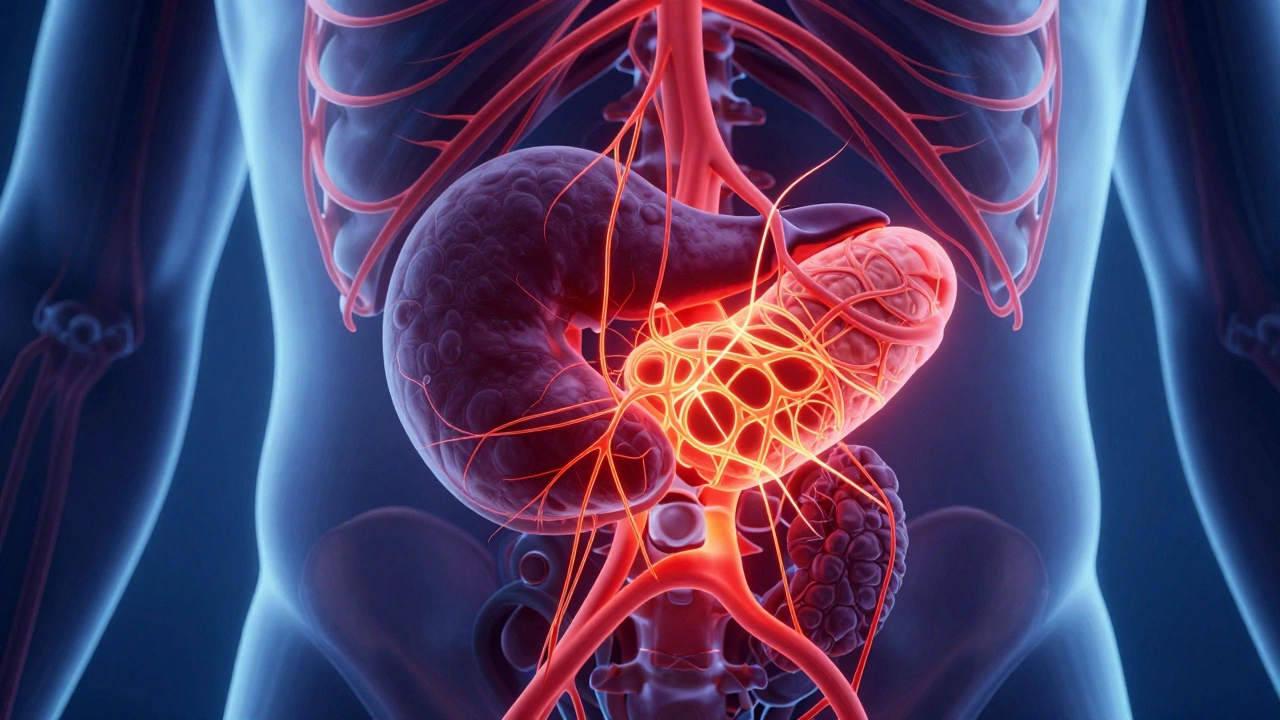
When medical professionals discuss severe cancer pain, Pancreatic Cancer is a malignancy of the pancreas known for late diagnosis and severe back pain. frequently tops the list. Why? Location, location, location.
The pancreas sits deep in the abdomen, right next to the celiac plexus-a dense network of nerves that sends signals from your abdominal organs to your brain. When a tumor grows in the head or body of the pancreas, it often invades these nerves early on. This causes intense, radiating pain that shoots through to the mid-back.
| Factor | Impact on Pain Level |
|---|---|
| Nerve Invasion | Tumors wrap around the celiac plexus, causing constant burning/shooting pain. |
| Organ Distension | Blockages in bile ducts cause liver swelling and visceral pressure. |
| Late Diagnosis | By the time symptoms appear, the tumor is often large and invasive. |
This pain is often present even in early stages, which is paradoxically helpful for diagnosis but terrible for quality of life. Because the pain is neuropathic, simple painkillers often don’t touch it. Patients may require nerve blocks (like a celiac plexus block) alongside medication to find relief.
Bone Metastases: The Structural Breakdown
While primary cancers start in one place, many become widespread. Bone Metastases are cancer cells that have spread from their original site to the bones. This is not a separate cancer type, but a complication of breast, prostate, lung, and kidney cancers. Statistically, up to 70% of patients with advanced breast or prostate cancer will develop bone mets.
Bones are rich in nerve endings. When cancer cells settle there, they trigger two things:
- Osteolytic Activity: The cancer releases chemicals that dissolve bone tissue. This weakens the structure, leading to micro-fractures. Imagine walking on a crumbling staircase; every step sends a jolt of pain.
- Inflammation: The body’s immune response to the tumor creates swelling inside the rigid bone cavity, increasing pressure on nerves.
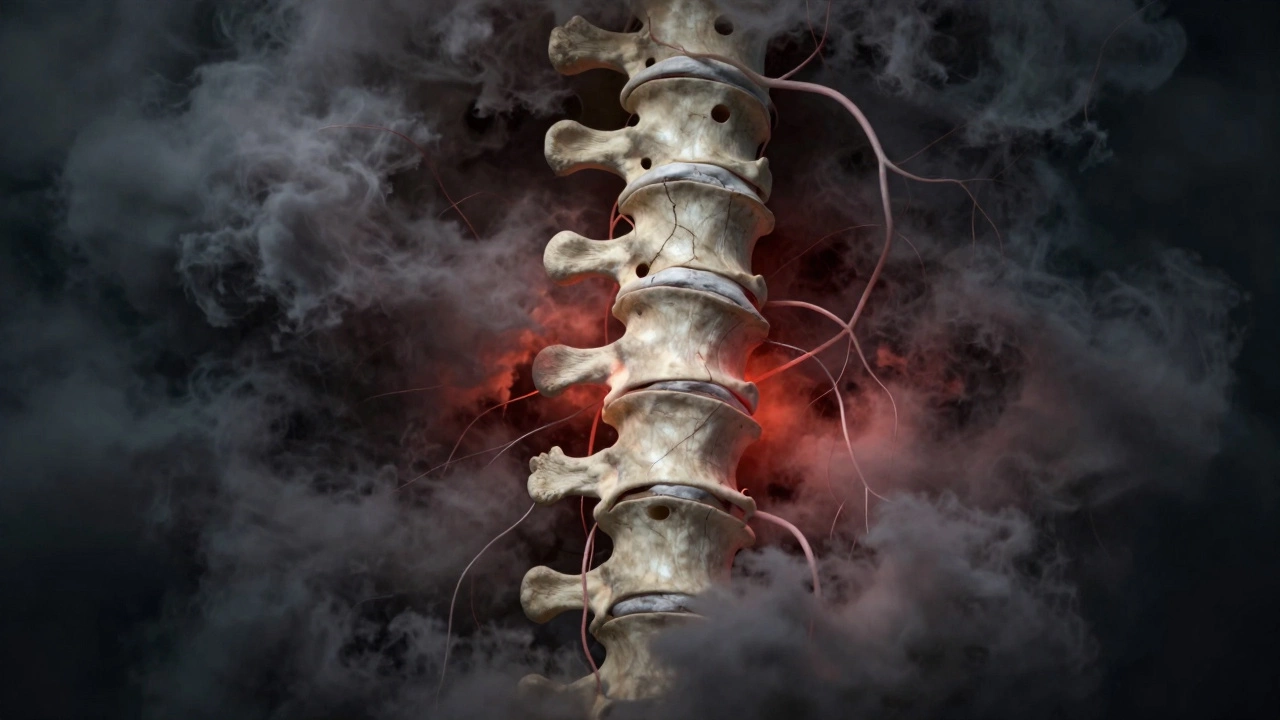
The pain from bone metastases is often described as a deep, gnawing ache that worsens at night or with movement. If a vertebrae (spine bone) is involved, the risk of spinal cord compression rises. This is a medical emergency where the tumor presses on the spinal cord, causing paralysis and excruciating pain if not treated immediately with steroids and radiation.
Liver Cancer and Liver Metastases
The liver itself doesn’t have many pain receptors, but its outer covering-the Glisson’s capsule-does. Hepatocellular Carcinoma is primary liver cancer that causes pain by stretching the liver's outer capsule. As tumors grow, they stretch this capsule, sending sharp signals to the brain.
Furthermore, the liver is located under the right rib cage. Pain here can be mistaken for gallbladder issues or muscle strain. When cancer spreads to the liver from other sites (metastatic disease), multiple nodules can form, causing significant distension. This leads to a constant, heavy pressure in the upper right abdomen, often accompanied by nausea and loss of appetite.
Head and Neck Cancers
Cancers of the mouth, throat, larynx, and salivary glands involve some of the most complex nerve networks in the human body. The trigeminal nerve, for instance, controls sensation in your face. Tumors in this region can invade these nerves, causing facial pain that mimics severe toothaches or migraines.
Additionally, treatments for head and neck cancers, such as radiation therapy, can cause mucositis-inflammation and ulceration of the soft tissues in the mouth and throat. Eating, swallowing, and even talking can become agonizing tasks. This combination of tumor-related nerve pain and treatment-induced tissue damage makes this category exceptionally challenging for pain management.

How We Manage Severe Cancer Pain
Knowing which cancers are the most painful is only half the battle. The other half is management. In 2026, we have moved far beyond just "giving stronger pills." Pain management is now multimodal, meaning we attack pain from several angles simultaneously.
1. Pharmacological Interventions
We use the WHO Analgesic Ladder as a baseline, but customize it heavily:
- Non-Opioids: Acetaminophen or NSAIDs for mild somatic pain.
- Opioids: Morphine, oxycodone, or fentanyl patches for moderate to severe pain. Fentanyl patches are particularly useful for patients who cannot swallow pills.
- Adjuvants: These are non-painkillers used to boost pain relief. For neuropathic pain (burning/shooting), doctors prescribe antidepressants (like duloxetine) or anticonvulsants (like gabapentin). These calm the overactive nerves.
2. Interventional Procedures
When drugs aren’t enough, we turn to procedures:
- Nerve Blocks: Injecting anesthetic or alcohol near specific nerves (like the celiac plexus for pancreatic cancer) to stop pain signals.
- Radiation Therapy: Targeted radiation can shrink tumors pressing on bones or nerves, providing rapid relief within days.
- Bisphosphonates/Rank Ligand Inhibitors: Drugs like zoledronic acid strengthen bones and reduce fractures in patients with bone metastases.
3. Psychological Support
Pain is processed in the brain. Anxiety and depression amplify pain signals. Cognitive behavioral therapy (CBT) and mindfulness techniques help patients reframe their relationship with pain, reducing the emotional suffering component.
Red Flags: When to Seek Immediate Help
If you are living with cancer, monitor your pain closely. Contact your oncologist immediately if:
- Your current medication stops working entirely.
- You experience new weakness, numbness, or difficulty walking (signs of spinal cord compression).
- You have sudden, severe headaches or vision changes (potential brain metastasis).
- You lose bowel or bladder control.
These are not normal parts of the journey. They are signs that the pain mechanism has changed and requires a new strategy.
Conclusion
While pancreatic cancer, bone metastases, and head and neck cancers are often cited as the most painful due to nerve involvement and structural damage, pain is not a competition. Any uncontrolled pain is too much pain. The landscape of cancer care has shifted toward aggressive, proactive pain management. You do not have to suffer in silence. Modern interventional techniques, combined with tailored medication regimens, can restore quality of life even in advanced stages.
Is pancreatic cancer really the most painful?
Pancreatic cancer is frequently cited as one of the most painful because the pancreas is located near the celiac plexus, a major nerve bundle. Tumors often invade these nerves early, causing severe back and abdominal pain. However, pain is subjective, and bone metastases from other cancers can be equally or more painful depending on the location and extent of bone destruction.
What does neuropathic cancer pain feel like?
Neuropathic pain is caused by nerve damage. Unlike the dull ache of somatic pain, neuropathic pain is often described as burning, shooting, stabbing, electric-shock-like, or tingling. It can occur spontaneously or be triggered by light touch. Standard painkillers like ibuprofen are often ineffective against this type of pain.
Can bone metastasis pain be managed without surgery?
Yes. While surgery (orthopedic stabilization) is sometimes needed to prevent fractures, many cases are managed with radiation therapy to shrink the tumor, bisphosphonates to strengthen bone, and a combination of opioids and adjuvant medications like gabapentin. Nerve blocks can also provide targeted relief.
Why is cancer pain harder to treat than regular pain?
Cancer pain is often multifactorial, involving tissue damage, nerve invasion, and inflammation simultaneously. Additionally, tumors can change shape and location, altering the pain source. Neuropathic components require specific medications (anticonvulsants/antidepressants) rather than just traditional analgesics, making the treatment regimen more complex.
What is a celiac plexus block?
A celiac plexus block is a minimally invasive procedure where a doctor injects an anesthetic or neurolytic agent (like alcohol) into the celiac plexus nerves behind the stomach. It is commonly used for pancreatic cancer pain to interrupt pain signals traveling to the brain, often providing significant relief for months.