Find Your Ideal Skin Treatment
Not sure which procedure is right for you? Answer these questions to get a personalized recommendation.
Your Recommended Treatment
Always consult a certified dermatologist before starting any procedure.
You walk into a dermatologist's clinic in Bangalore or Mumbai, and you see it everywhere: people asking for that one specific thing that promises glowing, flawless skin. Is it lasers? Is it needles? Or is it something simpler? If you are wondering what is the most popular skin treatment, the answer isn't just one magic wand. It depends on what problem you are trying to solve. But if we look at global data and local trends in India, a few clear winners emerge.
The landscape of skincare has shifted dramatically. We aren't just talking about creams anymore. Non-invasive procedures have exploded in popularity because they offer visible results with minimal downtime. You want clarity, not confusion. So, let's break down the top contenders, why they work, and which one might actually be right for your skin type.
The Global Leader: Chemical Peels
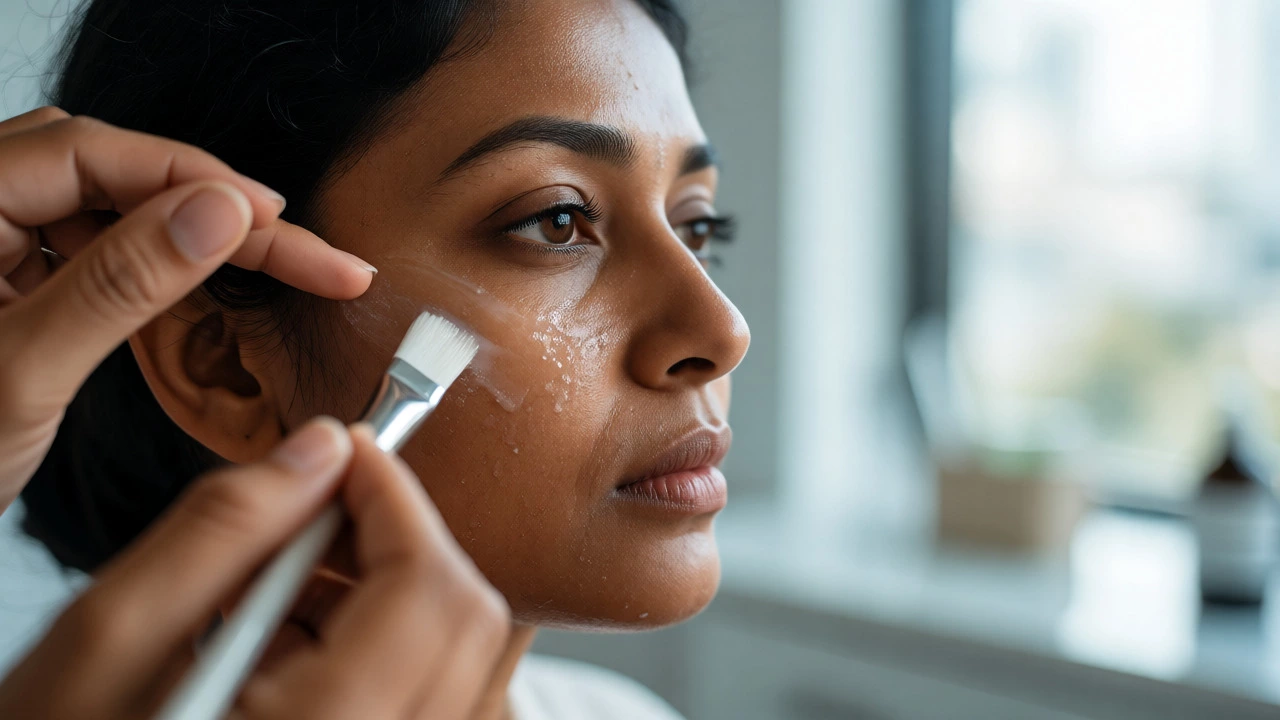
If there is a single procedure that consistently tops the charts globally, it is the chemical peel. This is a non-surgical treatment that uses a chemical solution to remove the damaged outer layers of your skin. The new skin grows back smoother and less wrinkled. Why is this so popular? Because it is versatile. Whether you are dealing with acne scars, sun damage, or fine lines, a peel can address it.
In India, where hyperpigmentation is a major concern due to higher melanin levels, chemical peels are a go-to. They are affordable compared to high-end lasers, and you can get them done during your lunch break. There are three main types:
- Superficial peels: Use alpha-hydroxy acids (like glycolic acid) to penetrate only the outer layer. Great for mild discoloration.
- Medium peels: Use trichloroacetic acid (TCA) to reach deeper layers. Effective for age spots and fine wrinkles.
- Deep peels: Use phenol to penetrate deeply. These require more recovery time but deliver dramatic results for severe damage.
Think of a superficial peel like exfoliating your face with a very strong scrub. It’s gentle, but effective over time. A deep peel is more like sanding down a wooden table-it strips away years of wear and tear in one go.
The Anti-Aging Powerhouse: Botulinum Toxin (Botox)
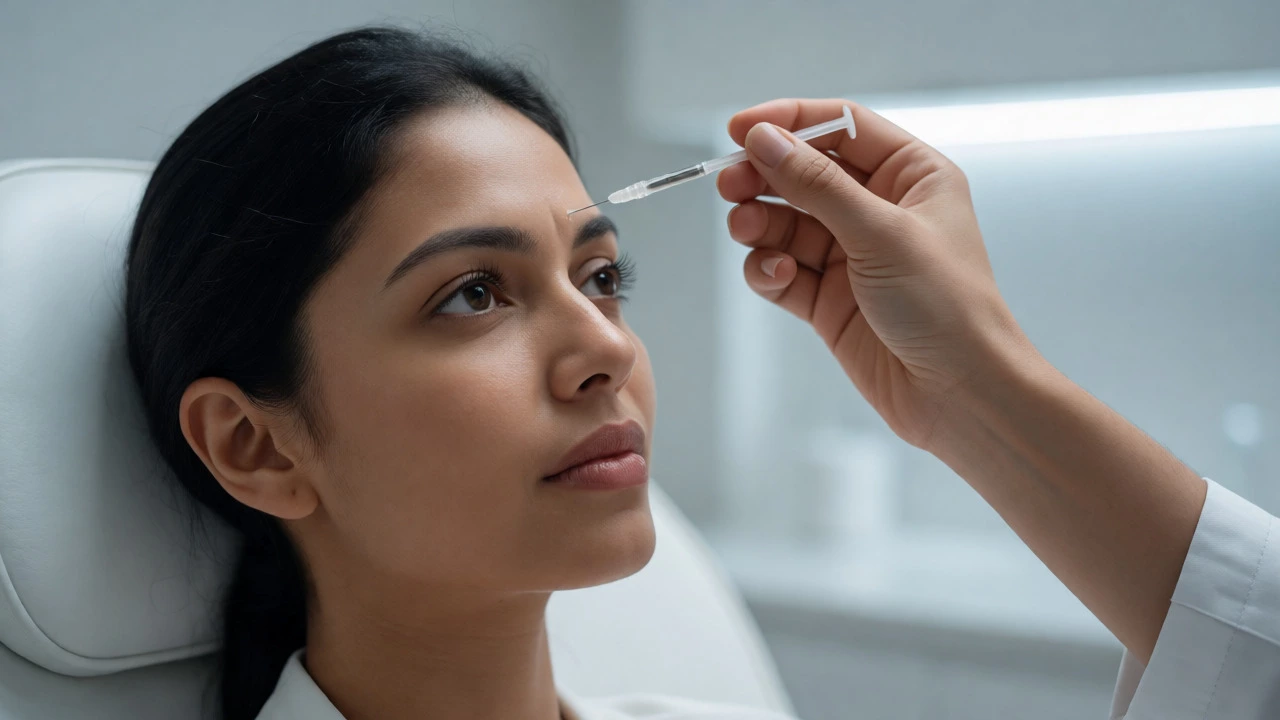
When people think of "getting work done," they often picture needles in the forehead. That is Botox, or botulinum toxin type A. It works by temporarily paralyzing the muscles that cause wrinkles, specifically those dynamic lines formed by smiling or frowning. While technically a drug rather than a "treatment" in the surgical sense, it dominates the cosmetic market.
Why do people love it? Speed. You can be in and out of the clinic in fifteen minutes. There is no downtime. You don't need to hide from the sun for weeks. For many professionals in their late 20s and 30s, this is the first step into aesthetic medicine. It prevents wrinkles before they set in. In cities like Delhi and Bangalore, preventive Botox is becoming as common as getting a haircut.
However, Botox doesn't fix texture or pigmentation. It only stops movement. If you have static wrinkles (lines that stay when your face is still), Botox alone won't help much. That is where fillers come in.
The Texture Transformer: Microneedling
Microneedling, also known as collagen induction therapy, has surged in popularity recently. It involves using a device with tiny sterile needles to create micro-injuries in the skin. Your body responds by producing new collagen and elastin. The result? Firmer, smoother skin.
This treatment is particularly favored by those who are wary of chemicals or lasers. It is mechanical, not thermal or chemical. For Indian skin tones, microneedling is safer than some aggressive laser treatments because it carries a lower risk of post-inflammatory hyperpigmentation (PIH). PIH is that annoying dark spot that appears after skin trauma, and darker skin types are prone to it.
Many clinics now combine microneedling with PRP (Platelet-Rich Plasma), often called the "Vampire Facial." They draw your blood, spin it to isolate platelets, and apply it to your face while the needles are working. The growth factors in PRP accelerate healing and boost glow. It sounds intense, but the results speak for themselves.
The Precision Tool: Laser Resurfacing
Lasers are the heavy hitters of skin rejuvenation. They use focused light energy to remove thin layers of skin. There are two main categories: ablative and non-ablative.
| Treatment | Best For | Downtime | Risk Level |
|---|---|---|---|
| Chemical Peel | Pigmentation, Acne Scars | Low to Moderate | Low |
| Botox | Dynamic Wrinkles | None | Very Low |
| Microneedling | Texture, Pores, Scarring | Minimal (Redness) | Low |
| Ablative Laser | Deep Wrinkles, Sun Damage | High (1-2 Weeks) | Moderate |
| Non-Ablative Laser | Mild Aging, Tone | Minimal | Low |
Ablative lasers (like CO2) vaporize skin cells. They give the best results for deep wrinkles but require significant recovery time. You might look red and swollen for days. Non-ablative lasers heat the underlying tissue without damaging the surface. They stimulate collagen but require multiple sessions. For someone with busy schedules, non-ablative is often preferred despite needing more visits.
How to Choose What’s Right for You
Knowing what is the most popular skin treatment is useless if it doesn't fit your needs. Here is how to decide:
- Do you have active acne? Avoid lasers and aggressive peels. Start with salicylic acid peels or topical retinoids. Microneedling can help with scars later, but not during active breakouts.
- Are you worried about dark spots? Chemical peels and Q-switched lasers are your friends. Sunscreen is non-negotiable here. Without SPF 50, any treatment will fail.
- Do you have fine lines around eyes/mouth? Botox is the quickest fix. If you have volume loss (hollow cheeks), consider dermal fillers alongside Botox.
- Is your skin rough or pitted? Microneedling or fractional lasers target texture effectively.
Remember, your skin barrier matters. If you have sensitive skin, start low and slow. A superficial peel is better than jumping straight into a deep TCA peel that leaves you peeling for a week.
The Hidden Cost: Aftercare Matters More Than the Procedure
Here is a truth nobody tells you upfront: the treatment is only 50% of the battle. The other 50% is aftercare. If you get a laser treatment and then spend an hour in the Bangalore sun without protection, you will undo all progress. Hyperpigmentation is the enemy of Indian skin.
Post-treatment rules are strict:
- Sun Protection: Wear broad-spectrum sunscreen every day, even indoors. Reapply every three hours if outside.
- Hydration: Keep your skin moist. Dry, flaking skin heals poorly. Use bland moisturizers-no fragrances or active acids immediately after.
- No Picking: Let scabs fall off naturally. Picking leads to scars.
Clients who skip aftercare often complain that the treatment "didn't work." It did work; they just sabotaged the healing process.
Common Myths About Skin Treatments
Let's bust a few myths that keep people from seeking help.
Myth 1: Lasers thin your skin. False. Properly performed laser treatments stimulate collagen production, which actually thickens the dermis over time. Your skin becomes stronger, not thinner.
Myth 2: Botox makes you look frozen. Not if done correctly. Modern techniques focus on preserving natural expression. You shouldn't lose your ability to smile; you should just stop creasing your forehead.
Myth 3: One session fixes everything. Rarely. Collagen takes months to build. Expect a series of treatments for lasting results, especially for acne scars or pigmentation.
FAQ
Which skin treatment is best for Indian skin tones?
Indian skin tones (Fitzpatrick types IV-VI) are prone to hyperpigmentation. Therefore, treatments with lower risk of thermal damage are preferred. Superficial to medium chemical peels, microneedling, and non-ablative fractional lasers are generally safest. Always consult a dermatologist experienced with darker skin to avoid post-inflammatory hyperpigmentation.
How much does a chemical peel cost in India?
Costs vary widely based on the city and clinic reputation. In metros like Bangalore or Mumbai, a superficial glycolic peel might range from ₹2,000 to ₹5,000 per session. Medium TCA peels can cost between ₹5,000 and ₹10,000. Deep peels are significantly more expensive due to the complexity and downtime involved.
Is microneedling painful?
Most people describe it as a vibrating sensation with mild prickling. Clinics typically apply a topical numbing cream 30-45 minutes before the procedure, which minimizes discomfort significantly. You might feel warmth or slight irritation afterward, but it is rarely described as painful.
Can I combine Botox and fillers?
Yes, and often you should. Botox relaxes muscles to prevent wrinkles, while fillers restore lost volume. They address different signs of aging. Many patients benefit from both in the same session, though your doctor may space them out slightly depending on your anatomy and goals.
How long do results last?
It depends on the treatment. Botox lasts 3-6 months. Fillers last 6-18 months depending on the type and area. Chemical peel results are cumulative; regular maintenance keeps skin bright. Laser resurfacing results can last years, provided you protect your skin from sun damage.
Final Thoughts
There is no single "best" treatment for everyone. The most popular skin treatment is simply the one that solves your specific problem efficiently and safely. For quick fixes, Botox wins. For glow and tone, peels shine. For texture, microneedling delivers. And for serious rejuvenation, lasers remain king.
Start with a consultation. Ask questions. Check before-and-after photos of patients with similar skin types to yours. Don't chase trends blindly. Invest in a provider who understands your skin biology, not just marketing buzzwords. Your skin will thank you for it.