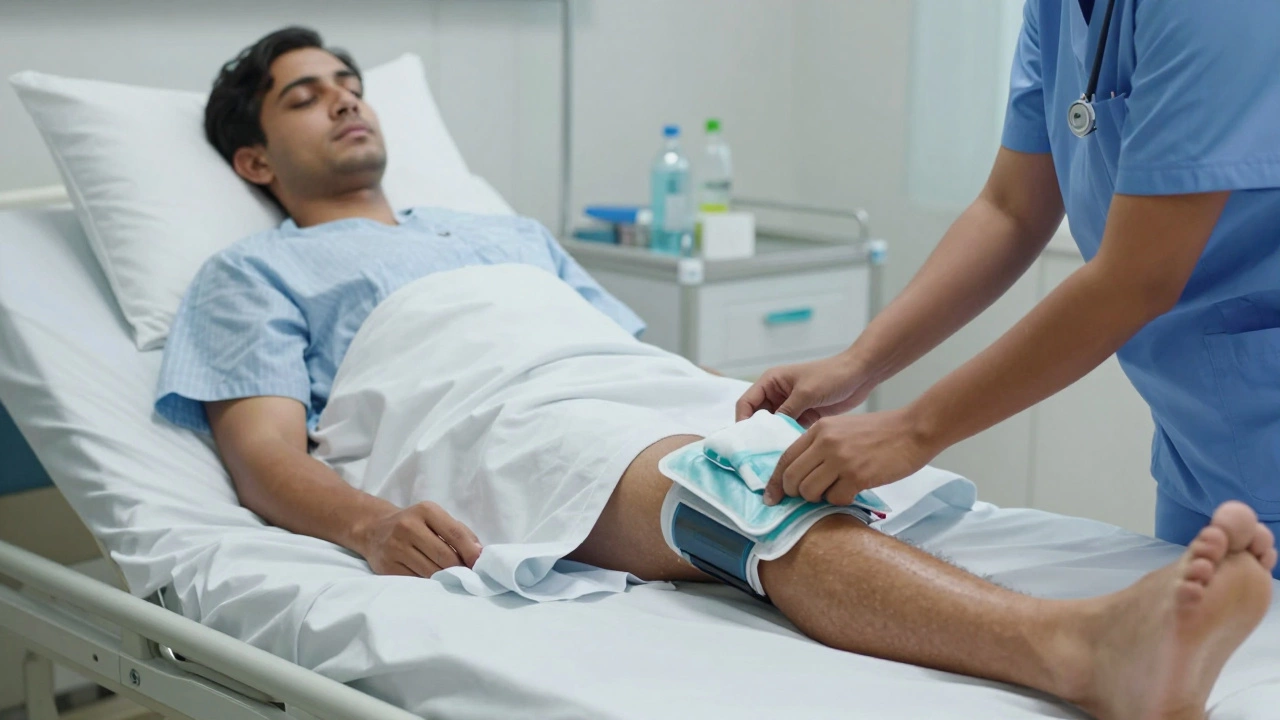
Knee Replacement Recovery Timeline & Pain Estimator
Select your current recovery stage or explore what to expect at each phase of total knee replacement recovery.
Days 1-3
Peak Phase
High IntensityDays 4-7
Transition Phase
ModerateWeeks 2-6
Stiffness Stage
Low-ModerateMonths 3-6
Recovery Phase
MinimalDays 1-3: The Peak Phase
Pain Profile
Acute Surgical Pain
Management Strategies
What to Expect This Week
During this phase, your job is not to eliminate all sensation. Your job is to keep pain at a level where you can breathe deeply and move slightly. A pain score of 3 or 4 out of 10 is acceptable if it allows you to participate in physical therapy.
⚠️ When to Contact Your Surgeon
While some pain is expected, these symptoms indicate potential complications:
💡 Pro Tips for Home Recovery
It is easy to imagine the worst when you hear "total knee replacement." You picture steel bolts grinding into bone and days of unmanageable agony. But here is the truth: for most people, the pain is manageable, predictable, and short-lived compared to the chronic ache that brought them to surgery in the first place.
I have spoken with dozens of patients recovering from this procedure, and the consensus is striking. The sharp, surgical pain peaks within the first 48 hours and then drops off sharply. What remains is a dull soreness that fades as your muscles wake up and your joint stabilizes. If you are sitting on the fence because you fear the pain, this guide will break down exactly what to expect, how doctors control it, and why moving early is actually your best friend.
The Reality of Surgical Pain vs. Arthritis Pain
To understand knee replacement pain is the discomfort experienced during and after the surgical procedure to replace damaged knee joint surfaces with artificial components, you have to compare it to your baseline. Most people seeking this surgery live with osteoarthritis or rheumatoid arthritis. That condition causes constant, gnawing inflammation, stiffness that locks the joint, and pain that disrupts sleep.
Surgical pain is different. It is acute. It has a clear start and end date. While the first three days can be intense, they are heavily medicated. After day four, the narrative shifts from "pain" to "discomfort" and "stiffness." By week two, many patients report feeling better than they have in years, even if they are still healing. The key difference is trajectory: arthritis pain gets worse over time; surgical pain gets better every single day.
Your First 72 Hours: The Peak Phase
The first three days are the hardest, but they are also the most controlled. Here is what happens in the hospital:
- Immediate Post-Op: As soon as you leave the operating room, an anesthesiologist may administer a nerve block. This numbs the leg for 12 to 24 hours. You might feel pressure or movement, but no sharp pain.
- Pain Management Protocol: Doctors rarely rely on opioids alone anymore. Instead, they use multimodal analgesia. This means combining acetaminophen (paracetamol), NSAIDs like celecoxib, and gabapentinoids to target pain through different pathways in the brain.
- Movement Starts Early: You will likely stand up within 24 hours. Yes, it hurts. But walking prevents blood clots and reduces swelling, which ironically lowers pain levels later.
During this phase, your job is not to eliminate all sensation. Your job is to keep pain at a level where you can breathe deeply and move slightly. A pain score of 3 or 4 out of 10 is acceptable if it allows you to participate in physical therapy.
Weeks 2 to 6: The Stiffness Stage
By the time you go home, the sharp surgical pain is gone. Now, you face a new challenge: stiffness and muscle fatigue. This is often misunderstood as "pain," but it is actually your body reacting to new movements.
Your quadriceps muscles have been inhibited by the surgery and subsequent swelling. When you try to straighten your leg or walk without a cane, these weak muscles strain. This feels like a deep ache behind the kneecap or along the inner thigh. It is normal.
| Timeframe | Pain Type | Intensity (1-10) | Primary Strategy |
|---|---|---|---|
| Days 1-3 | Acute Surgical Pain | 6-8 (managed) | Nerve blocks, IV/oral meds, ice |
| Days 4-7 | Dull Soreness | 4-6 | Oral analgesics, elevation, gentle ROM |
| Weeks 2-6 | Stiffness & Muscle Fatigue | 3-5 | Physical therapy, heat/ice, stretching |
| Months 3-6 | Activity-Related Discomfort | 1-3 | Strengthening, gradual load increase |
In this stage, consistency beats intensity. Doing small amounts of physical therapy multiple times a day is better than one long, painful session. Ice your knee for 20 minutes after exercise to reduce inflammation. Use compression stockings to manage swelling, which directly correlates with pain levels.

The Role of Physical Therapy in Pain Control
Many patients view physical therapy (PT) as something done *to* them. In reality, PT is the most effective painkiller you have after the first week. Movement lubricates the joint, breaks up scar tissue, and signals your brain that the area is safe.
If you skip PT because it hurts, you create a vicious cycle. Less movement leads to more stiffness, which leads to more pain, which leads to less movement. Break the cycle by following these rules:
- Pre-medicate: Take your prescribed pain medication 30 minutes before your PT session.
- Focus on Range of Motion (ROM): Getting your knee to bend 90 degrees and straighten fully is the primary goal in the first month. Flexibility reduces strain on the surrounding tissues.
- Strengthen the Quads: Strong muscles act as shock absorbers. Weak muscles force the joint to take the impact, causing pain.
Most surgeons recommend working with a licensed physiotherapist for 6 to 12 weeks. They can adjust exercises based on your specific pain feedback, ensuring you push just enough to heal without causing damage.
Long-Term Comfort: Months 3 to 12
By month three, most daily activities-walking, climbing stairs, getting out of a car-are pain-free. However, you may still experience occasional twinges or weather-related sensitivity. This is normal. The nerves around the incision site are still regenerating, and the soft tissues are remodeling.
Full recovery takes up to a year. During this time, you might feel tired or achy after high-impact activities like hiking or tennis. Listen to your body. If an activity causes sharp pain, stop. If it causes mild soreness that resolves with rest, it is likely fine.
Interestingly, many patients report that their new knee feels "different" rather than "painful." You may notice clicking or popping sounds. Unless accompanied by pain or swelling, this is usually harmless friction between the plastic insert and metal components.

When Pain Is a Warning Sign
While some pain is expected, certain symptoms indicate complications. Contact your surgeon immediately if you experience:
- Unrelenting Pain: Pain that does not improve with medication or worsens after the first week.
- Signs of Infection: Redness, warmth, pus drainage, or fever above 101°F (38.3°C).
- Blood Clot Symptoms: Calf pain, swelling in one leg, or shortness of breath.
- Instability: Feeling like the knee is giving way or dislocating.
These issues are rare but serious. Early detection prevents major setbacks.
Tips for Managing Pain at Home
Your home environment plays a huge role in your comfort. Prepare before surgery to minimize stress and pain triggers:
- Elevate Properly: Keep your leg elevated above heart level when resting. Use pillows under the calf, not directly behind the knee, to maintain slight flexion.
- Cold Therapy: Invest in a cryotherapy cuff or reusable ice packs. Apply for 15-20 minutes every hour while awake during the first week.
- Pain Diary: Track your pain levels, medication times, and activities. This helps you identify patterns and communicate effectively with your doctor.
- Distraction Techniques: Music, audiobooks, and breathing exercises can lower your perception of pain. Anxiety amplifies pain signals; calmness dampens them.
Conclusion: Pain Is Temporary, Freedom Is Permanent
Total knee replacement is not painless, but it is highly tolerable. The brief period of acute discomfort is a small price to pay for decades of mobility. By understanding the pain timeline, adhering to physical therapy, and managing expectations, you can navigate recovery with confidence. The goal is not zero pain-it is functional independence. And for most patients, that goal is achieved well within six months.
How long does severe pain last after knee replacement?
Severe pain typically lasts only 3 to 5 days. After this initial period, pain transitions to moderate soreness and stiffness, which gradually improves over the next 6 to 12 weeks.
Is knee replacement surgery more painful than wisdom teeth removal?
Yes, generally. Knee replacement involves larger muscles, bones, and joints. However, modern pain management techniques make it much more manageable than older methods. Wisdom teeth removal is less invasive but can cause significant jaw stiffness.
Can I avoid opioids after knee replacement?
Many patients can minimize or avoid opioids by using multimodal pain relief. This includes nerve blocks, acetaminophen, NSAIDs, and gabapentin. Discuss an opioid-sparing plan with your surgeon beforehand.
Why does my knee hurt more at night?
Nighttime pain is common due to inflammation buildup during the day and lack of distraction. Elevating your leg, taking anti-inflammatories before bed, and using ice can help reduce nocturnal discomfort.
Does physical therapy hurt?
Physical therapy should cause discomfort, not sharp pain. Mild soreness is expected as muscles strengthen. If you feel sharp, stabbing pain, inform your therapist immediately to adjust the exercise intensity.